A Scrolling Facsimile of the Bayeux “Tapestry” in Marquand

https://catalog.princeton.edu/catalog/99107157823506421

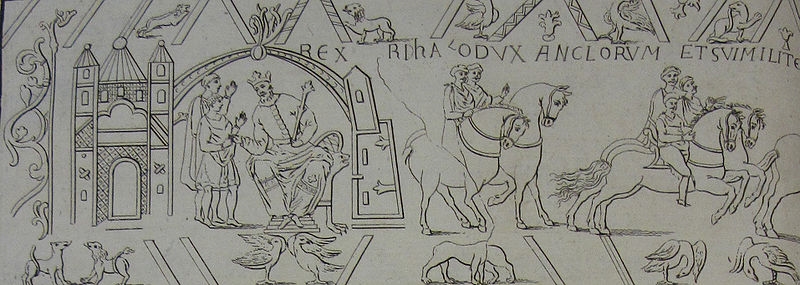
In 2020, the controversial “Brexit” finally severed a relatively new (less than fifty years) bond between Britain and Europe. Marquand Library recently acquired an unusual item that recorded a much earlier, even more tumultuous change in the relationship between England and mainland Europe: a scrolling facsimile of the Bayeux “Tapestry” depicting the Norman invasion of England almost one thousand years ago.

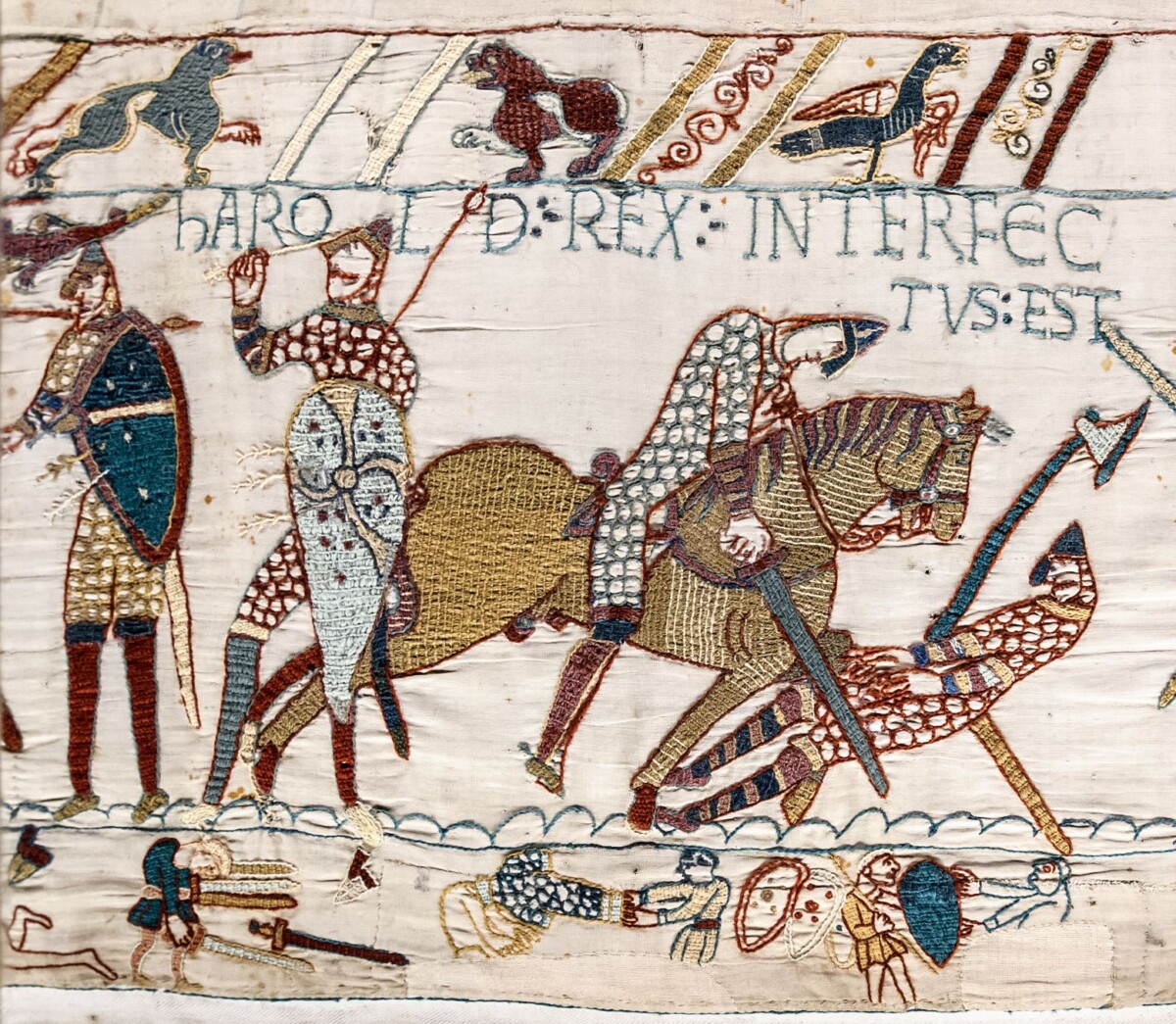
Scene showing the death of King Harold of England on the battlefield

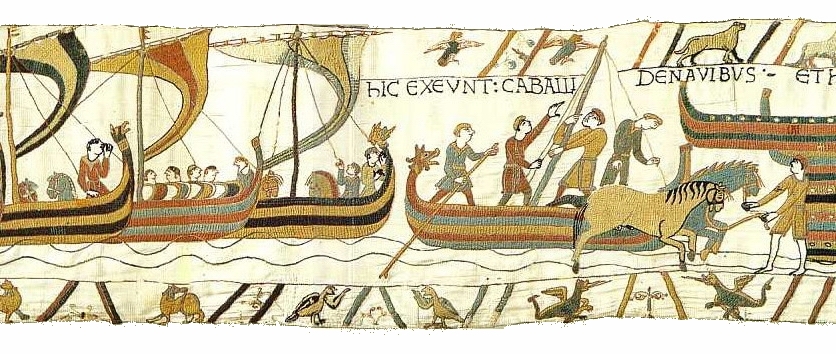
The events leading up to and narrating the Battle of Hastings in 1066, when Duke William of Normandy crossed the Channel to assert his claim to the English throne, are depicted in vivid scenes of battle, feasting, sea travel, and the deaths of two kings (Edward and his successor, Harold). Yet these images, executed in the Romanesque graphic style of the 1070s are embroidered rather than painted. In spite of its commonly used name, the Bayeux “Tapestry” is technically not a tapestry, since the imagery is not woven on a loom but embroidered in natural-dyed wool yarns onto a linen ground fabric. This pictorial textile scroll, consisting of a continuous narrative of scenes with embroidered captions, meant to be read from left to right, measures almost 70 meters (230 feet) long and 50 cms (19 inches) tall, and is a glorious testament to the work of medieval embroiderers.

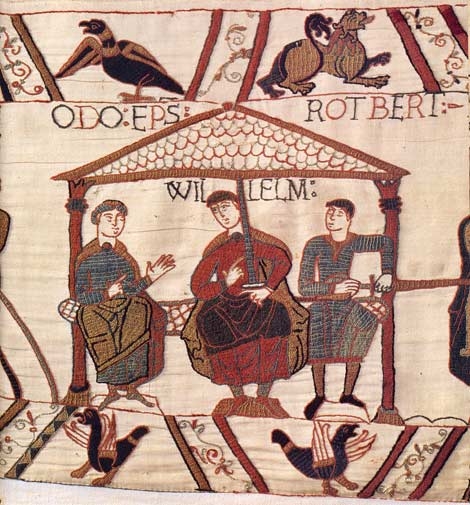
William of Nomandy (center) with Bishop Odo to his left

Although traditionally ascribed to the hands of Queen Matilda, William’s wife, and her attendants, the identity of the embroiderers remains unknown. It is likely that the work was commissioned by Bishop Odo of Bayeux, the William’s half-brother, a warrior-cleric who also acted as regent in the absence of the king. The embroidered narrative would have served both as a powerful piece of dynastic propaganda and to glorify Bayeux Cathedral, in Normandy, consecrated in 1077 in the presence of King William.

For nearly seven centuries, the embroidery was preserved in relative obscurity there, being displayed only once a year – which helped preserve this fragile textile relic. The first recorded mention of the Bayeux embroidery was in an inventory of the cathedral Treasury in 1476.

In the 1720s, sketches of the Bayeux embroidery came the attention of the scholar Bernard de Monfaucon, who published images of the scenes in his multi-volume Les monumens de la monarchie françoise, qui comprenant l’histoire de France…. (1729-1733). https://catalog.princeton.edu/catalog/9923172793506421.

Sketch of a detail the Bayeux “Tapestry” published in Bernard de Montfaucon, Les monumens de la monarchie françoise, qui comprenant l’histoire de France…, vol. II (1730)

Since 1805, when Napoleon commanded that the embroidery be brought to Paris as he contemplated his own invasion of England, the work has assumed iconic status. During World War II, the textile was carefully stored by the Nazi occupiers with other works of art in France, after which it was briefly shown to the public in the Louvre before returning to Bayeux, where it has since been on display in the former Seminary. It has acquired wider fame in recent years – referenced in movies (such as The Monuments Men), in cartoon form – in an episode of The Simpsons, and in an animated version, viewable online, where arrows fly and horses gallop. Princeton’s copy of this remarkable facsimile permits much closer examination of details than is possible when visiting the actual artwork today, since its fragile nature requires low light levels to help preserve the fibers and colors. This facsimile has already been studied by students in classes on medieval art in Marquand’s rare books classroom.

To view the entire facsimile as it is unrolled, use the link below. Warning: this video is accompanied by dramatic (and possibly loud) music!:

The original textile is on display in the former Seminary in Bayeux, France. Plans to lend it to the British Museum for display this year appear to have been postponed. For much more information about this extraordinary work of medieval art, see the Bayeux Museum website.

Nicola Shilliam, Western Art History Bibliographer

Posted in Rare monograph | Tagged | Comments Off on A Scrolling Facsimile of the Bayeux “Tapestry” in Marquand

‘BIRD WATCHING’: Kitao Masayoshi’s “Illustrated Book of Birds from Abroad” (1793)

Colorful birds on flowering branches fill the pages of a recent acquisition to Marquand Library’s Japanese rare book collection. The serene beauty of its illustrations, however, belies a rather scurrilous publishing history. Illustrated Book of Birds from Abroad [Kaihaku raikin zui] is therefore not just nice to look at, but important to our understanding of Japan and the business of publishing in the late 18th century.

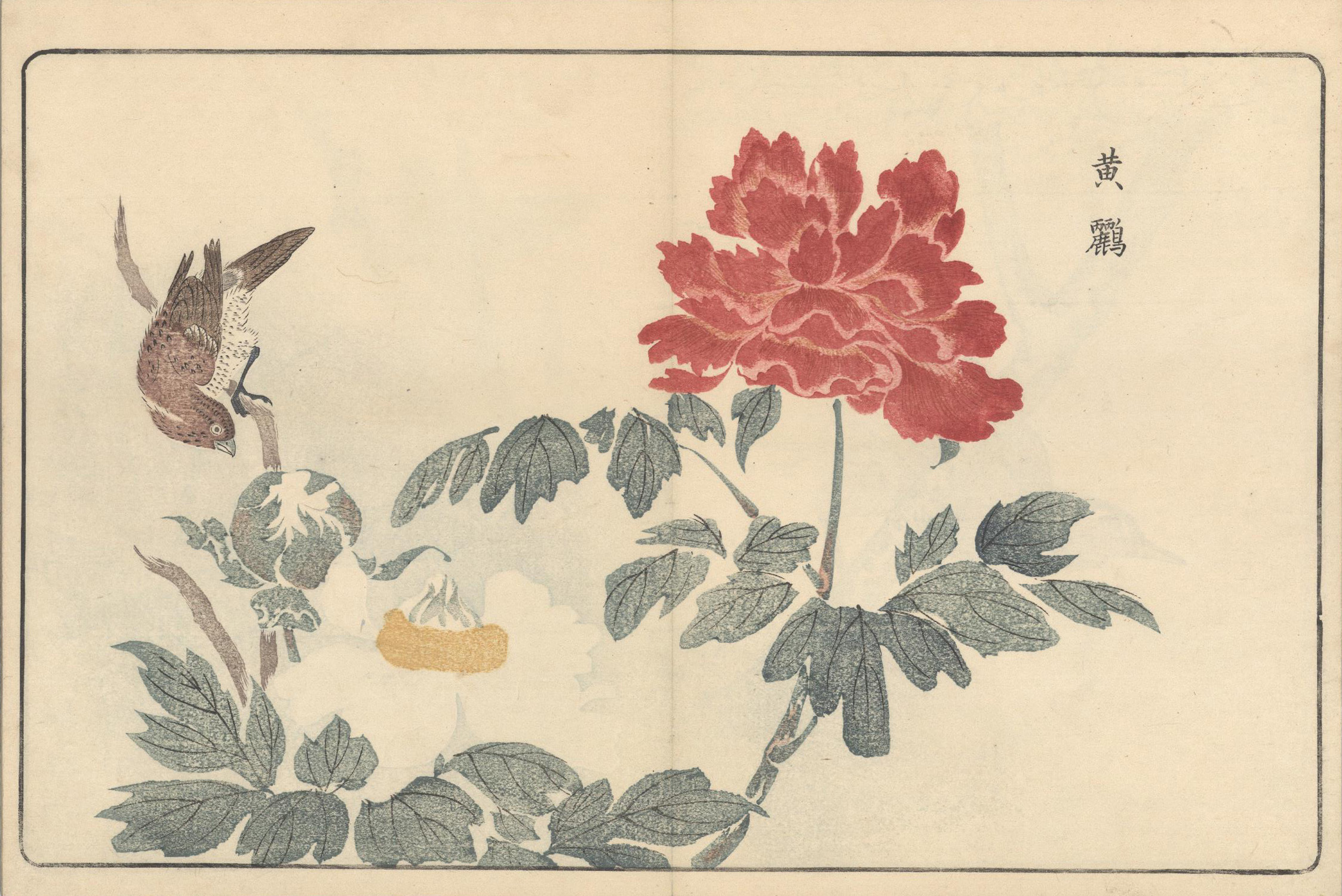
Huangli/Kōri [Bush Warbler] with Peonies

When Birds from Abroad was first published in 1790, the technology of full color printing was relatively new in Japan. The bird-and-flower-theme, long established in both Chinese and Japanese painting, was also a relatively recent addition to the woodblock print repertoire.

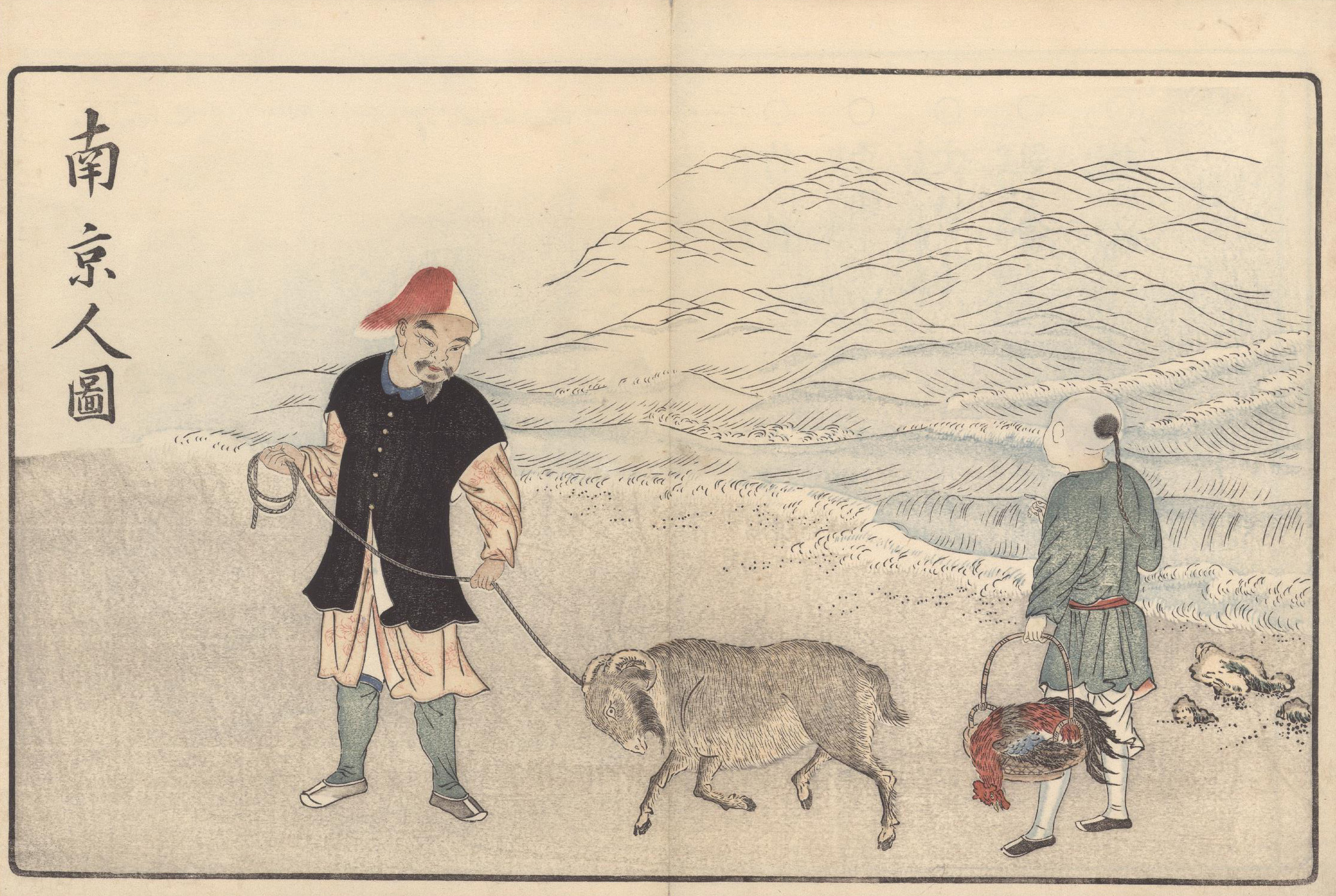
“A picture of people from Nanjing” (from the inscription) is one of two illustrations of Chinese traders at the beginning of the book.

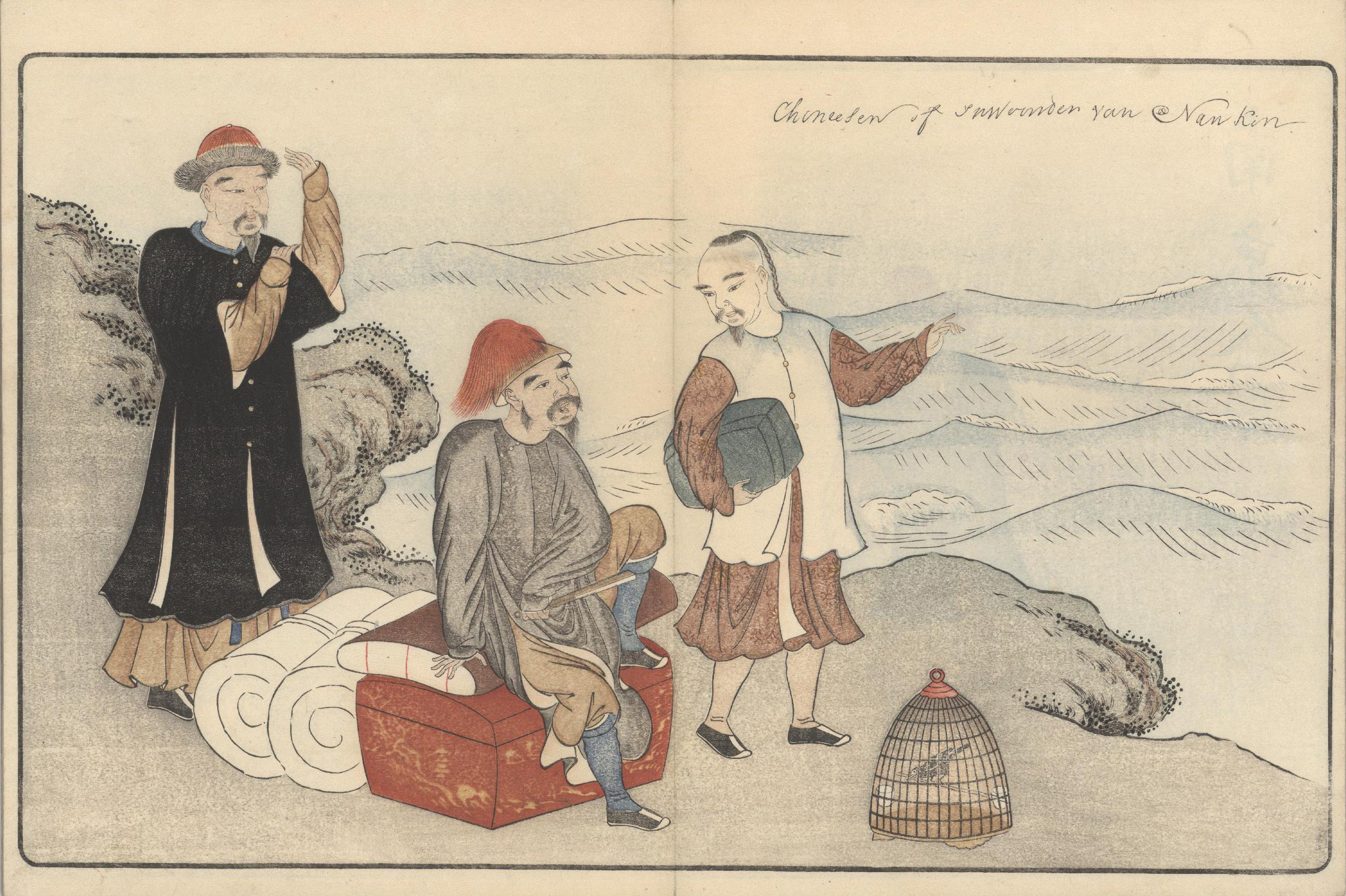
The preface of the book tells us that it is about the magnificent exotic birds brought to Japan by Chinese and Dutch traders. Prefaces in Japanese publications of this period, however, were often patently false or exaggerations of the truth; they were part of the hype of the book and they always spun marvelous tales. Birds from Abroad actually has two prefaces: one in the very prestigious Chinese language and one in Japanese. They tell us that the birds pictured were brought to the port city of Nagasaki from China and Indonesia in the year 1788 and that they were painted by the Chinese artist, Kiyō Ishōsai Shusen, who was living there at the time. The Chinese preface adds that the two illustrations of Chinese traders would be of great interest to those who did not live in the the port city and had never seen foreigners. Purchasers of this book therefore would be getting privileged access to the exotic worlds of Chinese culture and of Nagasaki where foreigners lived. They would also own beautiful illustrations by a noted Chinese artist.

“Chinese…from Nanking” (Chineesen…van Nankin) is written here in Dutch to add an exotic air to the illustration of these foreign traders.

The name of the true artist–the “un-prestigious” Japanese artist of the beautiful double-leaved woodblock prints in Birds from Abroad–does not appear in either preface or in the publishing information at the end of the book; the lofty presentation required that the Chinese artist, Kiyō Ishōsai Shusen be acknowledged here in the colophon once more. The Japanese artist, Kitao Masayoshi (also known as Keisai), is mentioned only in the afterward where we are told that the illustrations in the book are actually his reduced-size copies of Shusen’s paintings, and that the twelve woodblock images that comprise the book were chosen from the hundreds painted by the Chinese artist.

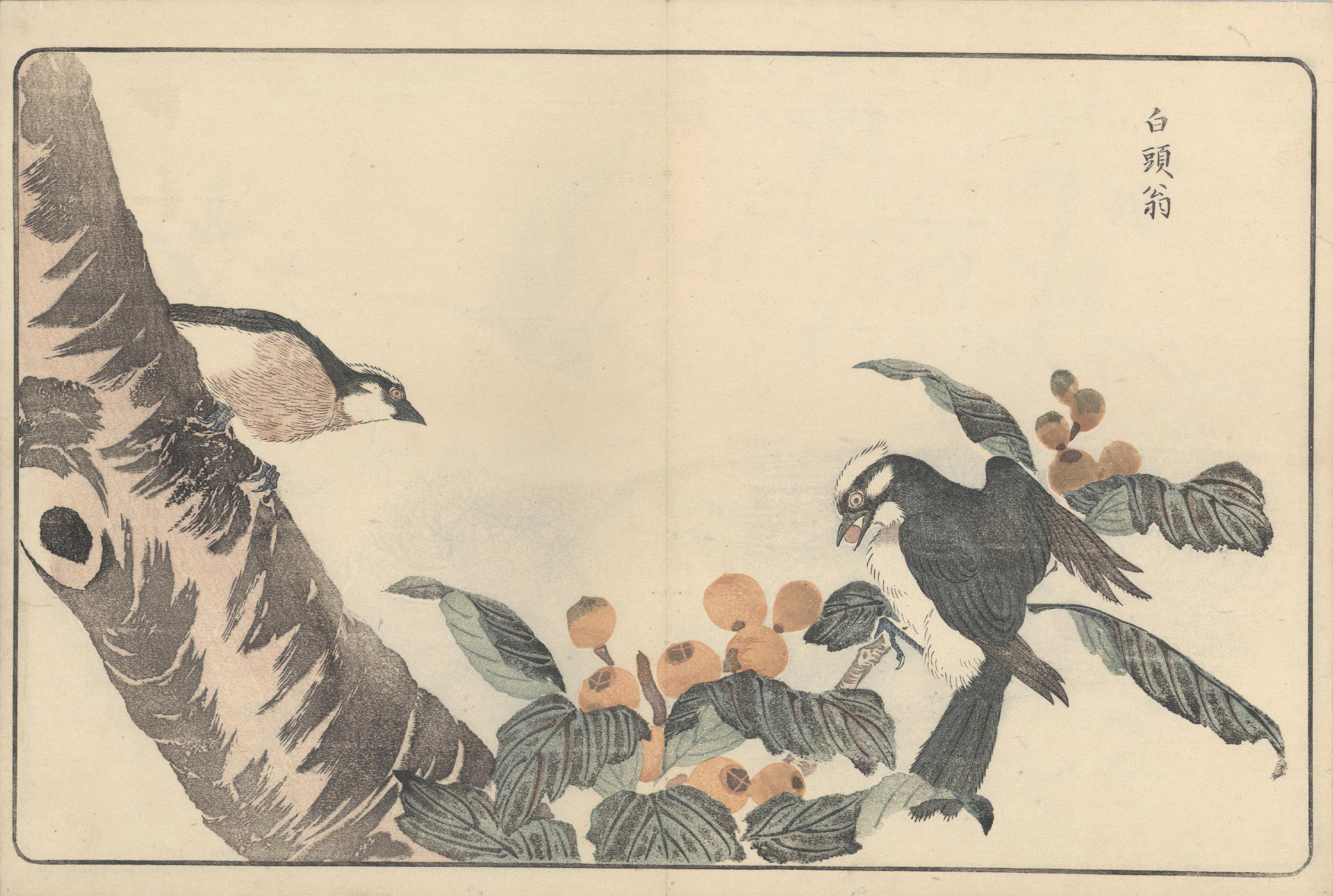
Hakutōō[Grey Starling] in Loquat Tree

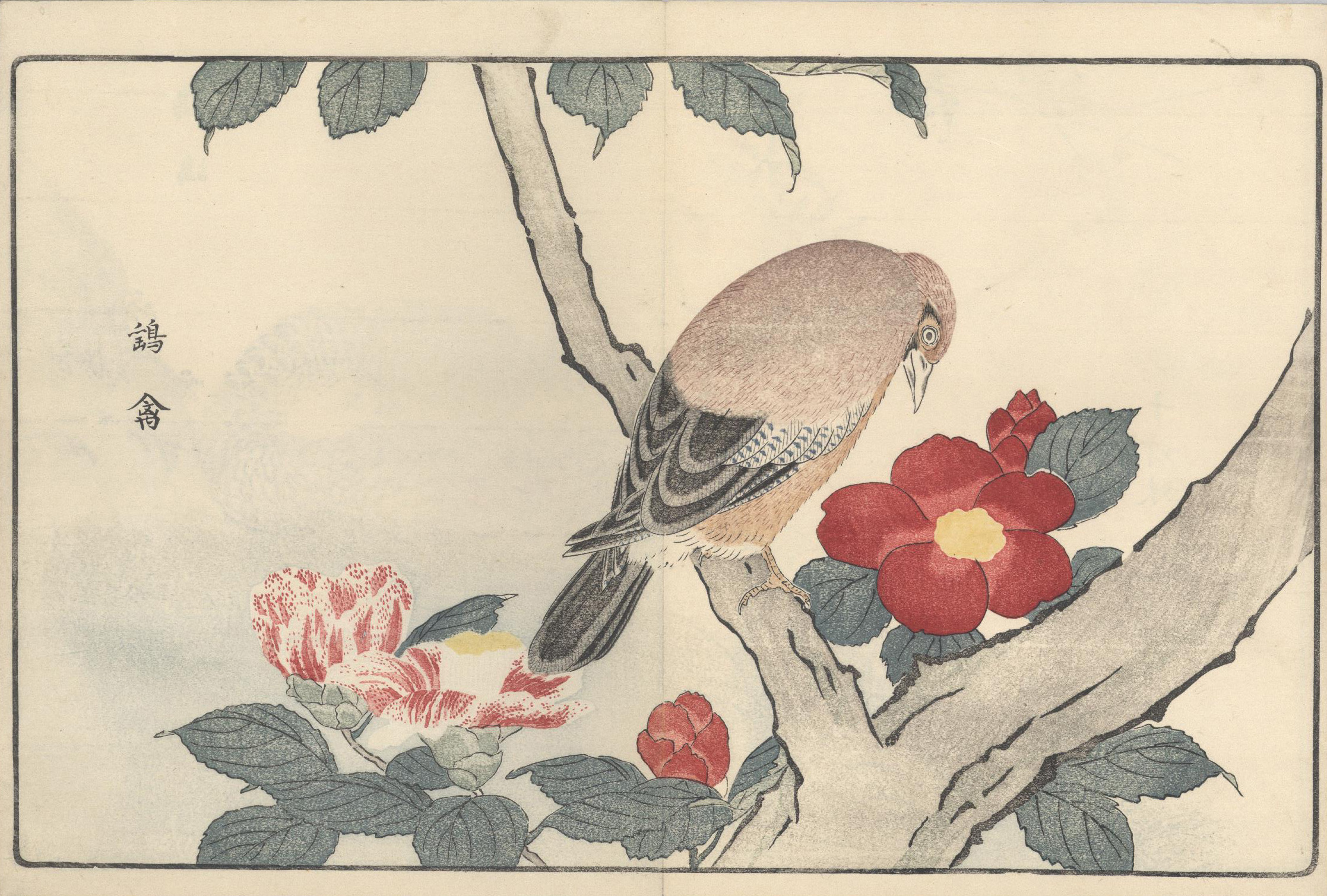
The bird and flower illustrations of Birds from Abroad are beautifully delineated in carefully balanced compositions. In a further nod to ‘things Chinese,’ the motif are “boneless” (mokkotsu), lacking the contour lines which define forms in most Japanese woodblock prints. The first (1790) edition of the book also featured the embossing of motif, which brought the birds and flowers life-like three-dimensionality. The Marquand copy, however, is the third edition. While Marquand does not often seek the third edition of a book, this particular third edition, printed in 1793, is quite special.

Yōkin [Falcon] and Camellia

By way of background, in 1790, at the same time the first edition of Birds from Abroad was published, another book about birds, Myriad Birds: Paired Kyōka (Momochidori kyōka awase), with designs by one of the most renowned artists of the time, Kitagawa Utamaro, was released by one of the most noted publishers of the period, Tsutaya Jūzaburō. Kitagawa’s book was wildly popular and an instant best seller. It seems it was so successful that, three years later, when Marquand’s third edition of Birds from Abroad was published, the publishing information at the back of the 1790 edition was changed. The woodblock for the final page of our edition was re-carved to falsely indicate that Kitagawa Utamaro—not the Chinese painter, Kiyō Ishōsai Shusen, was the artist responsible for the illustrations. To reinforce the attribution, Utamaro’s printed signature also appears on one of the prints, indicating that a second block was altered to validate the spurious colophon. The afterword, however, remains unchanged; it still refers to Kitao Masayoshi copying the paintings of Shusen. While we do not know how this was rationalized, it does suggest that the afterword was largely ignored–even in the first edition where he was given credit for his beautiful prints.

Because publishers in 18th century Japan are known for their pirating of material and underhanded bookselling practices, a book like this edition of Birds from Abroad, which highlights the manipulation of the art market, is a real find for our teaching collection. We are also fortunate to have acquired a copy because it is extremely rare in any edition. Unfortunately, this is because of the disgraceful widespread practice of art dealers cutting up books with beautiful double-leafed images (especially those with bird and flower designs) to sell them individually as woodblock prints for greater profit. Interestingly, without the book context, these individual prints in museum collections are recognized as the work of Kitao Masayoshi, finally giving this artist his true credit for the beautiful designs.

  • Nicole Fabricand-Person, Japanese Art Specialist
Posted in Japanese, Rare monograph | Tagged , , , , , , , , , , | Comments Off on ‘BIRD WATCHING’: Kitao Masayoshi’s “Illustrated Book of Birds from Abroad” (1793)

Maria de Wilde and Signa antiqua e Museo Jacobi de Wilde …: The First Museum Catalogue Illustrated by a Woman?

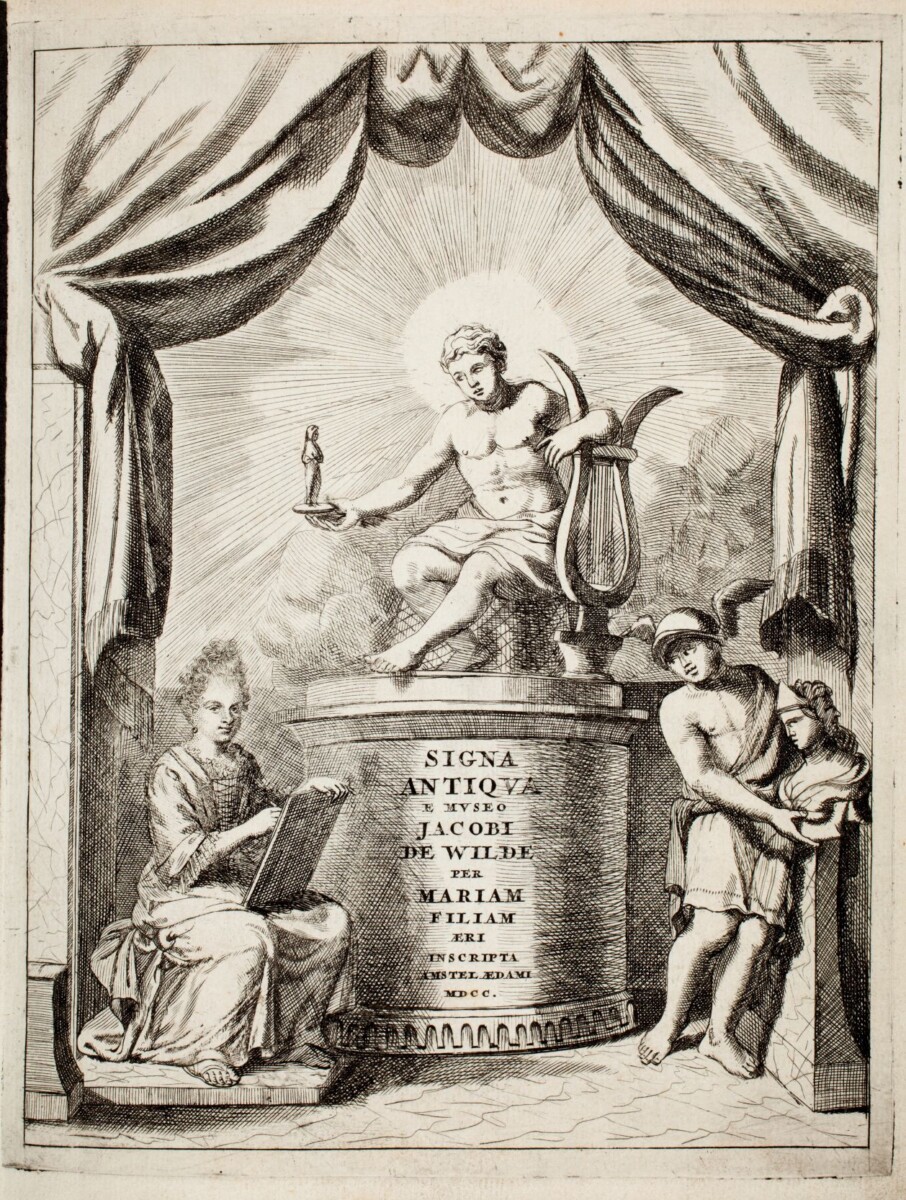
Frontispiece of Signa antiqua e museo Jacobi de Wilde… Amsterdam: Jacob de Wilde, 1700

Marquand Library recently acquired a copy of Signa antiqua e museo Jacobi de Wilde veterum poetarum carminibus illustrata et per Mariam filiam aeri inscripta. Amsterdam: Jacob de Wilde, 1700

Signa antiqua is a catalogue of part of the private collection of antiquities assembled by Jacob de Wilde (1645-1721), the prosperous Collector-General of taxes for the Admiralty in Amsterdam. In an era before the establishment of public museums, de Wilde was one of a small group of wealthy and educated amateurs who collected, sometimes published on, and invited guests to view and study their treasures. De Wilde’s interests were more focused on antique objects – Egyptian and Roman statuettes, vases, and coins – than on the diverse mix of both natural and man-made specimens found in most Wunderkammern (cabinets of curiosities) [See an earlier blog posted here on this topic.] The Museum Wildianum, built by de Wilde behind his home in Amsterdam on Keizersgracht 333 and extending to the houses nearby, was viewed by hundreds of distinguished visitors.  

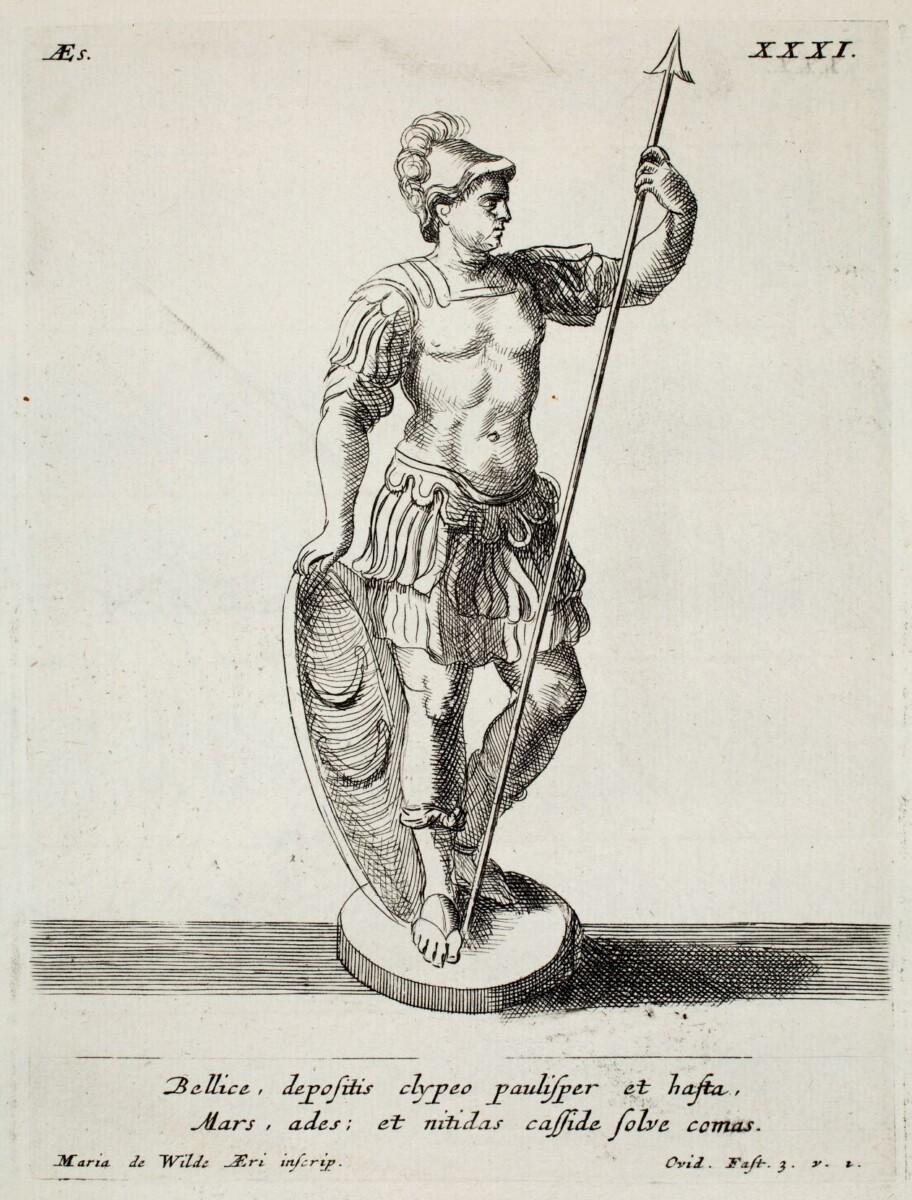
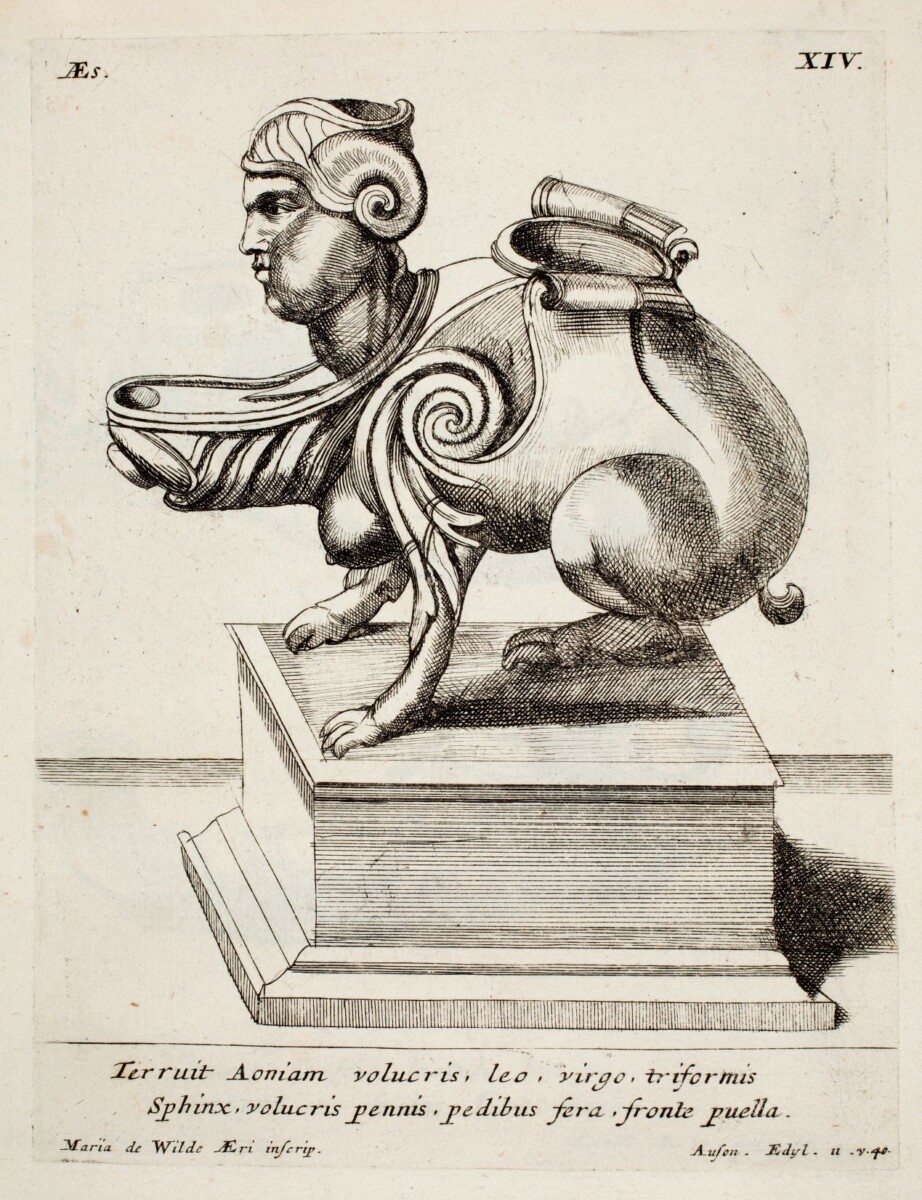
Statuettes of Mars and a Sphinx, two illustrations for Signa antiqua…,etched and engraved by Maria de Wilde after her drawings of objects in the Museum Wildianum .

What is particularly noteworthy about this book is how much de Wilde’s teenage daughter contributed to the publication. Maria de Wilde (1682-1729) was responsible for the illustrations: 60 etched plates after drawings she made from her study of the objects in the family’s museum. This may be the first catalogue of a private museum collection known to have been illustrated by a woman. Maria’s privileged upbringing and enlightened parents enabled her to pursue her diverse talents – drawing, painting, and engraving; singing and playing the lute; composing poems, and even publishing a play.

Maria de Wilde
Maria de Wilde, portrait with emblematic verse from Signa antiqua… (1700)

Judging by the accurate captions in her prints and the lavish tributes written by learned acquaintances, such as the dedicatory poems by Adriaan Reland and others n the catalogue, she was almost certainly fluent in several languages. In addition, Johannes Brandt (1660-1708), a poet and family friend, as well as the pastor of the nearby Remonstrant church, also praised her “thirst for science.” Maria took lessons in etching and engraving from Adriaan Schoonbeek, a pupil of Romeyn de Hooghe, and from Pieter van den Berge. Maria’s portrait, above, was etched by van den Berge and accompanied by an emblematic verse of praise by David Hoogstraten.

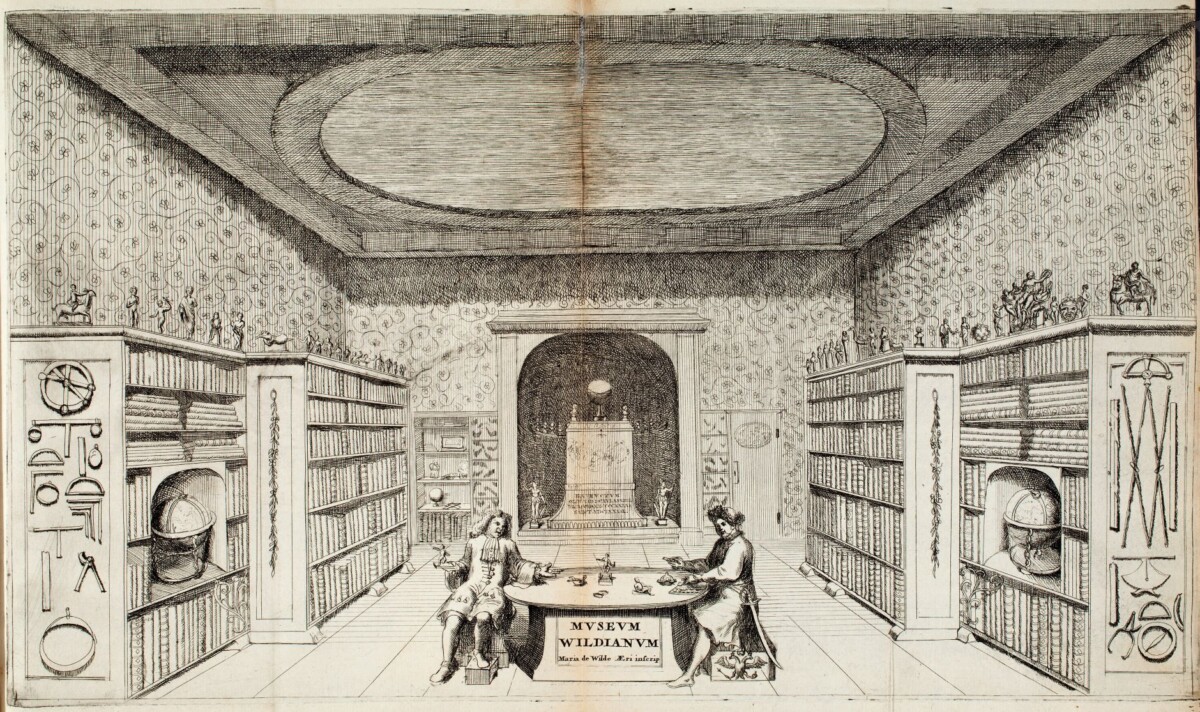
Tsar Peter the Great’s visit to the Museum Wildianum in 1697 in a print by Maria de Wilde

One of the most distinguished visitors to the Wilde collection was Tsar Peter the Great, whose trip to the Museum on December 13, 1697, was commemorated by a print that Maria made and later included in the book. In addition to the specimens, globes and measuring tools, a large collection of books lines the walls of the museum. On the Tsar’s second visit in 1716, Maria presented him with the print, and he made her a gift of a jewel.

A second volume recording de Wilde’s collection, Gemmae selectae antiquae e museo Jacobi de Wilde..., was published in 1703, though the extent of Maria’s participation in that publication is yet to be resolved. However, with many contacts in the scholarly community, Maria was one of the few female artists whose work appeared in several academic publications: two of her prints also appeared as illustrations in Adriaan Reland’s  Dissertatio altera de inscriptione nummorum quorundam Samaritanorum: ad spectatissimum virum, Jacobum de Wilde… [1704].

Immersing herself completely in her work, Maria adopted the motto “Sine Pallade Nihil” and avoided a conventional early marriage. Andreas Lang, a visiting German poet, praised her talents in a Latin poem (1705), though lamented that she was not interested in him as a suitor. In Lang’s 1707 birthday poem celebrating Maria, he warned that no one should bring up the subject of marriage because she was “engaged to Apollo” and produced “adult paper children.” Yet, in 1710, Maria did marry. That same year, she published Abradates en Panthea, a tragedy. Though the work appeared anonymously, the accompanying poems of praise easily identified her as the author. Although other literary works have been attributed to her, nothing dating after her marriage has been authenticated. Likewise, except for the published prints, none of her art works have been identified. In 1729, Maria was buried in Amsterdam’s renowned Oude Kerk, in a plot bequeathed by father in his will. She was survived by at least one daughter, Jacoba Woutrina (born 1719).

Nicola Shilliam, Western Art Bibliographer,

Posted in Rare monograph | Tagged | Comments Off on Maria de Wilde and Signa antiqua e Museo Jacobi de Wilde …: The First Museum Catalogue Illustrated by a Woman?

Sea Monsters on the Arno: A Delightful European Festival Book

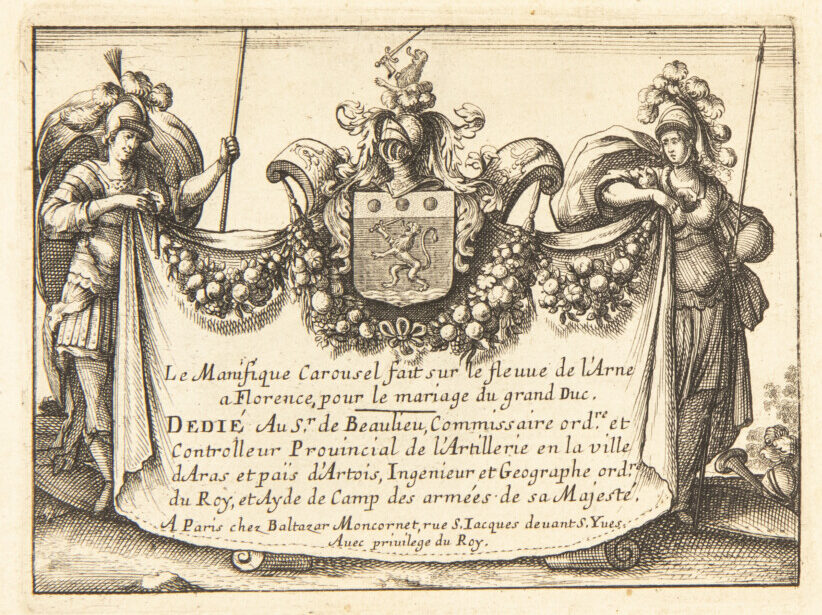
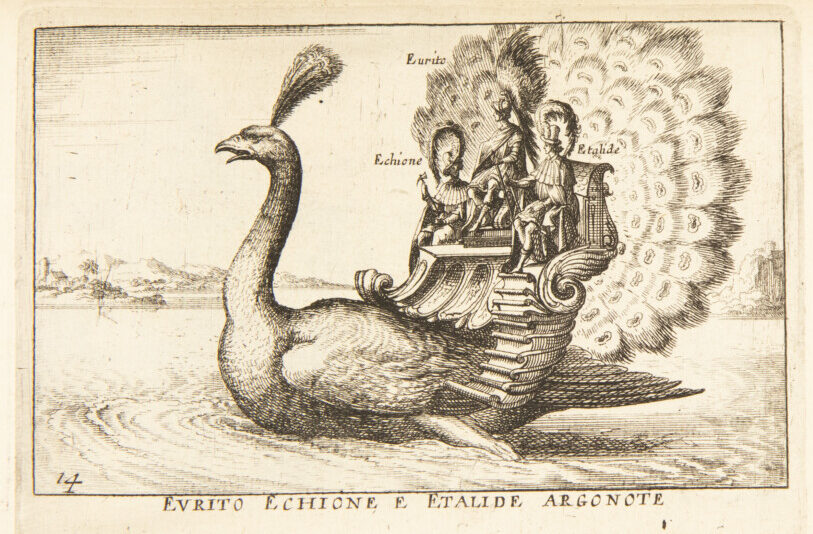
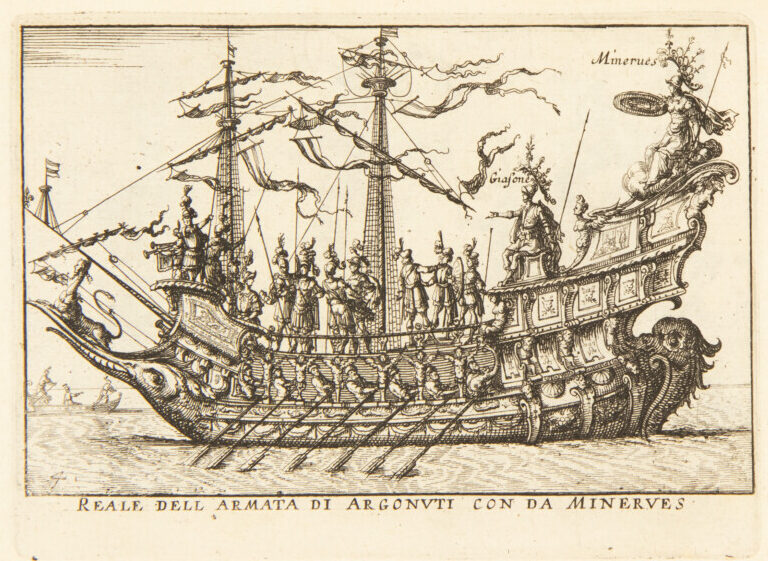
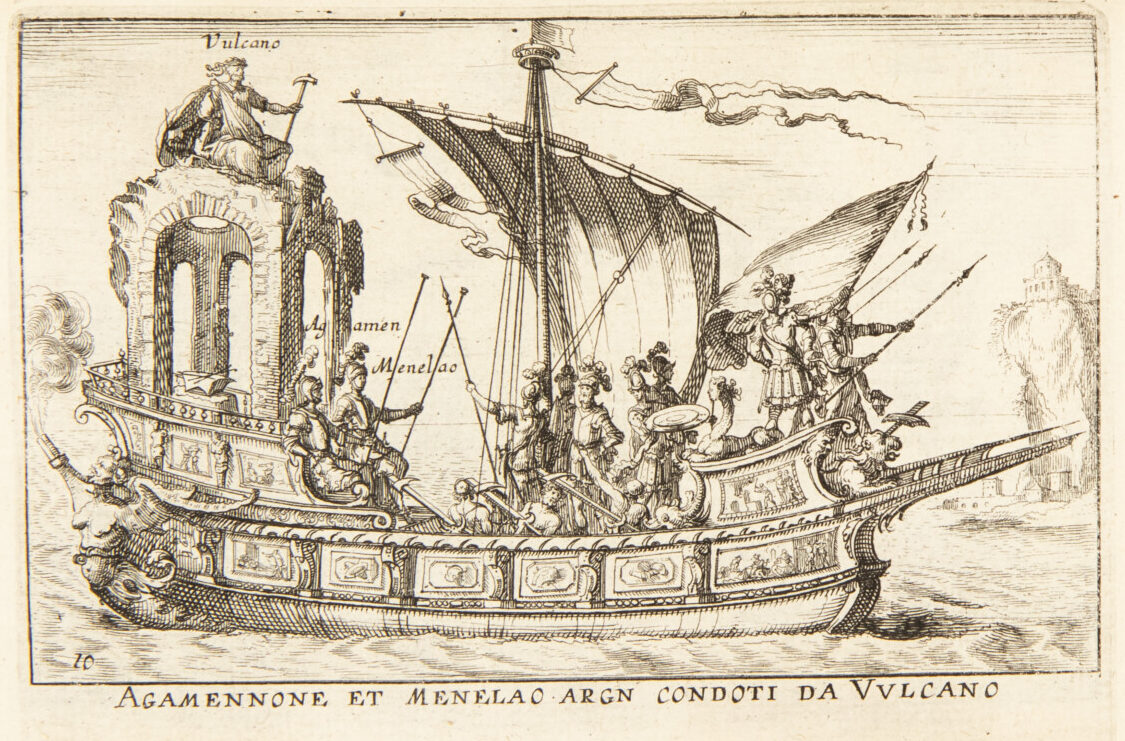
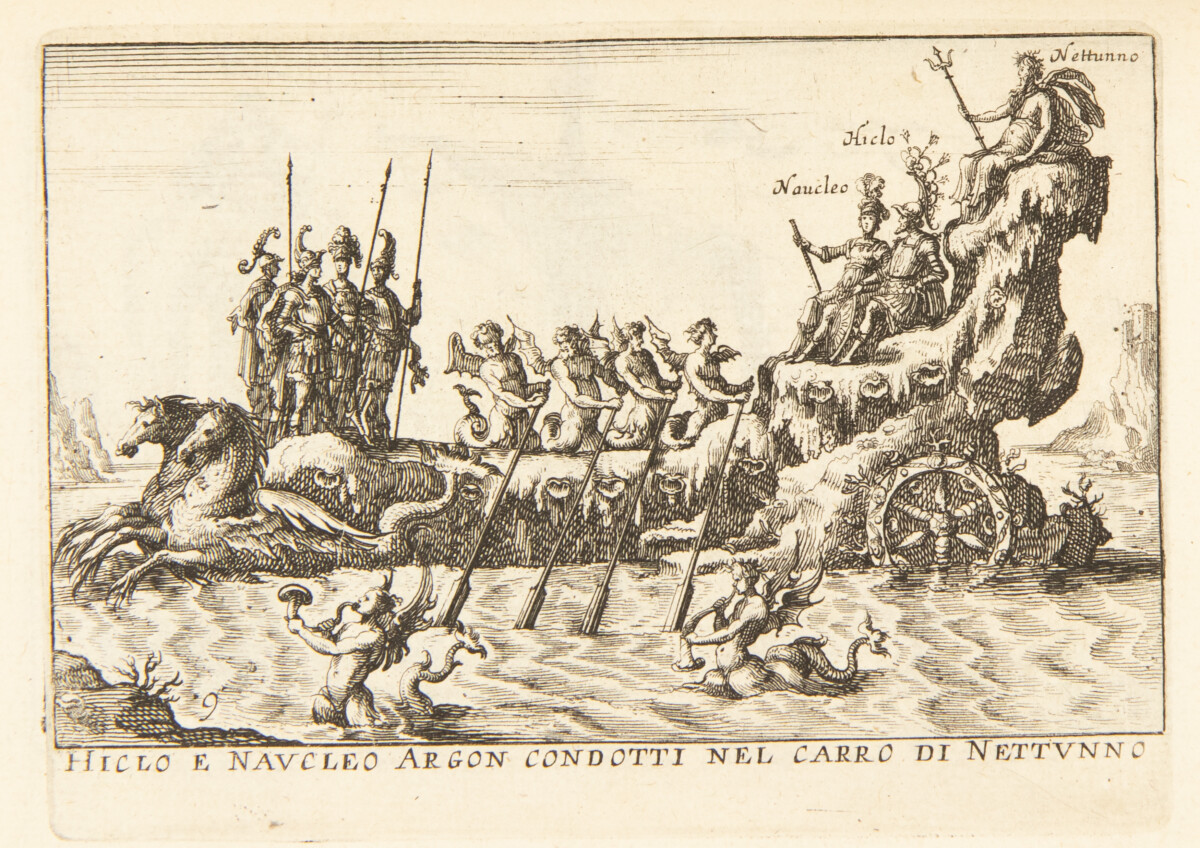
Le Manifique Carousel fait sur le fleuve de l’Arne a Florence, pour le mariage du grand duc. Paris: Chez Balthazar Moncornet,  late 17th C. Octavo: 18.6 X 14.3 cm. 19 etched plates: [1] (title) and 18 (scenes from the pageant).

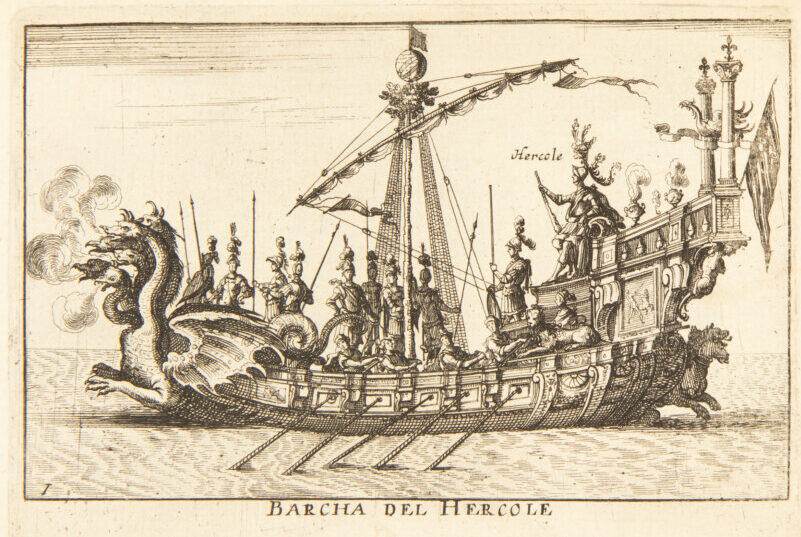
Our newest “Festival Book,” made for the wedding of Cosimo II de’Medici & Maria Maddalena of Austria, is a publication type found in all manner of rare book collections. They were extravagant publications meant to commemorate major ceremonial events of a monarch or ruler.

Our “Le Manifique Carousel fait sur le fleuve de l’Arne a Florence, pour le mariage du grand duc” is a suite of prints dedicated to Sébastien Pontault de Beaulieu (circa 1612-1674), “Ordinary Commissioner and Provincial Controller of the Artillery of the town of Arras and the Pais d’Artois, engineer and geographer of the King”.

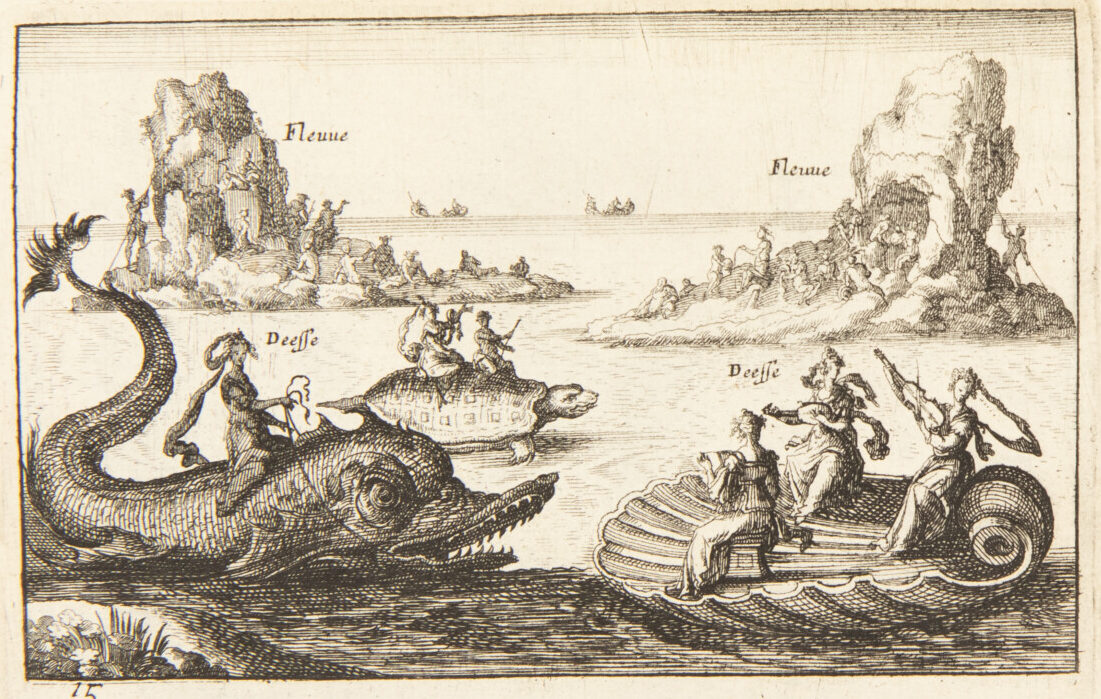
The plates depict the mock naval battle with a theme of the Argonauts’ expedition to find the Golden Fleece. The pageant took place on the Arno on the occasion of the marriage between Cosimo II de’Medici (1590-1621), Grand Duke of Tuscany, and Maria Maddalena of Austria (1589-1631), on 3rd November 1608.

This book was produced in Paris, with a dedication to the engineer and geographer of the French king- Louis XIII at the time of earlier editions. Two later editions were made while Louis XIV was king. Evidence points to our edition as being one of the earlier due the size and dedication. The ensemble was published with a double purpose: to perpetuate the memory of one of the great Florentine festivals, and to provide a possible source of inspiration for celebrations at the French court.

Such spectacles appealed to Louis XIV, and this book could have been used as a source of inspiration by his own creators of festivals. The boats were each captained by a god: Hercules, Amphion, Castor and Pollux, Thetis, Polyphemus and Palaemon, Cupid, etc.

This event was easily the most important of the wedding festivities and employed massive numbers of craftsmen, costumers, technicians and artists. Giulio Parigi, Jacopo Ligozzi and Ludovico Cigoli designed most of the theatrical performance, of which a series of etchings of the ships also survives. The bridge of Santa Trinità was transformed into the city of Colchis, complete with crenelated castles and towers.

In front of the bridge, an island in the middle of the river provided the setting for a small temple that housed the Golden Fleece. The event took place at night and was lit by torches that burned at both sides of the river. “The richly appointed captain’s ship of the Colchis armada appeared first from the Carraia side and took his sixteen galleys on a tour of the theater, “to survey its territory.” Then Jason’s magnificently carved and painted galley appeared from the Santa Trinità side, full of exquisite and exotic details, and led the twenty-six galleys of the Argonauts, each uniquely decorated, for an even more pompous tour of the ensemble.

Our new acquisition garnered much faculty support including  Associate Professor of French Volker Schröder,—who often teaches with our many publications on Versailles—stated:

“This precious little suite is a wonderful addition to Princeton’s outstanding holdings of early modern European festival books. It provides a missing link between the pageantry of the Medici court and the fêtes of the young Louis XIV. I am particularly intrigued by the connections between these images and the 1664 “Pleasures of the Enchanted Isle,” the first major entertainment staged in Versailles, which included sea monsters and was in turn documented in a famous album of etchings by Israel Silvestre.”
Find this reference in the PUL online catalog.

Marquand has many other books about Medici festivals in this period including:

Esequie fatte in Venetia: an Account of the funeral of Cosimo d’Medici II, Grand Duke of Tuscany, held in Venice, Italy, May 25, 1621. Find here.

1625: Visit to Florence of Władysław IV Zygmunt, Prince of Poland; complete with jousting and horse ballet organised by Cardinal Gian Carlo de’ Medici. Find here.

Celebrating Marie de Medici (Queen, consort of Henry IV, King of France, 1573-1642) arrival in Amsterdam (1638). Find here.

Find our featured book in our online catalog.

Holly Hatheway
Head, Marquand Library of Art & Archaeology

Posted in European, Rare monograph | Tagged , , , , , , , | Comments Off on Sea Monsters on the Arno: A Delightful European Festival Book

SOMETHING FISHY

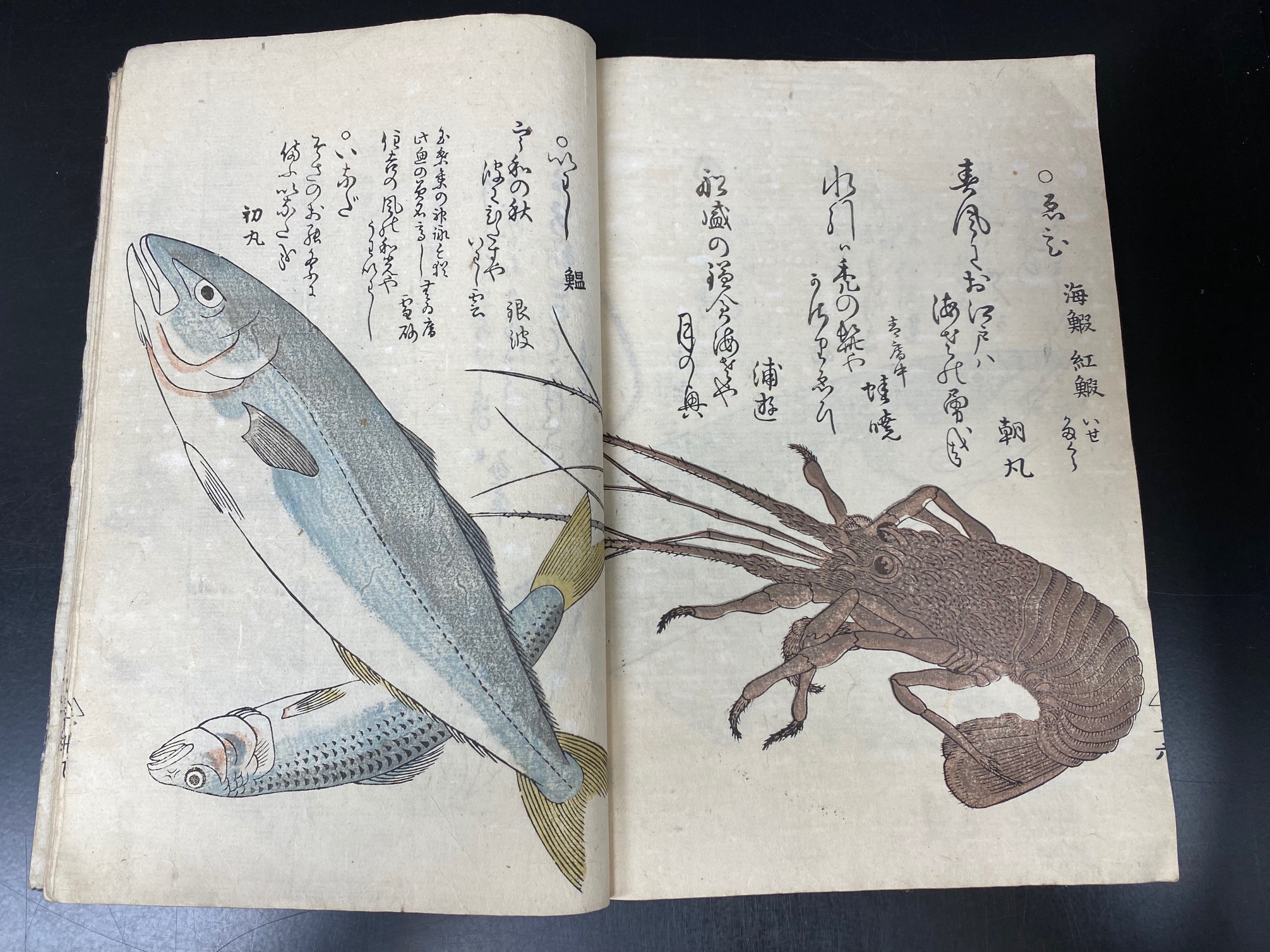
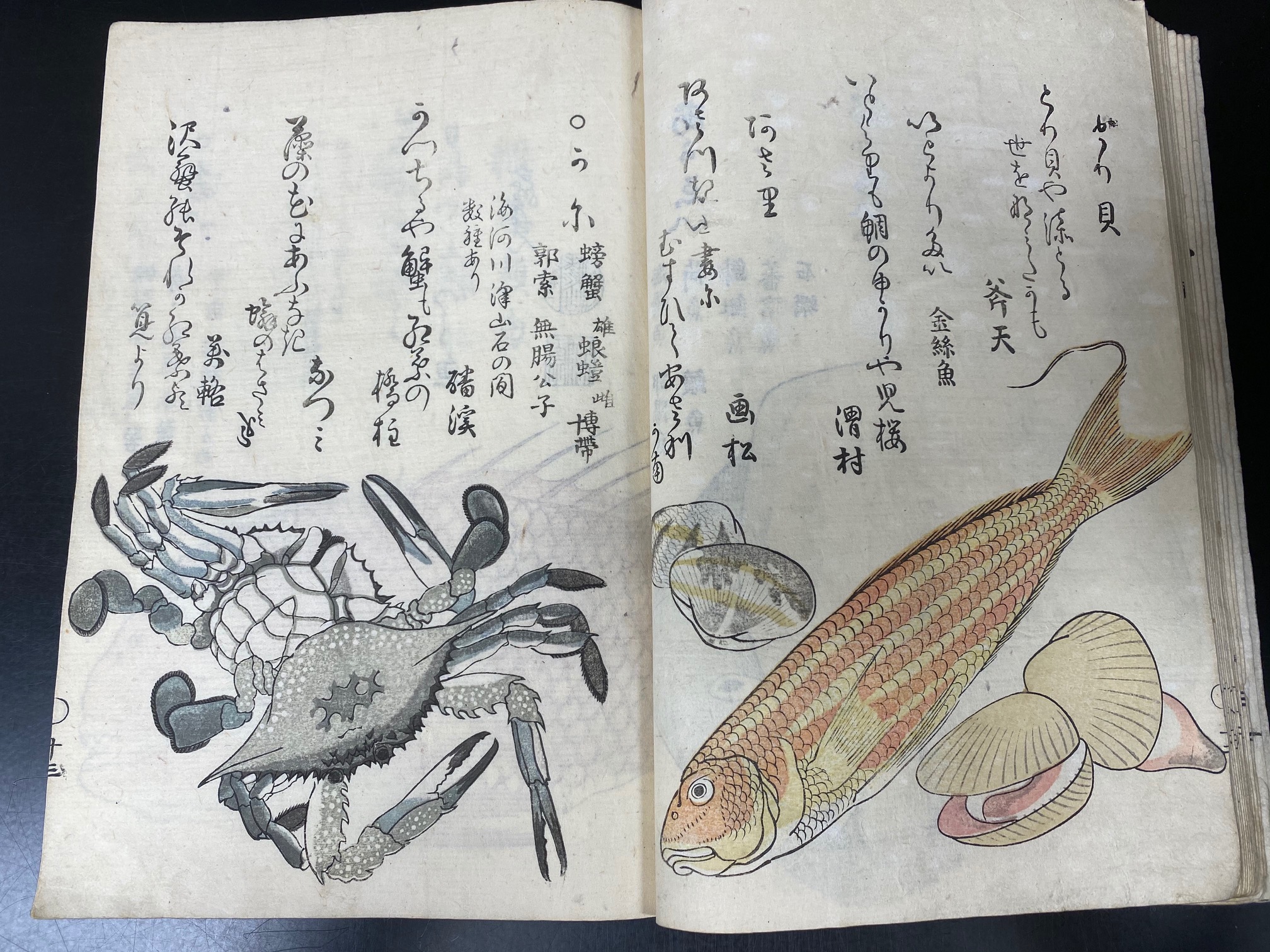
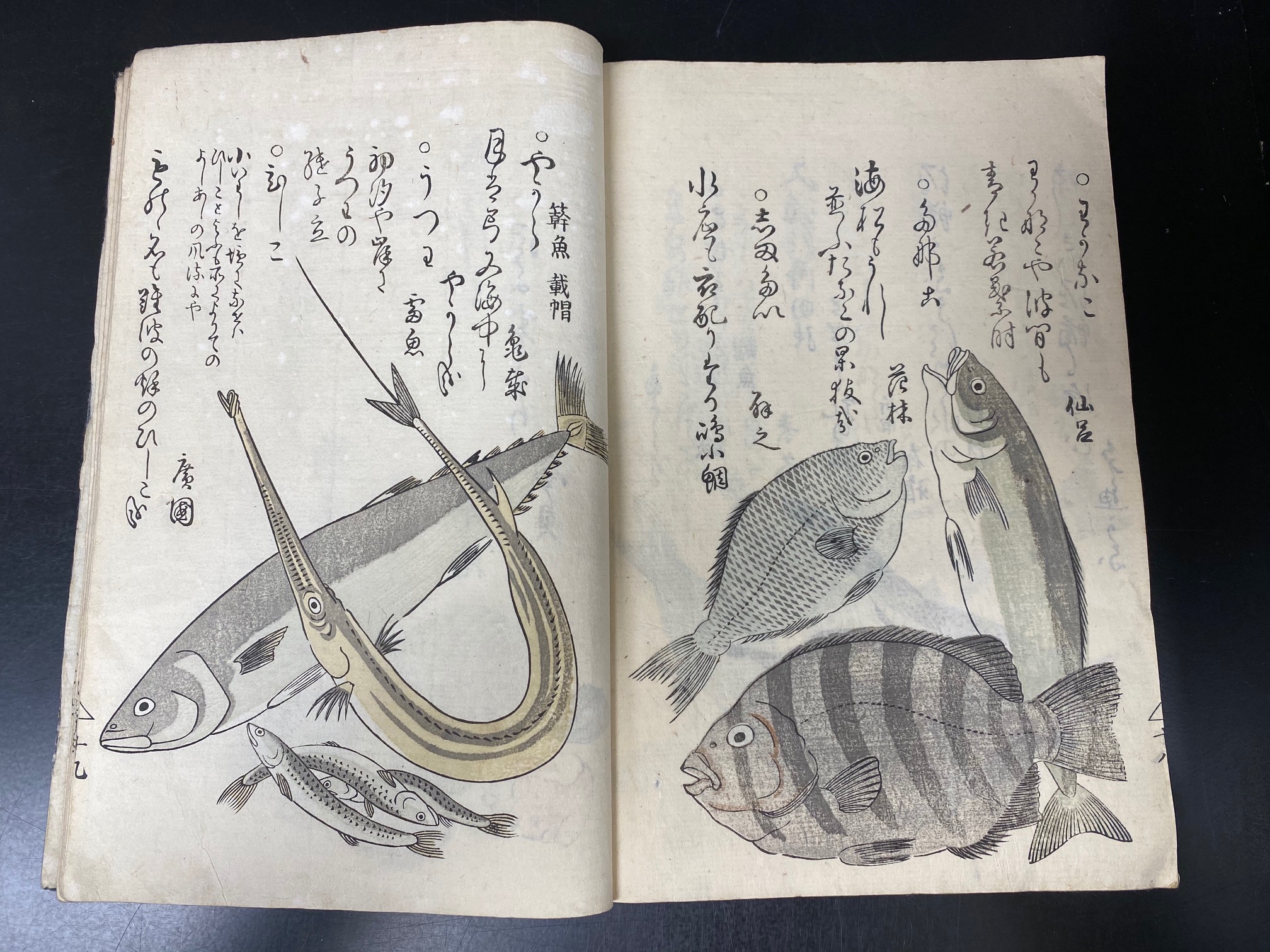
New to the Marquand Library is the extremely rare Bounty from the Sea (Umi no sachi), one of Japan’s earliest color-printed books. The artist, Katsuma Ryūsui1 (1711-1796), though rarely credited in the history of the Japanese woodblock print, was experimenting with using multiple blocks of color for book illustrations years before single-sheet color woodblock prints began to appear in the latter half of the 18th century.

Bounty from the Sea is one of three books Ryūsai produced using this nascent color printing technique. All were expensively published with color that was printed on large leaves of thick luxurious paper. This kind of production suggests that all three were commissioned by elite poetry circles.

Bounty from the Sea, in two volumes, is a masterpiece that celebrates ‘all that lives beneath the sea’ in beautifully detailed illustrations and haikai poetry. Themes of wildlife and the natural world were becoming popular in Japan in the 18th century as books on scientific studies filtered into the country through trade with the Dutch.

In Bounty from the Sea, the artist Ryūsai adds whimsy to the natural forms, while experimenting with grand compositions that successfully balance a variety of sea creatures with decorative calligraphy across the two large leaves.

The colors that endure are wonderfully subtle—almost silvery in some places—and make the fish appear as if we are seeing them through water.

In an unusual move, the publisher of the book has included the name of the printer, Sekiguchi Jinshirō, in the publishing information at the end of the book. The Japanese book-buying audience of this era clamored for novelty and the inclusion of his name could have been a way of promoting this revolutionary color-printing technique to brand a new and innovative way of making books.

1. Ryūsui has also been transliterated as Ryūsai.

  • Nicole Fabricand-Person, Japanese Art Specialist
Posted in Japanese, Japanese, Rare monograph | Tagged , , , , , , , , , , | Comments Off on SOMETHING FISHY

THE SUBLIME WORK OF TAKEUCHI SEIHO (1864-1942)

Marqund Library recently acquired the beautiful Seiho ippinshū [The Sublime Work of Seiho] (1935-36), which has been called “one of the most magnificent printing achievements of the twentieth century.”[1] It is not actually a “book,” but a luxurious set of 31 prints of the work of the artist Takeuchi Seiho in 10 wrappers.

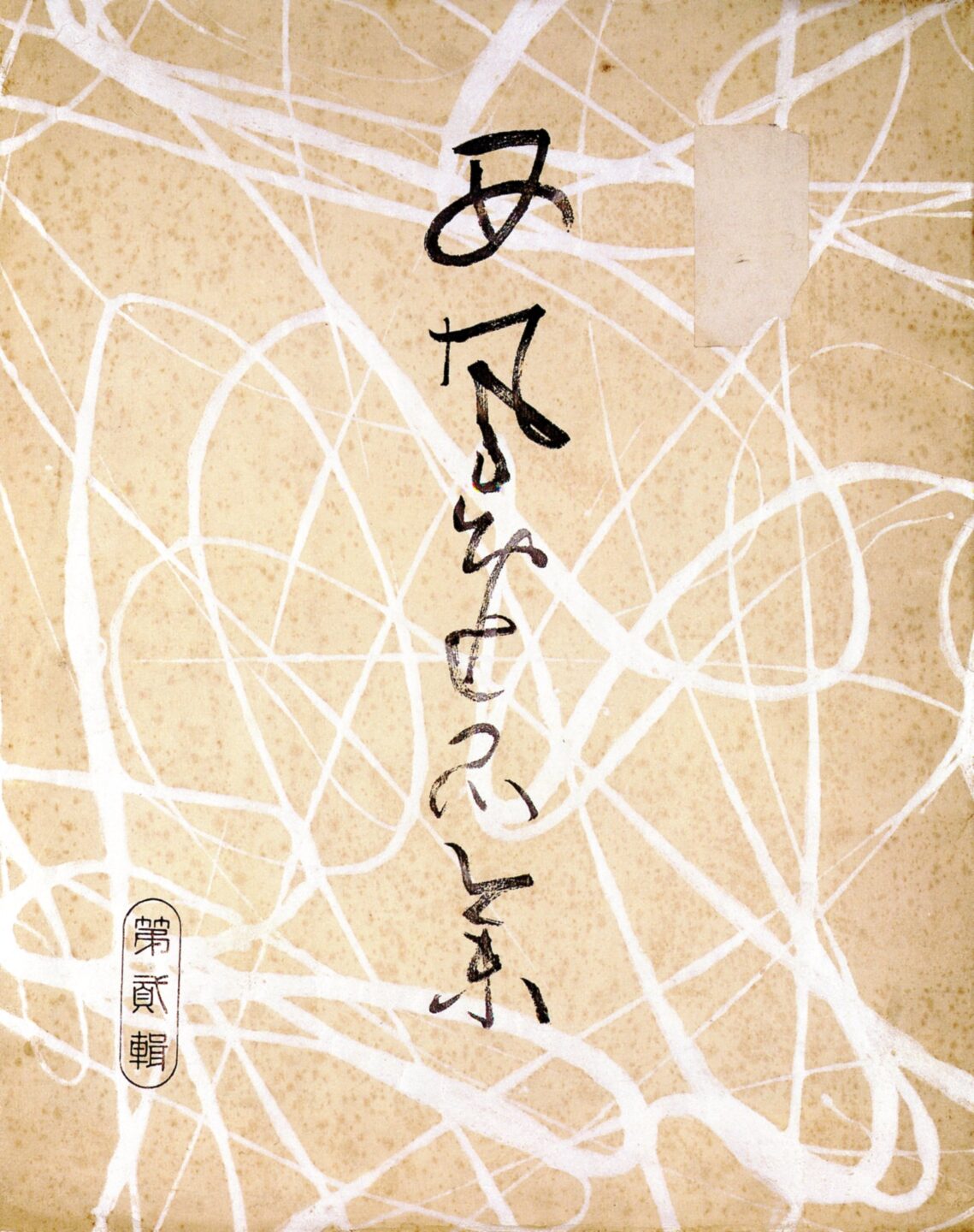
The wrappers, thick expensive papers folded to envelope each group of prints, have been sumptuously decorated with dynamic designs that are woodblock-printed in crushed mica. They sparkle in the light.

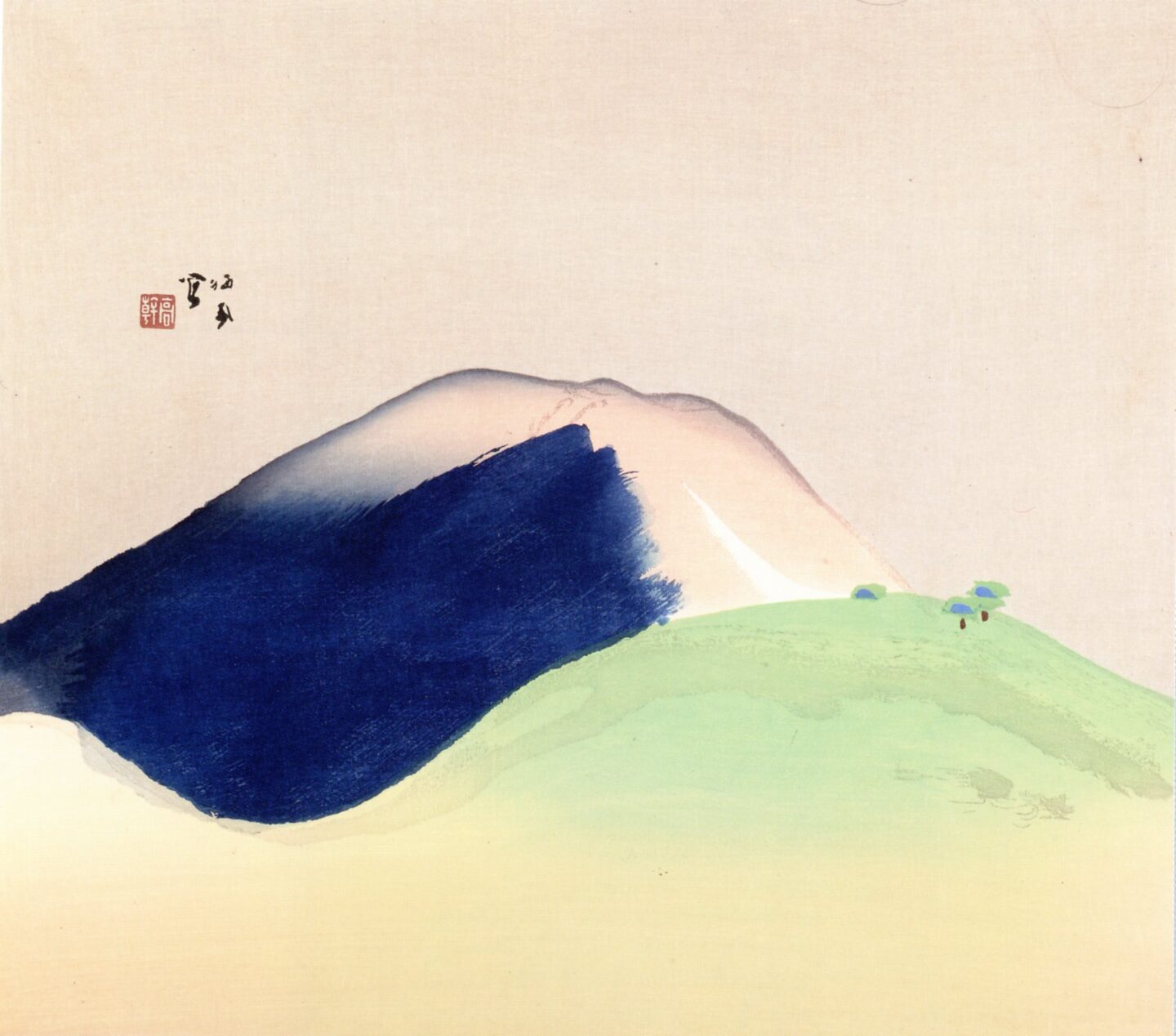
Takeuchi Seiho (1864-1942) was one of the most famous Japanese artists of the early 20th century. He personally oversaw the production of these prints which reproduce his greatest painted works. In traditional Ukiyo-e fashion, the prints were a collaboration of the artist, the block cutter and the printer. But now, in the 20th century, photographic innovations like collotype were employed to create the printing block. It meant that subtle effects, like the appearance of the brushwork seen in the paintings, could be achieved in these prints. This can be seen below in the blue shadow of the mountain of the print entitled Pink Fuji.

Marquand Library owns one of the very few extant complete examples of The Sublime Work of Seiho. It is extremely rare because, over time, many sets have been broken up and sold by art dealers as individual prints. A brief Google search will confirm that these individual prints appear in countless museum collections without mention of their original context. Adding to the rarity of the book is the unfortunate fact that both the unsold copies and the blocks used to print this title were stored at the printer’s studios in Tokyo and were destroyed by the U.S. carpet bombing of the city in 1945. This is one of only 4 complete copies known to still exist.  

Find The Sublime Work of Seiho in our Online Catalog.

  • Nicole Fabricand-Person, Japanese Art Specialist

[1] Jack Hillier, The Art of the Japanese Book. London: Sotheby’s Publications, 1987, p. 993.

Posted in Japanese, Japanese, Rare monograph | Tagged , , , , | Comments Off on THE SUBLIME WORK OF TAKEUCHI SEIHO (1864-1942)

Johanna van Gogh-Bonger (1862-1925): The Unseen Champion of Vincent van Gogh

Illustrate blog entry
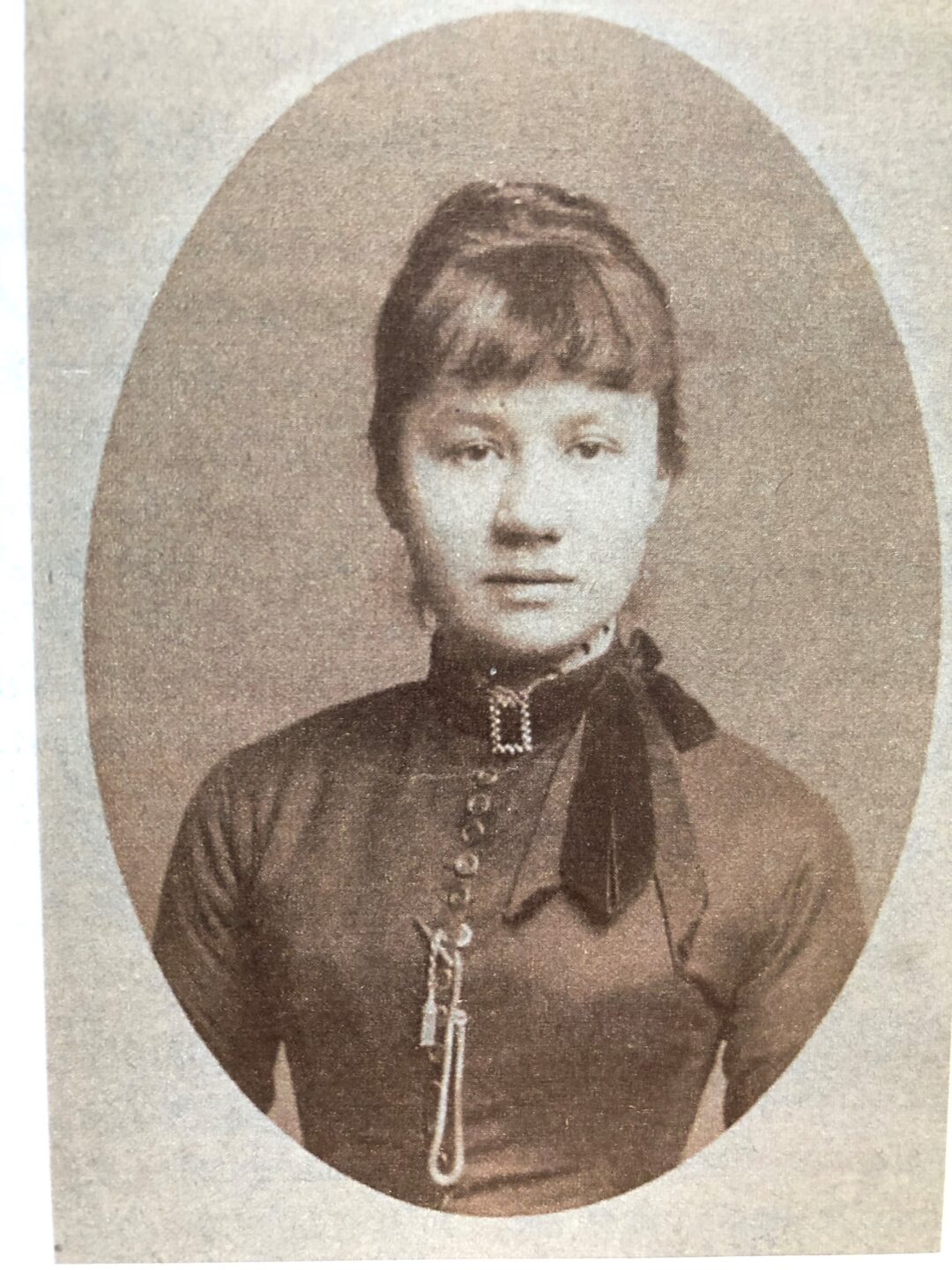
Photograph of Johanna van Gogh-Bonger, ca. 1884. F.W. Deutmann, Zwolle, Van Gogh Museum, Amsterdam (Vincent van Gogh Foundation)

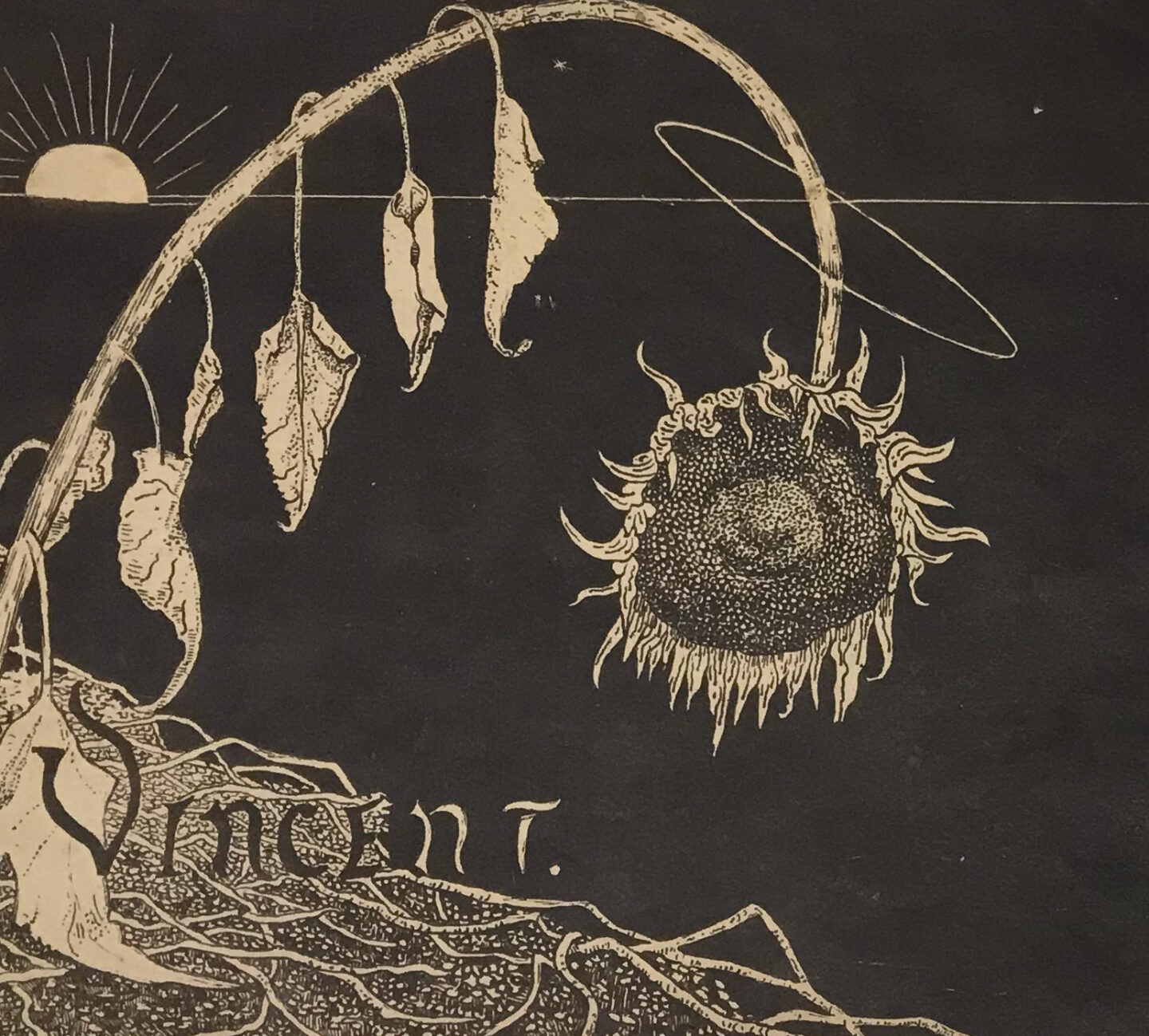
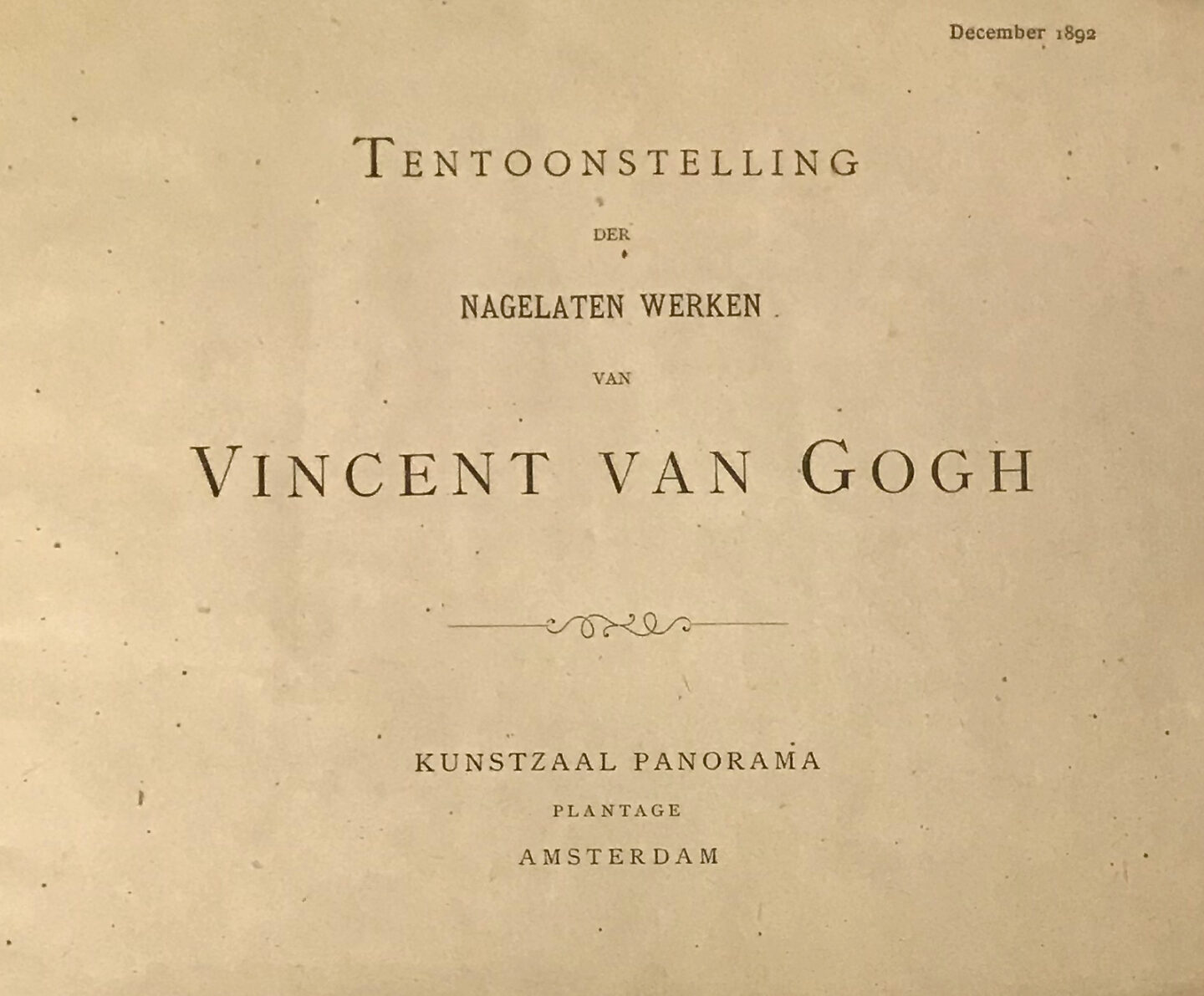
In January of this year, Marquand Library acquired a catalogue of one of the earliest exhibitions of art by Vincent van Gogh following his death in July 1890. This slim publication listed the 107 works on display in 1892 at the Kunstzaal Panorama, Amsterdam, without titles but with a numbered key showing the dates and locations of the artist’s extraordinary paintings and drawings. R. N. Roland Holst wrote a short introduction, where he warned: “This exhibition is for those few among the people who still believe that what is immediately understood is not always the greatest” (translation from the Dutch original). Roland Holst also created a memorable lithographed cover: against a dark ground pierced by the setting sun on a slender horizon line, a wilted sunflower, its head crowned with a slim halo, bends towards the earth, where the name “Vincent” emerges from the roots, its lettering shifting from dark to light as it moves across the page space. The hagiography of Vincent van Gogh had begun.

Cover of Tentoonstelling der Nagelaten Werken van Vincent van Gogh. Amsterdam (1892). Marquand Library of Art and Archaeology

The key role that Johanna (Jo) van Gogh-Bonger, his sister-in-law, played in championing the art of Vincent van Gogh was largely overlooked until recent decades. Following the rapid decline and death of her husband Theo only six months after the suicide of Vincent, the young widow made the decision to return to her native Holland with her infant son. Shortly after the death of Vincent, Theo had organized a memorial show of his brother’s work in the couple’s Montmartre apartment. Crates of the artist’s paintings accompanied Jo back to Holland, against the advice of some of Theo’s former colleagues, who thought the ‘’difficult” work would be better served (and sold!) by established avant-garde art dealers in Paris. Johanna undertook the guardianship of the artist’s works and status very seriously – immediately reading and preserving the surviving correspondence between the brothers, in which Vincent grappled with descriptions of his torments and of his artistic process. She also pursued contacts with artists, critics, and intellectuals associated with the Dutch artistic journal De nieuwe gids (The New Guide) and beyond to better understand the artistic milieu and nascent social awareness from which Vincent’s singular genius emerged. From Bussum, where she resettled and ran a guesthouse, she worked initially with the artists Jan Veth and Roland Holst to organize several Van Gogh exhibitions, including this one and other venues in 1892, and initiated several important European exhibitions in the following decades. Beginning in 1916, she spent almost three years in the United States trying to promote appreciation for his work in America – a challenging project at that time. She continued her careful curation of the artist’s works right up until her death in 1925.

Though her initial efforts to nurture the reception of Van Gogh were met with condescension by some of the male artists and critics she encountered – in addition to being female, she was trained neither as an art critic nor as business dealer – she became a powerful and astute guardian of and advocate for the artworks. Her example inspired her descendants to view the works remaining in family hands as national rather than personal treasures. The works owned by the Vincent van Gogh Foundation are now preserved for public display in the Van Gogh Museum, originally opened in 1973. Russell Shorto’s recent article, “The Woman Who Made van Gogh” (New York Times, April 18, 2021) revealed the gradual uncovering of the extent of Johanna van Gogh’s role in the establishment of the artistic legacy of Vincent van Gogh. In 2009, scholars who were working on the multi-volume publication of the Van Gogh letters were finally granted access to Jo’s diaries, which the family had kept private since her death. More recently, some of her own reflections on her remarkable life can now be read in an English translation of the diaries, accessible online: https://www.bongerdiaries.org

Nicola Shilliam, Western Art History Bibliographer

Posted in Rare monograph | Comments Off on Johanna van Gogh-Bonger (1862-1925): The Unseen Champion of Vincent van Gogh

An Unusual “Tōkaidō Road Acquisition”

Adventure was promised to those who traveled the three-hundred-mile-long Tōkaidō Road, which linked Japan’s modern capital, Edo (present-day Tokyo), with the ancient imperial capital at Kyoto from the seventeenth though early twentieth century. For more than three centuries, illustrated books and woodblock prints created and fostered a perception that the Tōkaidō was more than a route along the country’s eastern seacoast—it was a destination in and of itself.”

The above quote is the introduction to my 2011 article in The Princeton University Library Chronicle, which offered an in-depth exploration of works related to Japan’s legendary Tōkaidō Road in Princeton University collections (Marquand Library, East Asian Library, Special Collections (Graphic Arts and Cotsen) and the Princeton University Art Museum). Our shared acquisitions include beautifully designed woodblock-printed books, prints, illustrated maps, handscrolls, and even toys and games related to this culturally significant landmark.

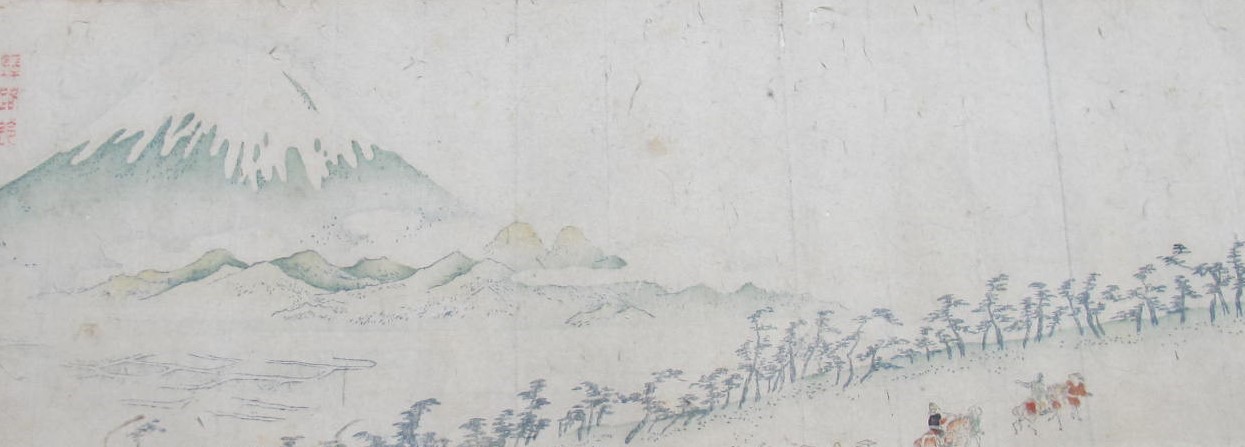
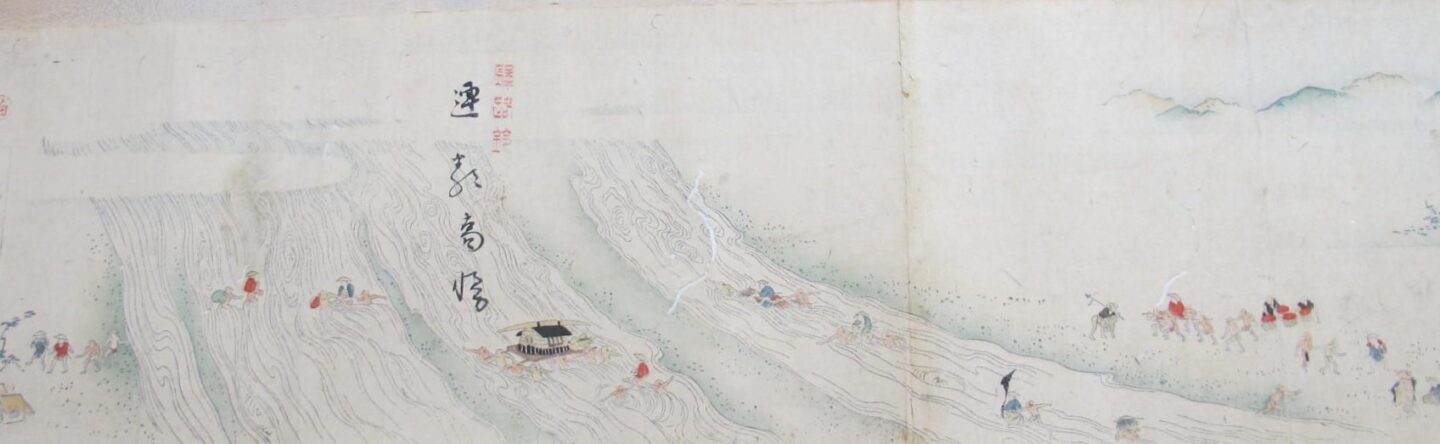
Marquand Library has now acquired an exciting new addition to this important group of works: a Tōkaidō bunken ezu [“proportional map of the Tōkaidō”]. It is a miniature (6.5” high) illustrated woodblock-printed handscroll that was created to offer potential travelers (or armchair travelers) a bird’s-eye-view of the road and its fifty-three iconic post stations. “Tōkaidō proportional maps” were a genre of map/guide developed in the 17th century that purported to be drawn to a 1 to 12,000 scale. The earliest known example was made in 1690 by mapmaker, Ichikochi Dōin and illustrated by the legendary Japanese woodblock print artist, Hishikawa Moronobu (1618-94).

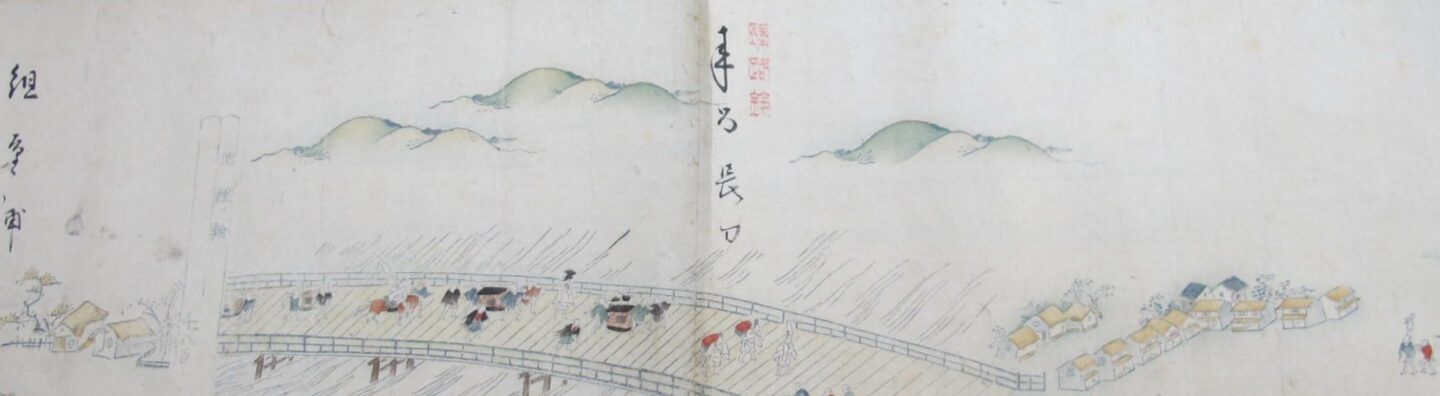
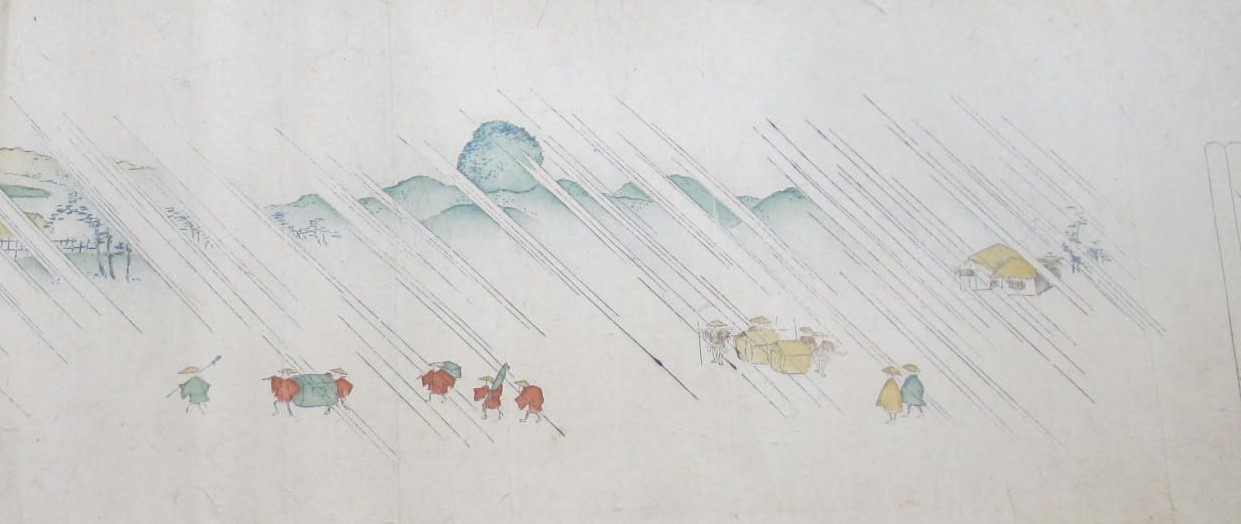
The anonymous artist of the Marquand scroll, in keeping with the ongoing tradition of creating these measured maps of the Tōkaidō, quotes Moronobu’s classic images while also offering new interpretations of iconic sites. As seen above, elements of Sudden Shower at Shonō from Hiroshige’s famous set of 19th-century woodblock prints, Fifty-three Stations of the Tōkaidō (1830-32) is also referenced, dating this handscroll to between 1830 and the early 20th century when the Tōkaidō Road fell out of use and was largely replaced by railroad tracks. This is when the last of the “Tōkaidō proportional maps” were published. The scroll’s pastel pigments, however, further suggest a 20th century date. It is probably roughly contemporary with Marquand’s beautiful set of eight Tōkaidō scrolls that were woodblock printed over collotypes of 1921 paintings by artists Ōtani Sonyū and Iguchi Kashū and published in 1922.[1]

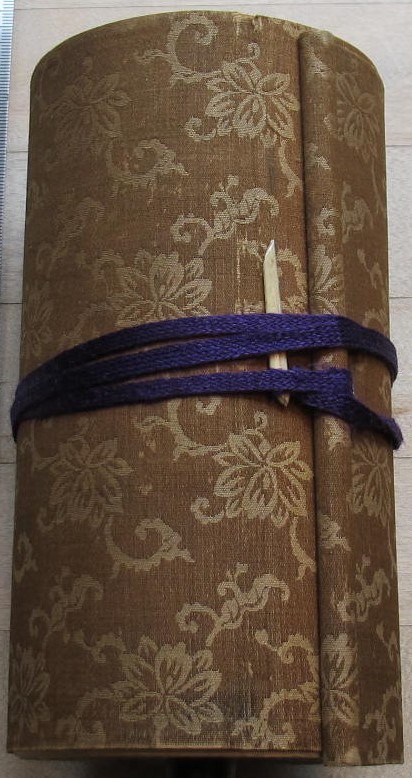
Despite its diminutive size, the handscroll’s length is staggering at a little over 46 feet long. This is the result of the transformation from its original format. Like most “Tōkaidō proportional maps,” this scroll was first created as a set of five miniature orihon [accordion books] that could be more easily carried on a long journey. We can still see faint traces of the folds and the points at which the continuous images of the five folding books were, at some point in time, joined and mounted to create this chunky handscroll.    

It is usually assumed that Tōkaidō proportional maps, even though diminutive, were not published for the actual traveler (who would wish to keep items carried to a minimum), but were produced for and purchased by armchair travelers, wishing to vicariously experience the excitement of traveling the great road. Our map, however, features some unusual elements that might suggest otherwise.

At every four to five rest stops depicted on the scroll, the character “haku” meaning “overnight stay” or “lodging” has been stamped in red. This same encircled character is used in Tōkaidō-themed suguroku games to indicate that you are “staying the night” and therefore losing a turn.

Is it possible that a traveler may indeed have carried this in either miniature book or scroll form and stamped it or had it stamped along the way–in much the same way that pilgrims received stamps from religious sites visited? Did this also become a souvenir of a trip taken?

As can be seen in image above, another curious addition to the original woodblock-printed design are red seals reading “ekiro no suzu,which, like the haku seals, have been stamped on the paper sporadically at different post stations throughout the length of the scroll. The phrase has been translated as both “post-station bell” or “pack-horse bell,” and probably, through historical allusion, indicates the ability to get fresh horses at a particular site. Prior to the 12th century, station bells or post-station bells cast from red copper were issued by the government to officials or messengers traveling on official business. They served as proof of identity and gave the traveler the ability to procure fresh horses at the various rest stops. Engraved lines on the bell indicated the official’s status and determined the number of horses available to them. The phrase was then appropriated in the early 19th century by artists like Katsushika Hokusai as an alternate title to Fifty-three Stations of the Tōkaidō Road for sets of woodblock prints and woodblock-printed books. The appearance of this seal on the Marquand scroll may therefore have indicated a place to get a fresh horse while referencing the poetic titles of these earlier works. Like the haku seal, however, the repeated use of “post-station bell” seal might also suggest that this was a “Tōkaidō proportional map” that was carried and stamped on a journey along the Road. This though, is a puzzle for future researchers to solve!

  • Nicole Fabricand-Person, Japanese Art Specialist
[1] https://catalog.princeton.edu/catalog/6131707

Posted in Japanese, Japanese, Rare monograph | Tagged , , , , , , , | Comments Off on An Unusual “Tōkaidō Road Acquisition”

European Architecture from a Japanese Point of View

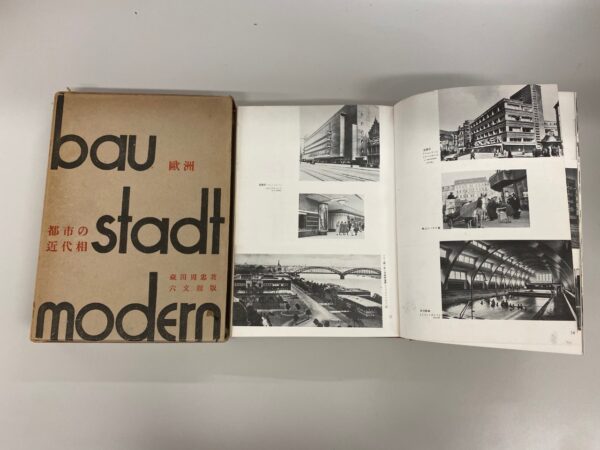
歐州 都市 の 近代相 / 蔵田 周忠 著

Ōshū toshi no kindaisō / Neues bauen in Deutschland was ich gesehen habe von K. Kurata    (Aspects of Modern Architecture in European Cities / New Architecture Seen by K. Kurata in Germany). Tokyo: Rokubunkan, 1932.

A fascinating study of European architecture, written by the Japanese architect and furniture designer Kurata Chikatada (1895-1966) after studying in Germany with the renowned founder of the Bauhaus, Walter Gropius. Kurata, who wrote extensively about architecture and art, was a member of the Secessionist Architectural Group (Bunriha Kenchiku Kai), the group responsible for Bunriha, the first architectural movement in Japan. Published in 1932, this book focuses on new architecture in Berlin, contemporary German furniture, an exhibition of works by Walter Gropius, and the 1931 German architecture exposition. The cover is especially interesting in that German words, “Construction, City, Modern,” are not a translation of the book’s title (appearing here in Japanese) but, enhanced by the avant-garde font, becomes more of a punchy advertisement for its savvy Japanese audience.
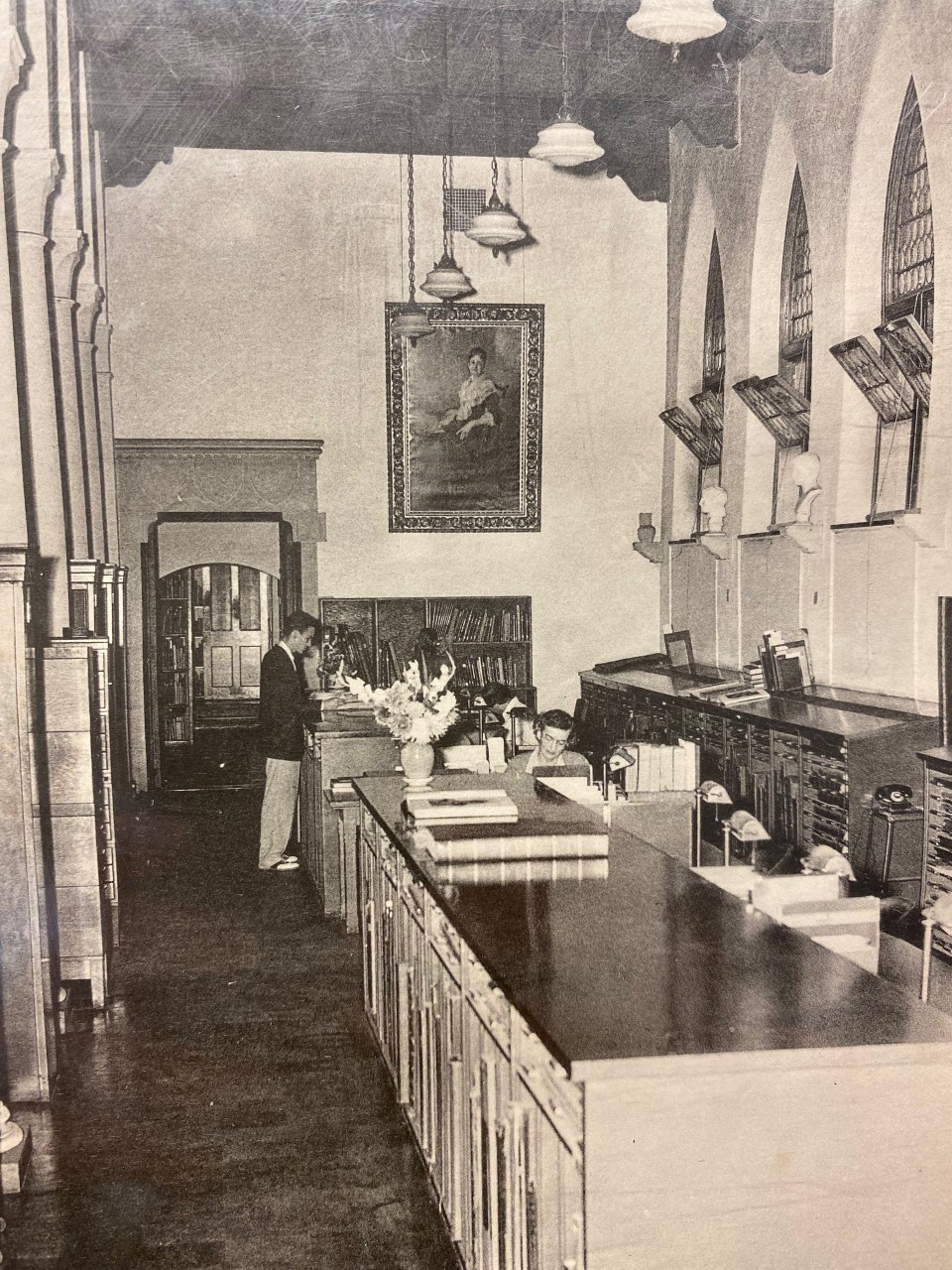
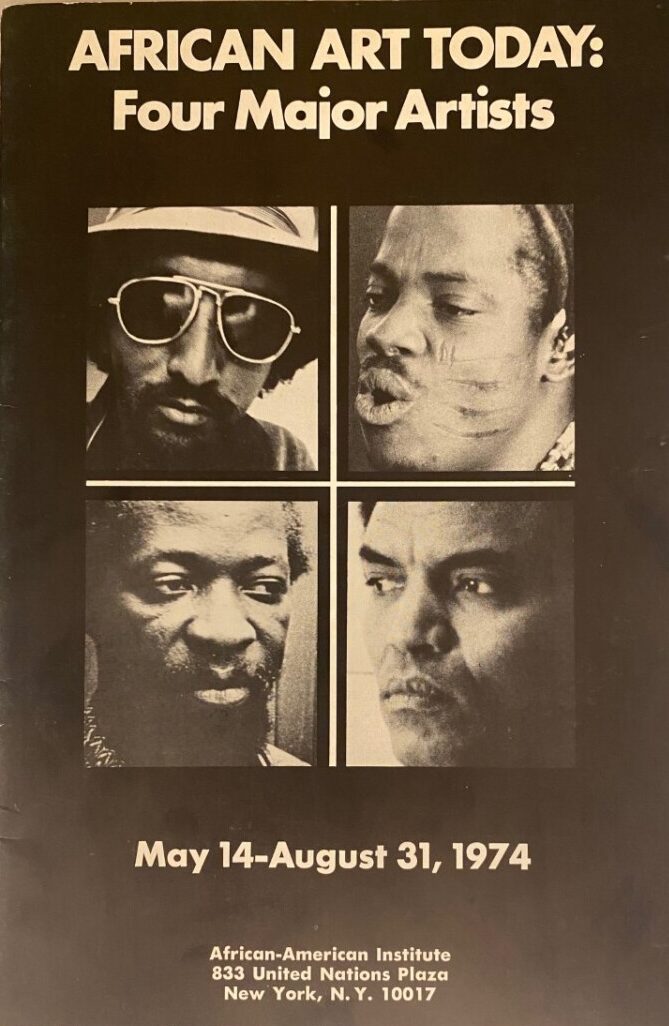
Find in our Online Catalog

Holly Hatheway
Head, Marquand Library of Art & Archaeology

Posted in Rare monograph | Tagged , , | Comments Off on European Architecture from a Japanese Point of View

Shanghai scenes

Wu, Youru 吳友如. Shenjiang sheng jing tu 申江勝景圖 : [2 juan]. Shanghai: Dian shi zhai, Guangxu 光緒10 [1884] 4 v. (double leaves : chiefly ill.) in case ; 25 cm.

NC1230.W8 View in Catalog

SCENIC VIEWS IN AND AROUND SHANGHAI

SCENIC VIEWS IN AND AROUND SHANGHAI
 Dianshizhai chubanshe, 光緒十年 [1884].
Wu, Youru 吳友如 . Shenjiang sheng jing tu 申江勝景圖 , 二卷 . Shanghai: Dianshizhai chubanshe, 光緒十年 (1884).

Opened in 1879 by former English shipping agent Ernest Major (1841-1908), the Dianshizhai Lithographic Printing House 點石齋出版社 in Shanghai introduced lithographic printing to China with presses imported from England. The publications of Dianshizhai stood out for the fine quality of their fonts, manageable size, and value.

Major had distinguished himself seven years prior to this by founding the first Chinese independent newspaper, Shenbao 申報 (Shanghai Gazette), which took for its primary audience the average Chinese reader. The only news sheet in regular circulation before this was the Peking Gazette, which was devoted to court and government news and written in a classical style virtually unintelligible to the ordinary person. Major’s innovations included keeping the paper low in cost to both readers and advertisers; the use of baihua 白話 , or everyday language; and printing articles that came, in the majority, from Chinese writers, and which were often critical of the government.

Dianshizhai 點石齋 (Dianshizhai Lithographic Printing Office) Volume 1, part 2, pp 59b-60a

Helmed by Master Printer Qiu Zi’ang 邱子昂 , Dianshizhai Lithographic Printing House published a wide range of works, utilizing photographic technologies to reproduce classic texts from woodblock carved editions of the past. These included the comprehensive dictionary of Chinese characters, Kangxi zidian 康熙字典 reprinted in a smaller format; the early 18th century rhyme dictionary of literary allusions and poetic diction Peiwen yunfu 佩文韻府 (Rhyme Treasury of [the Studio for] Admiring Literature); a Chinese-English bilingual edition of Sishu  四書 (The Four Books), which detail the fundamental precepts of Confucianism, in addition to a variety of Western language books, collections of rubbings, and painting manuals.

Continue reading
Posted in Chinese, Rare monograph | Tagged , , , , | Comments Off on Shanghai scenes