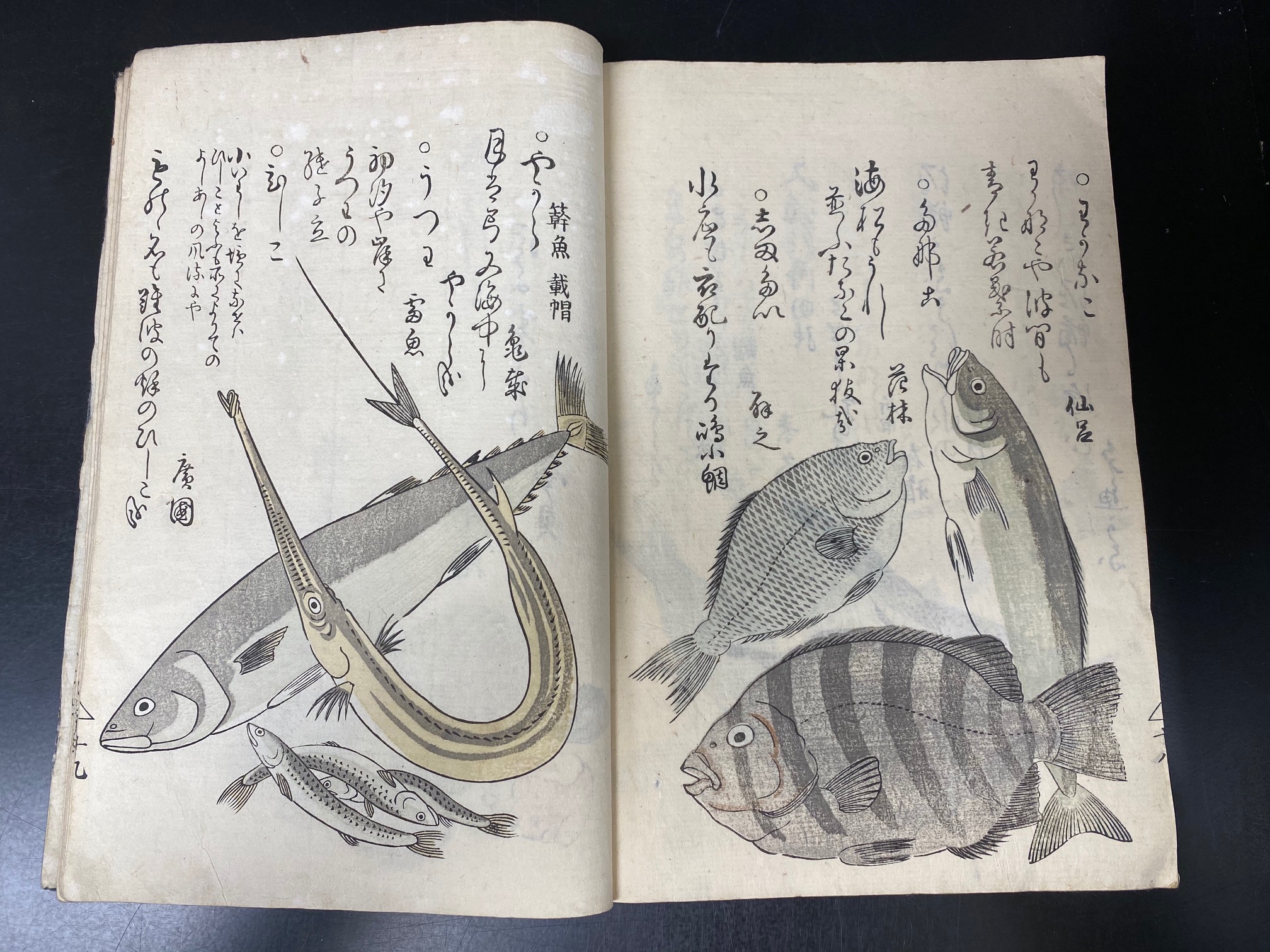
New to the Marquand Library is the extremely rare Bounty from the Sea (Umi no sachi), one of Japan’s earliest color-printed books. The artist, Katsuma Ryūsui1 (1711-1796), though rarely credited in the history of the Japanese woodblock print, was experimenting with using multiple blocks of color for book illustrations years before single-sheet color woodblock prints began to appear in the latter half of the 18th century.
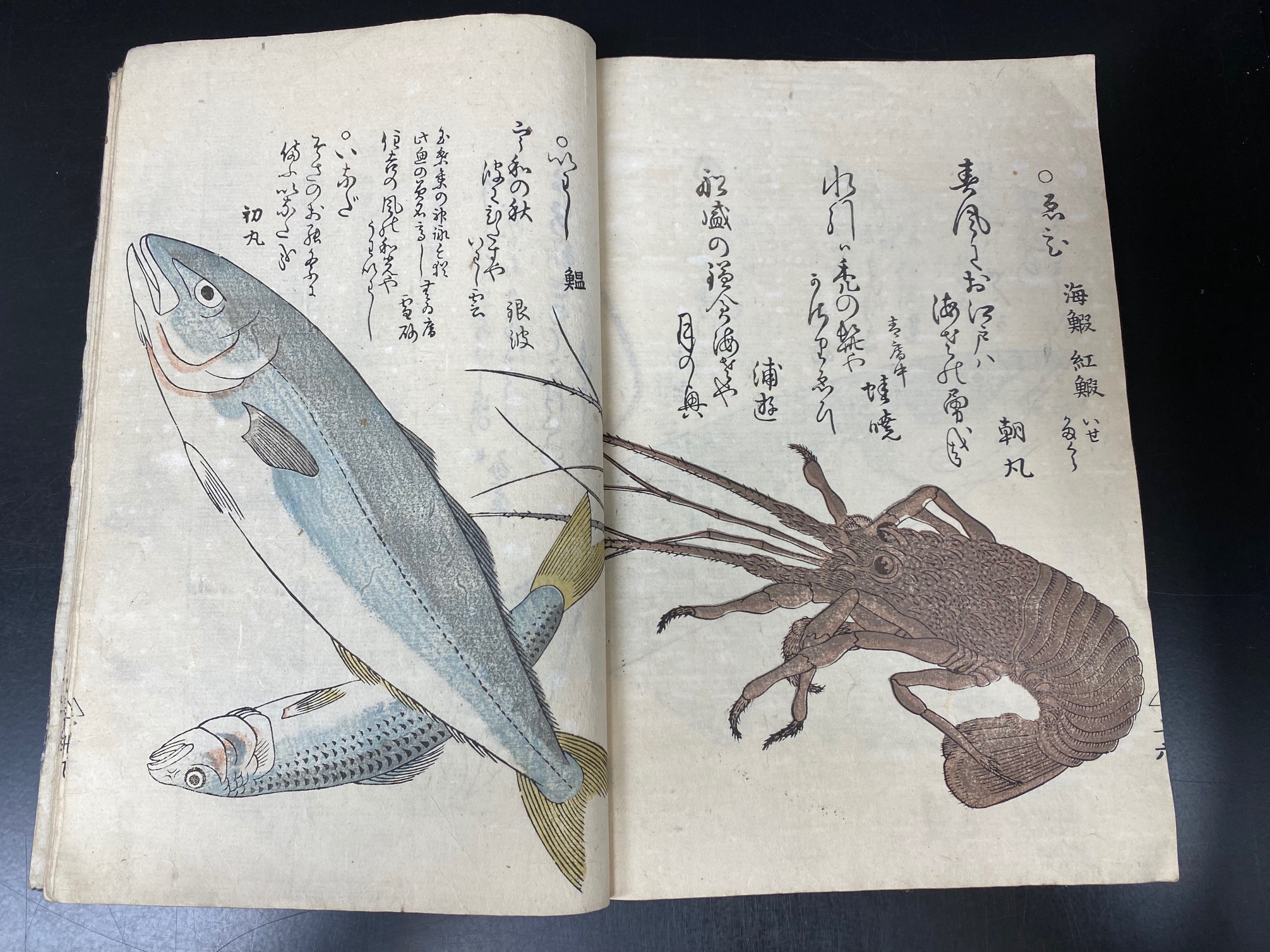
Bounty from the Sea is one of three books Ryūsai produced using this nascent color printing technique. All were expensively published with color that was printed on large leaves of thick luxurious paper. This kind of production suggests that all three were commissioned by elite poetry circles.
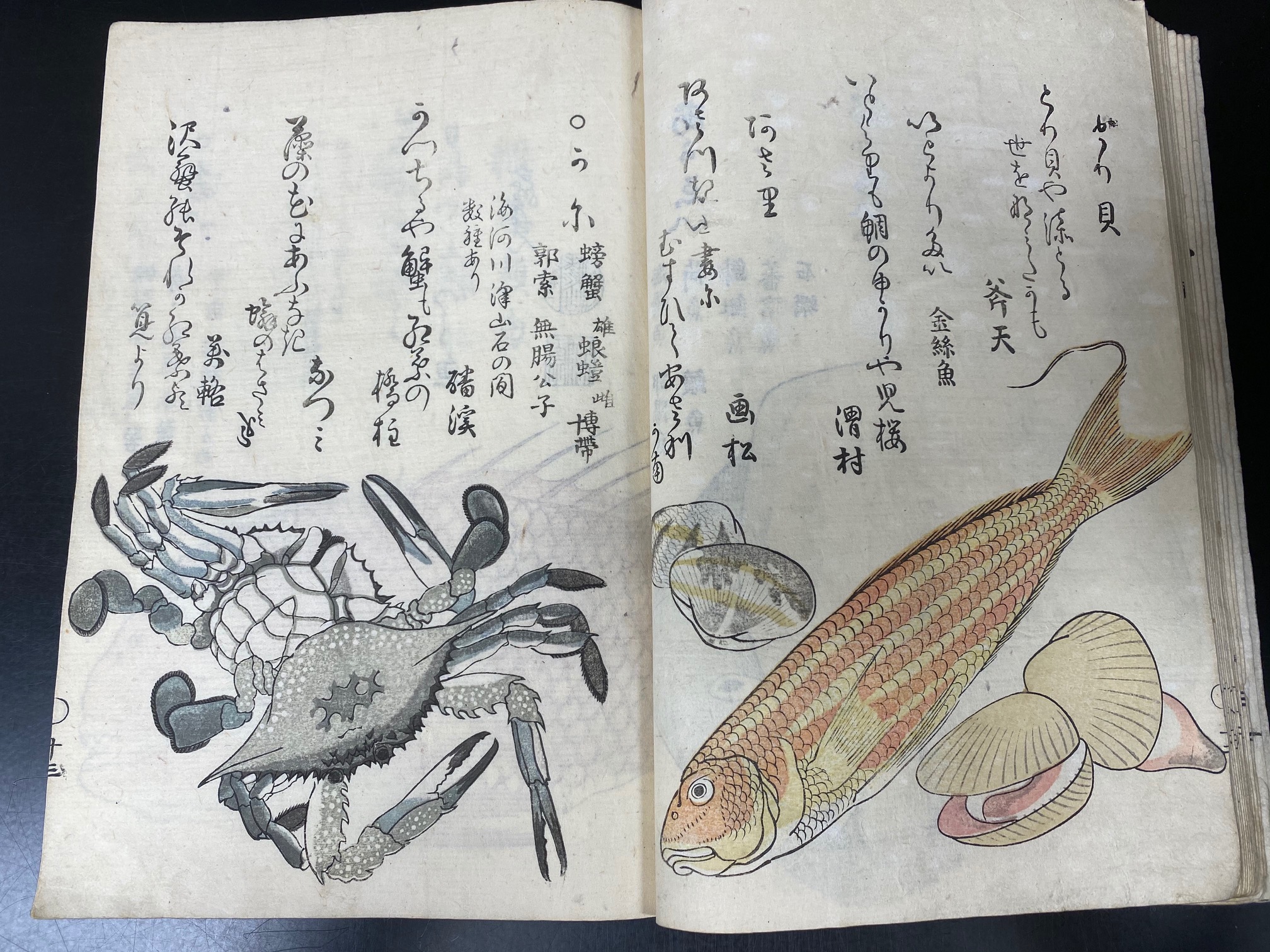
Bounty from the Sea, in two volumes, is a masterpiece that celebrates ‘all that lives beneath the sea’ in beautifully detailed illustrations and haikai poetry. Themes of wildlife and the natural world were becoming popular in Japan in the 18th century as books on scientific studies filtered into the country through trade with the Dutch.
In Bounty from the Sea, the artist Ryūsai adds whimsy to the natural forms, while experimenting with grand compositions that successfully balance a variety of sea creatures with decorative calligraphy across the two large leaves.
The colors that endure are wonderfully subtle—almost silvery in some places—and make the fish appear as if we are seeing them through water.
In an unusual move, the publisher of the book has included the name of the printer, Sekiguchi Jinshirō, in the publishing information at the end of the book. The Japanese book-buying audience of this era clamored for novelty and the inclusion of his name could have been a way of promoting this revolutionary color-printing technique to brand a new and innovative way of making books.
1. Ryūsui has also been transliterated as Ryūsai.
- Nicole Fabricand-Person, Japanese Art Specialist