Marqund Library recently acquired the beautiful Seiho ippinshū [The Sublime Work of Seiho] (1935-36), which has been called “one of the most magnificent printing achievements of the twentieth century.”[1] It is not actually a “book,” but a luxurious set of 31 prints of the work of the artist Takeuchi Seiho in 10 wrappers.
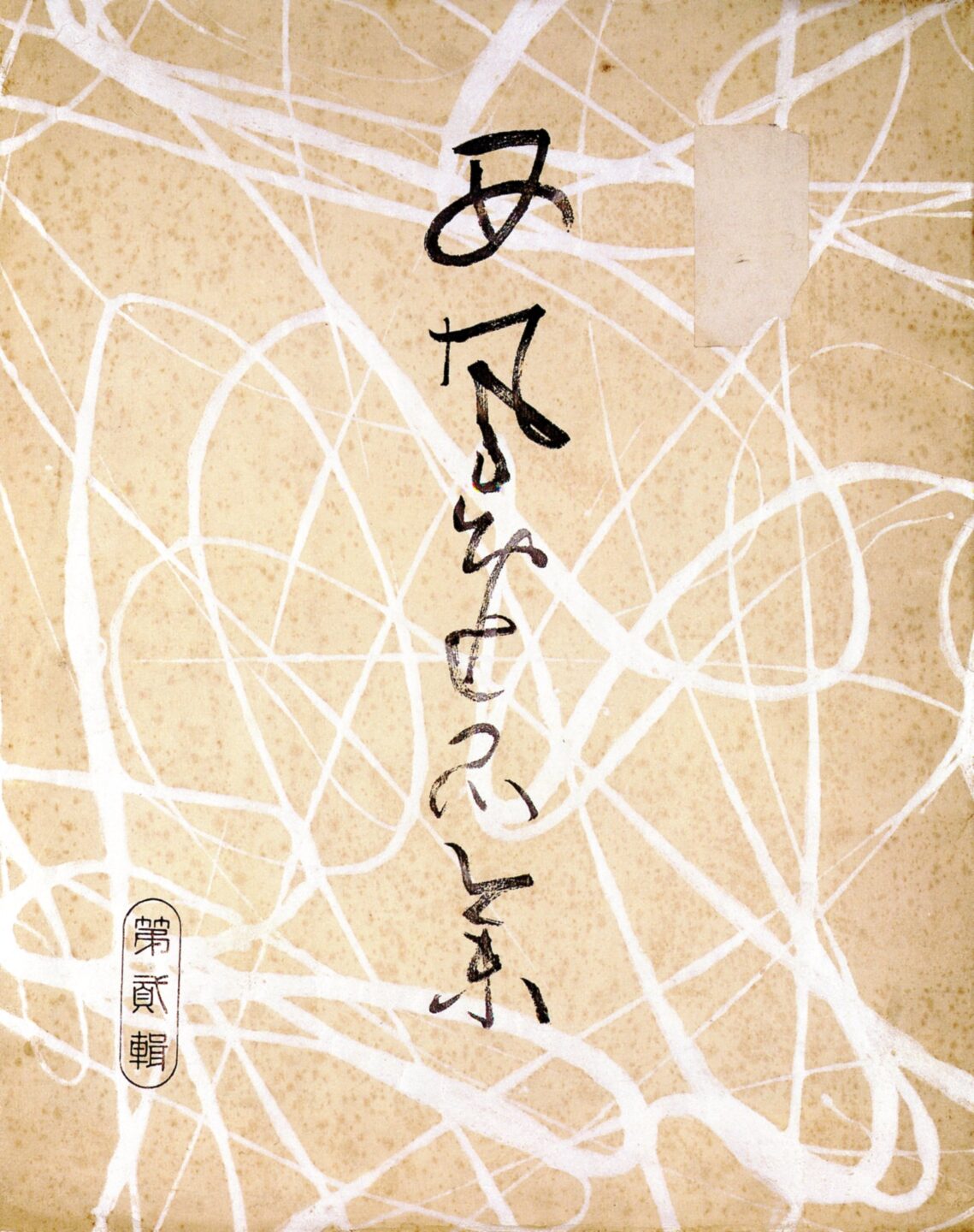
The wrappers, thick expensive papers folded to envelope each group of prints, have been sumptuously decorated with dynamic designs that are woodblock-printed in crushed mica. They sparkle in the light.
Takeuchi Seiho (1864-1942) was one of the most famous Japanese artists of the early 20th century. He personally oversaw the production of these prints which reproduce his greatest painted works. In traditional Ukiyo-e fashion, the prints were a collaboration of the artist, the block cutter and the printer. But now, in the 20th century, photographic innovations like collotype were employed to create the printing block. It meant that subtle effects, like the appearance of the brushwork seen in the paintings, could be achieved in these prints. This can be seen below in the blue shadow of the mountain of the print entitled Pink Fuji.
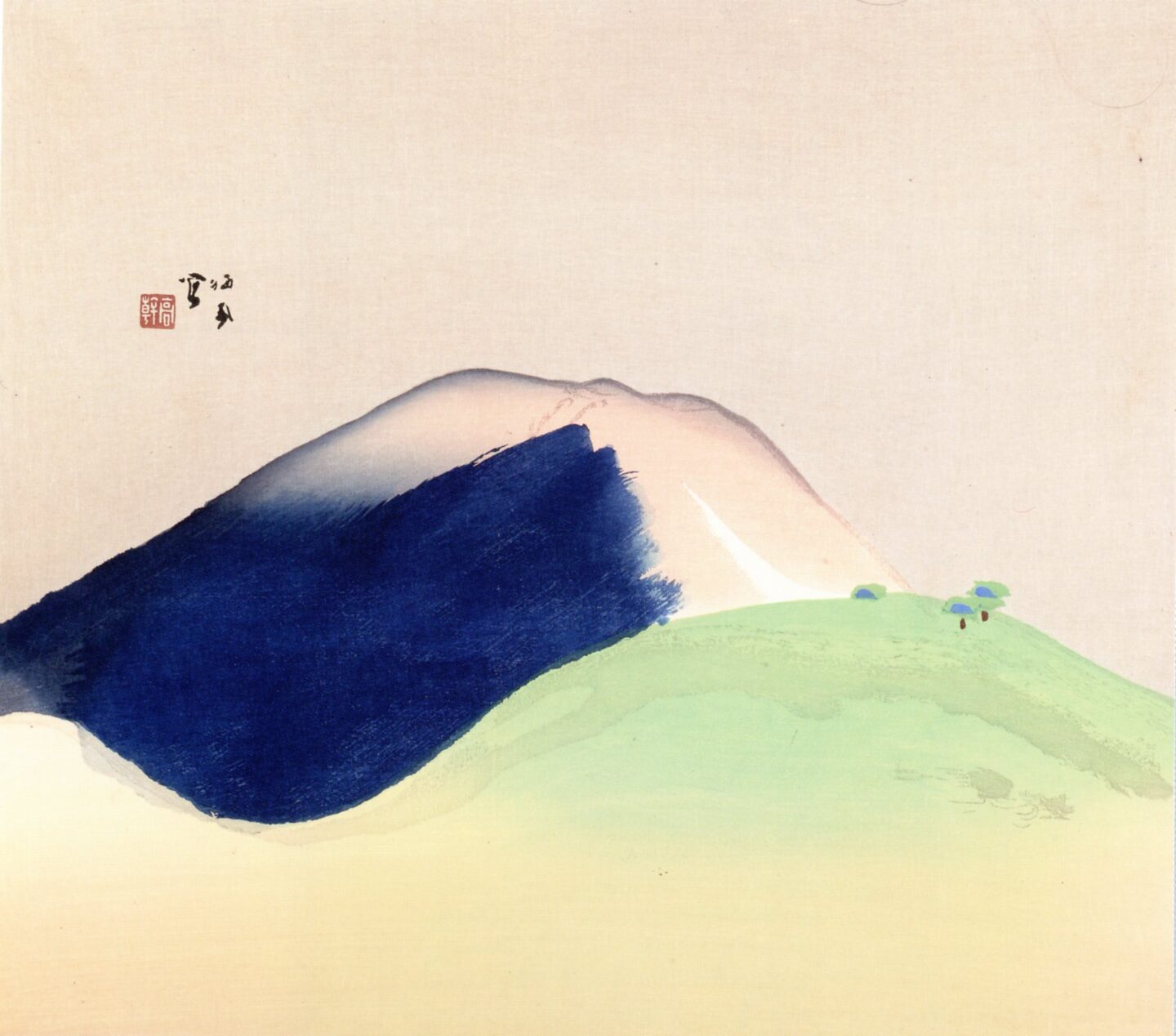
Marquand Library owns one of the very few extant complete examples of The Sublime Work of Seiho. It is extremely rare because, over time, many sets have been broken up and sold by art dealers as individual prints. A brief Google search will confirm that these individual prints appear in countless museum collections without mention of their original context. Adding to the rarity of the book is the unfortunate fact that both the unsold copies and the blocks used to print this title were stored at the printer’s studios in Tokyo and were destroyed by the U.S. carpet bombing of the city in 1945. This is one of only 4 complete copies known to still exist.
Find The Sublime Work of Seiho in our Online Catalog.
- Nicole Fabricand-Person, Japanese Art Specialist
[1] Jack Hillier, The Art of the Japanese Book. London: Sotheby’s Publications, 1987, p. 993.