Marquand Library is fortunate to be the only institution to own a complete 7-issue run of the Japanese serial Seikigun [世紀群], published and hand-distributed in 1949 and 1950 by the artist/writer organization, The Century Association [Seiki no Kai]. The eclectically produced pamphlets were created as experiments in ‘synthetic art’ (sōgō geijutsu), which was defined by the group as the merging of visual art and literature to create a new form of expression.
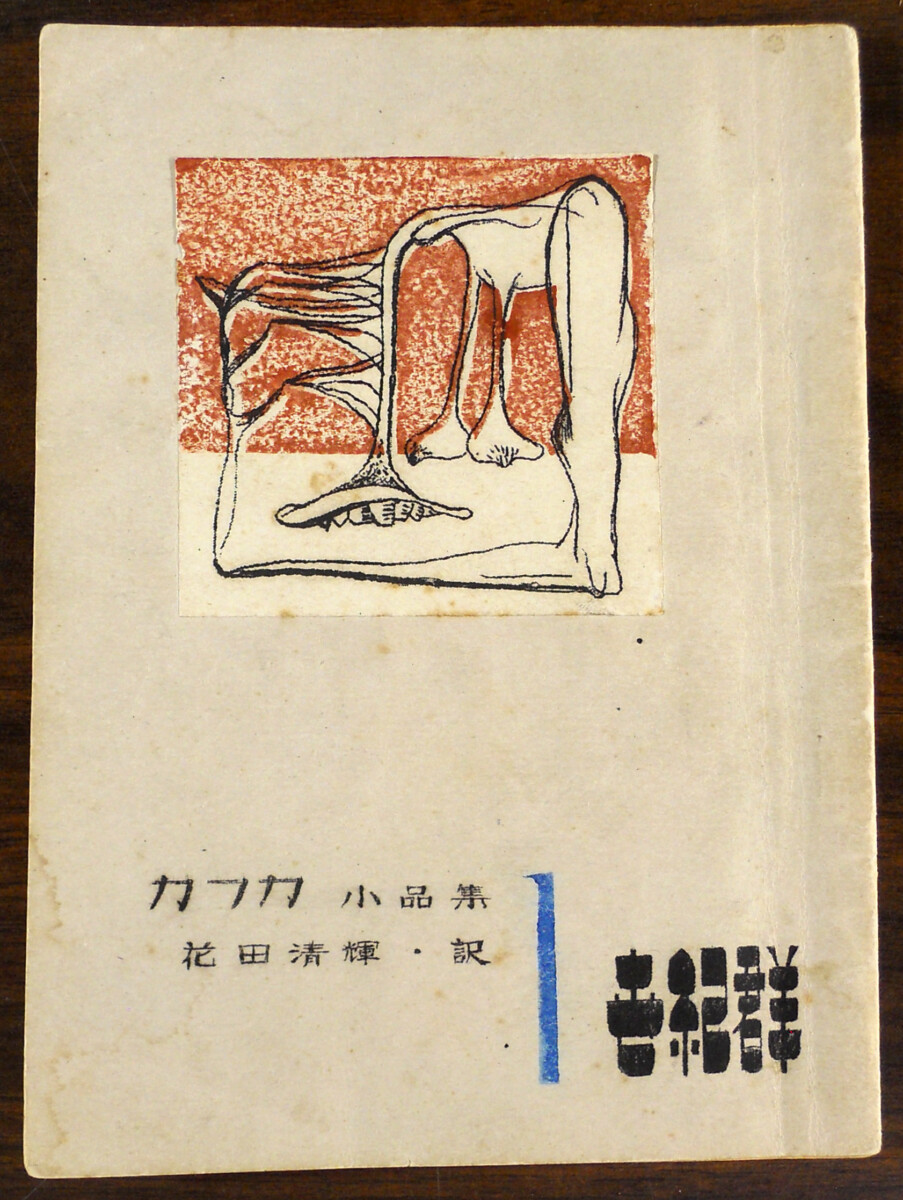
Cover of Volume 1
It was the hope of The Century Association that the subject matter of each issue would inspire artistic and political discussion about Japan’s recent participation in World War II. To that end, volumes 2-7 are stamped “Research Material” (kenkyū shiryō) on the back covers. Today, these small printed volumes not only capture the artistic mood of the brief period between the end of the world war in 1945 and the beginning of the Korean Conflict in 1950, but preserve for us the unknown works of important avant-garde artists and writers in Japan.
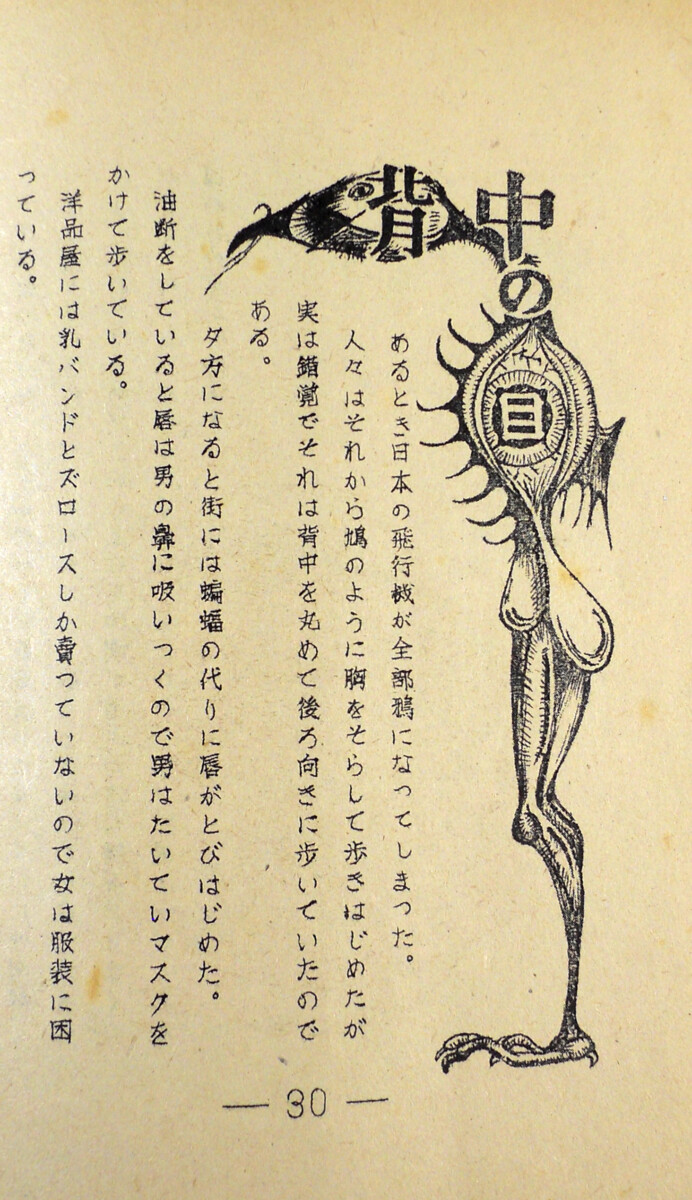
Founded in 1948, The Century Association was largely made up of the younger members of an avant-garde collective of writers and artists known as The Night Group [Yoru no kai ]. The new group was led by the famous poet, novelist and playwright, Kōbō Abe (1924-1993), who is probably best known in the West for his 1962 novel, Woman in the Dunes (Suna no onna). Teshighara Hiroshi (1927-2001), the avant-garde filmmaker who received an Academy Award nomination for his film version of the book in 1964, was a later participant in the group. Some of its other well-known members were: the poet, Sekine Hiroshi; artists, Okamoto Tarō and Katsuragawa Hiroshi; the art critic, Segi Shinichi; the artist/photographer, Kitadai Shōzō; and the literary critic and journalist, Hanada Kiyoteru.
Illustration from Volume 6
Each of the seven issues of Seikigun is unique in both design and content. All are small in scale (around 18 cm). They are not printed, but stenciled (mimeographed) in black ink with some illustrations done in colored ink (mostly red). What appear to be a few woodblock prints have also been pasted onto the cover of Volume 1 and onto pages of subsequent issues. In keeping with The Century Association’s goal to democratize the creation of art, each issue was a collaborative effort with participants experimenting in areas outside their fields of specialization. So, while the texts were mostly written by the professional writers of the group, the illustrations were designed and hand-stenciled by both the artists and the writers (with artist assistance). The influence of Western Surrealism and Existentialism is clearly evident throughout.
Remilitarization in Japan after the outbreak of the Korean War convinced The Century Association that the essence of the avant-garde movement should be relinquished to the masses, and by 1951 the group had disbanded. It our privilege at Marquand Library to be able to preserve the collaborative work of these writers and artists who, for just a brief moment in time, helped to define the modern art movement in Japan.
Individual Volume Highlights
The first volume of Seikigun, Essays/Small Works by Kafka [ Kafuka shōhinshū] features literary critic Hanada Kiyoteru’s translation of two short pieces by Franz Kafka. One of the founders of The Night Group, Hanada was widely considered the leader of the avant-garde movement in Japan after World War II and may have coined the phrase “total art.” Teshigahara Hiroshi is credited with conceiving the overall design of the issue and it contains two illustrations by Katsuragawa Hiroshi (see below). These, it is explained, are not illustrations of the text, but work that grew out of a group discussion about the publication.
Frontispiece Portrait of Franz Kafka
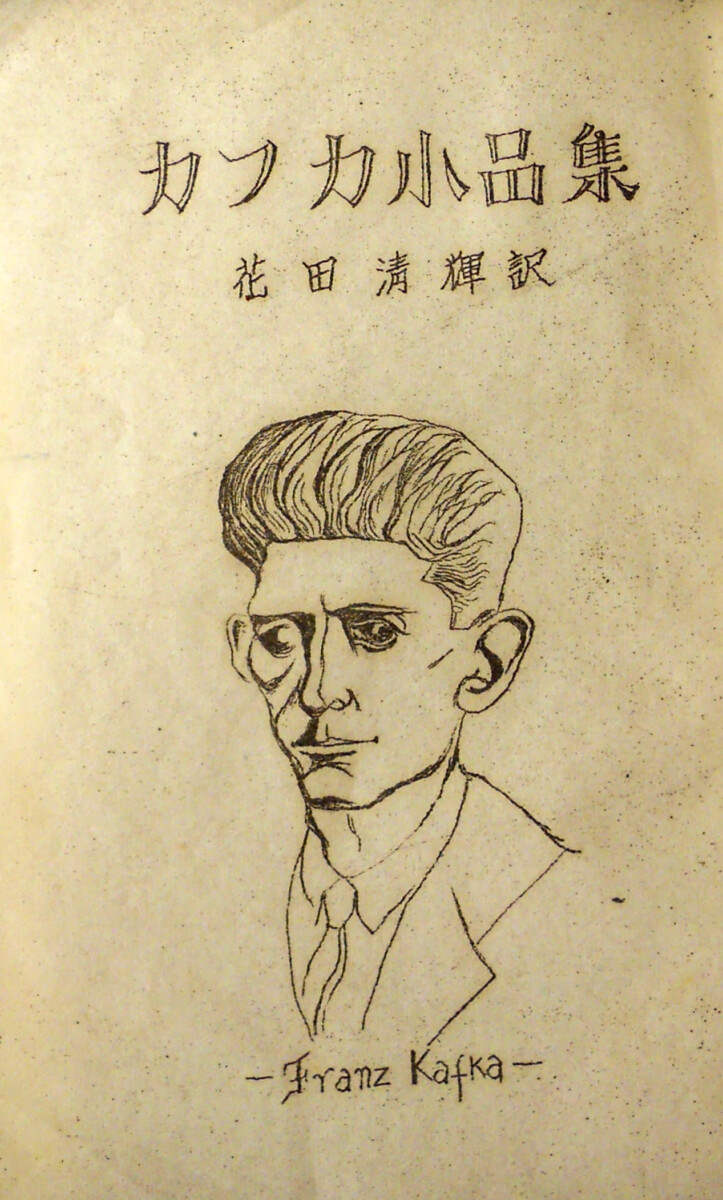
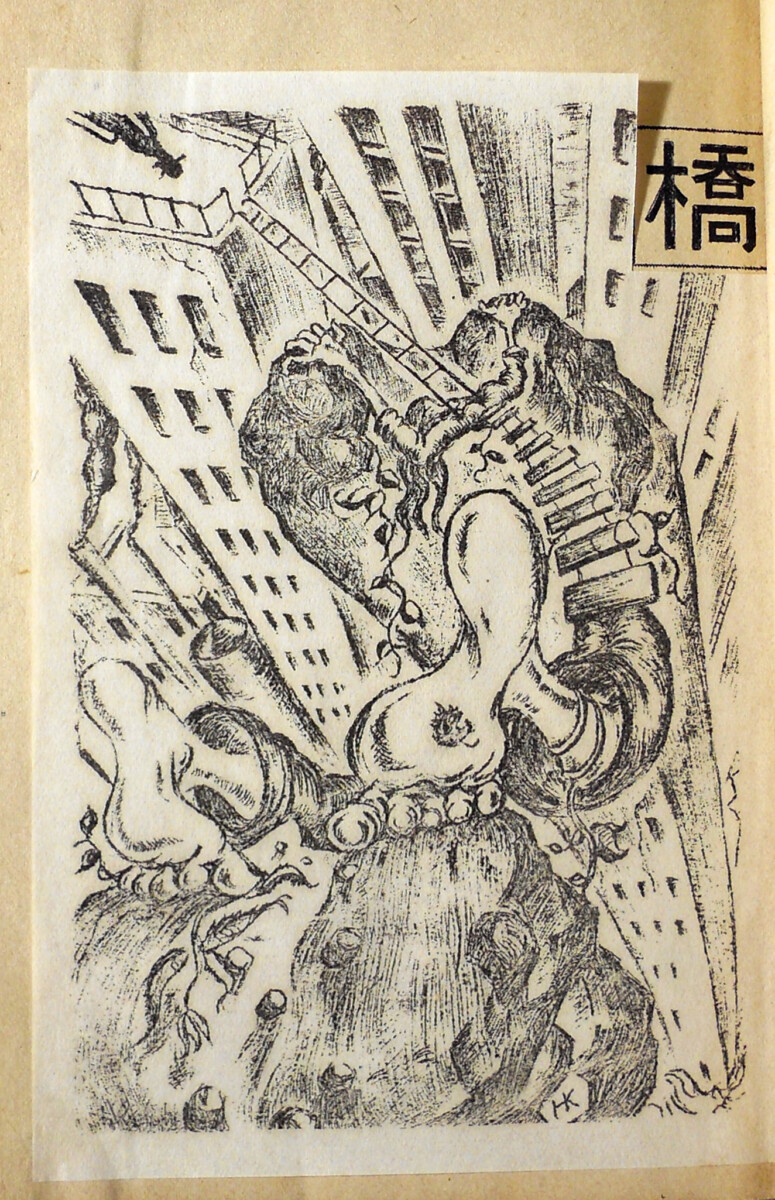
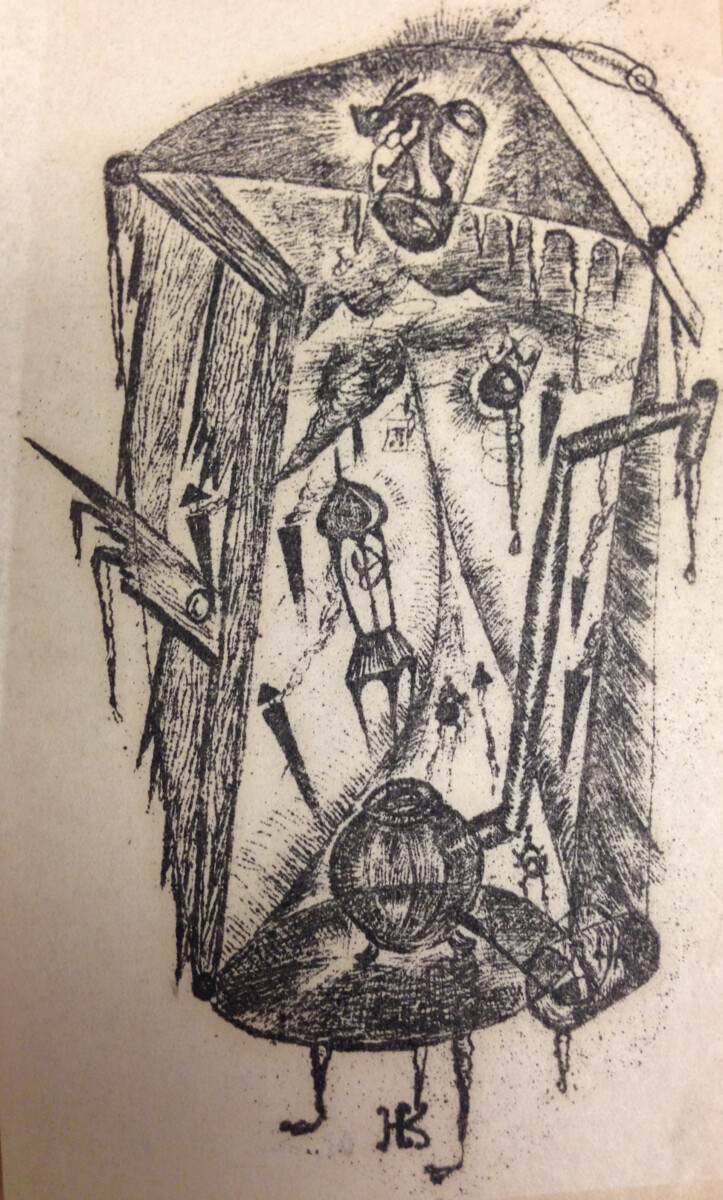
Volume 1: Illustrations by Katsuragawa Hiroshi
Tucked inside this first volume is a small 3-page insert written (and probably illustrated) by Kōbō Abe. It outlines the goals of this ‘experiment in collaboration’ to create a new genre of diverse artistic expression.
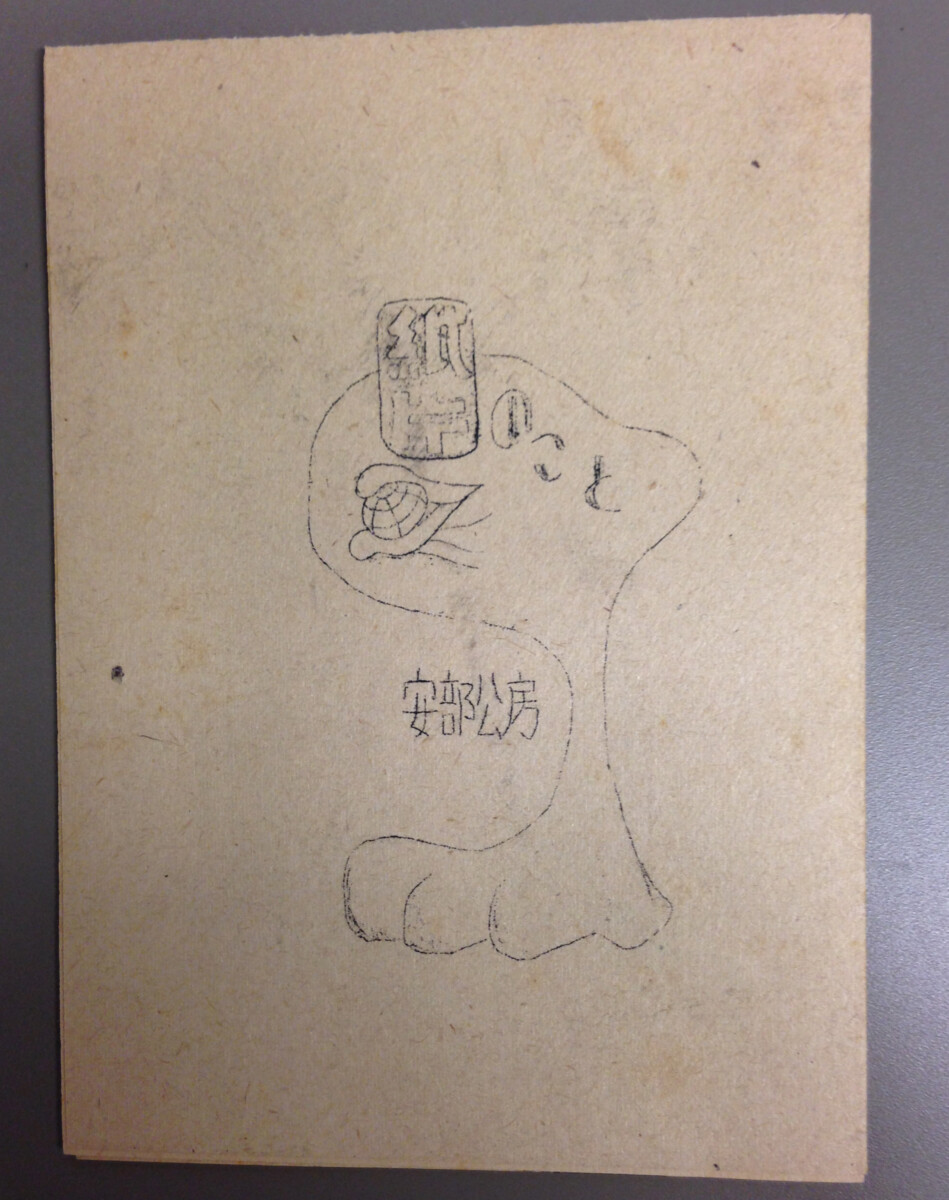
Volume 1: Insert Cover by Kōbō Abe
Volume 2 of Seikigun begins with an essay by Suzuki Shutarō entitled Slip of Paper [Shihen]. There are also two written vignettes and a woodblock print by Ono Seiji.
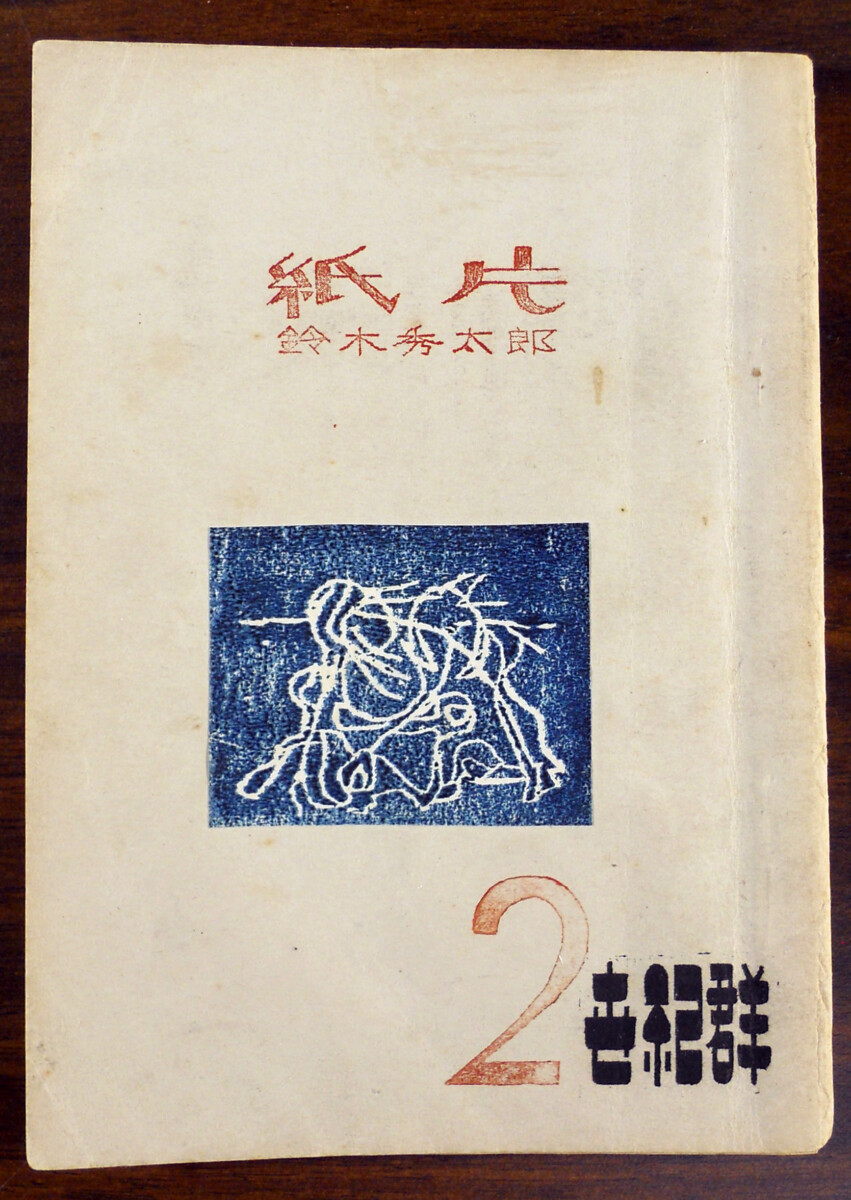
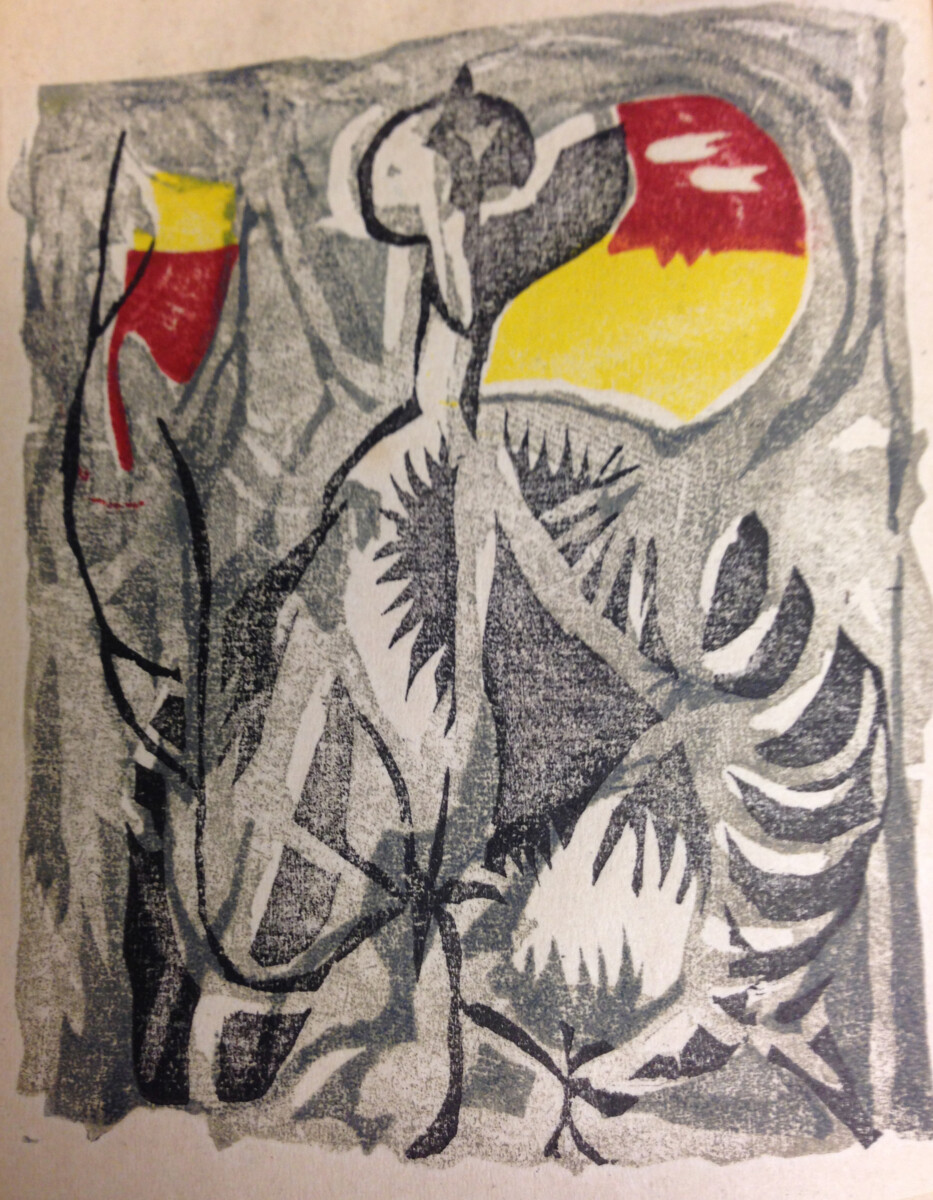
Volume 2 Cover and Illustration by Ono Seiji
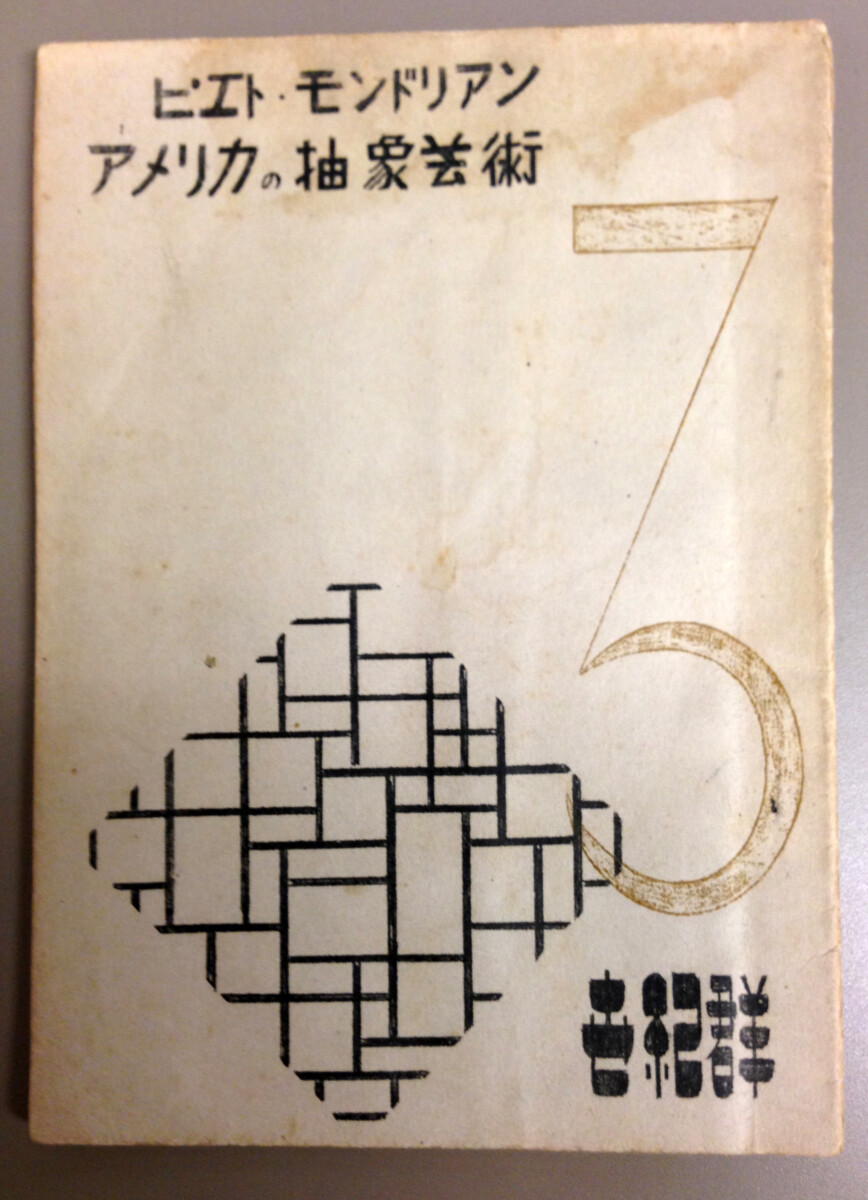
Volume 3 begins with a frontispiece portrait of Piet Mondrian and contains an essay by Segi Shin’ichi entitled, New Realism: American Abstract Art [Amerika no chusho geijutsu: atarashi riarizumu].
Volume 3: Cover
Volume 4 contains Kōbō Abe’s essay, The Magic Chalk [Mahō no choku], about a starving artist who find a piece of “magic” red chalk in his apartment that makes the things he draws on the walls become real. A color woodblock print by Teshigahara Hiroshi also appears in this issue.
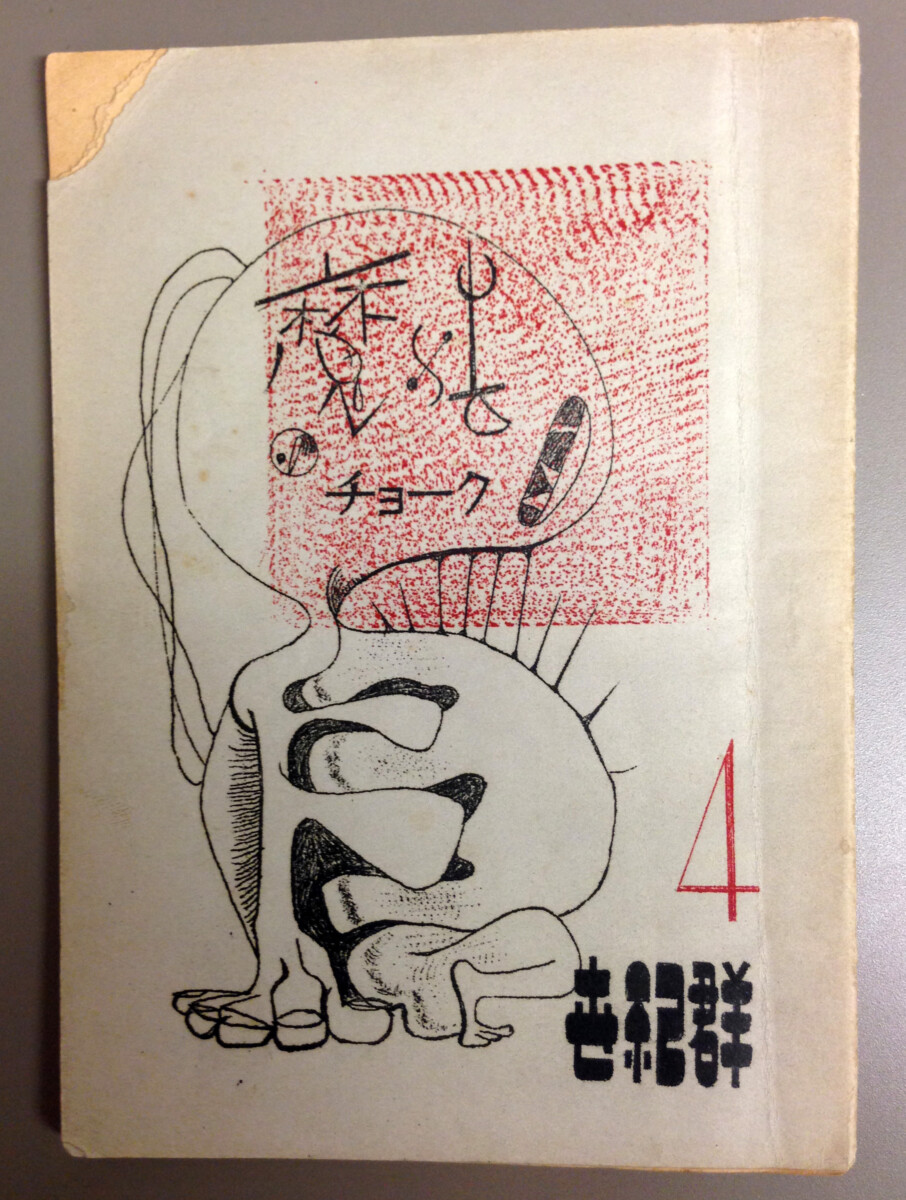
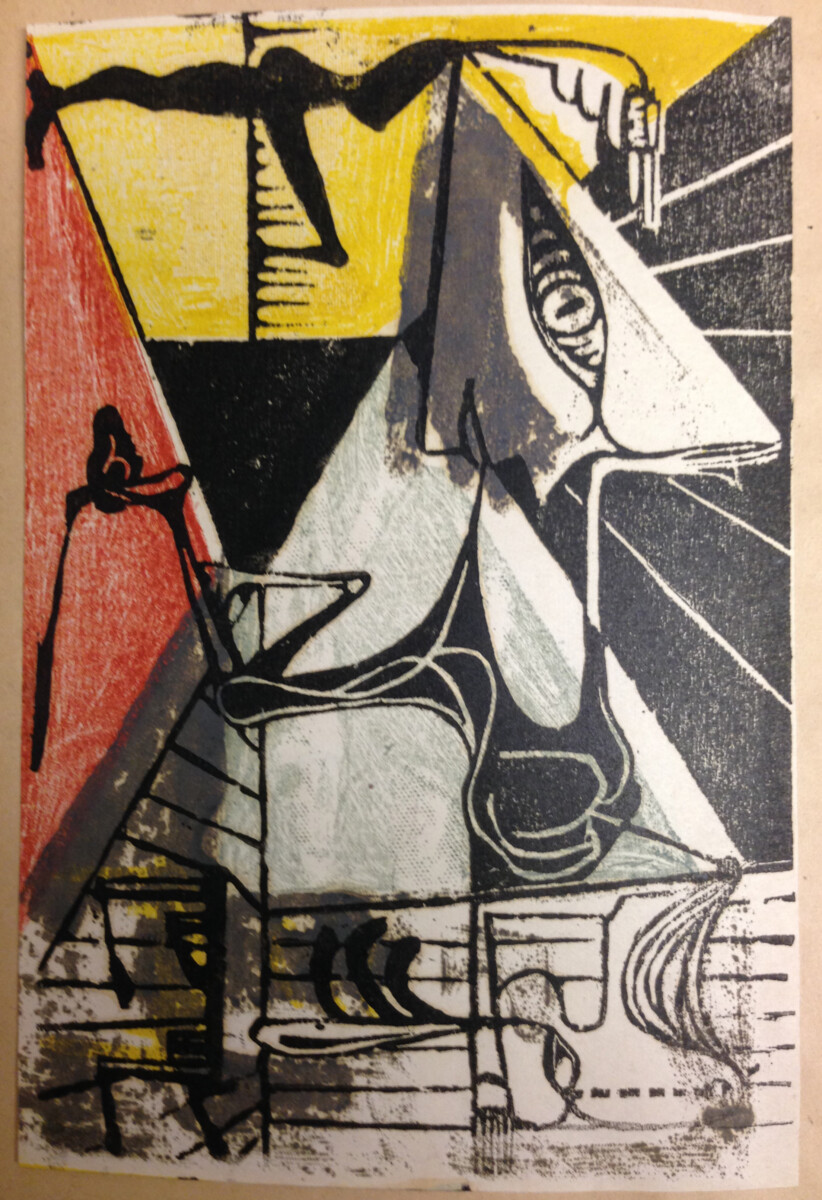
Volume 4 Cover and Woodblock Print by Teshigahara Hiroshi
Kōbō Abe is also the author of the essay in Volume 5: Enterprise [Jigyō] / Utopia, which has tipped-in images by writers, Katsuragawa Hiroshi and Suzuki Shutarō.
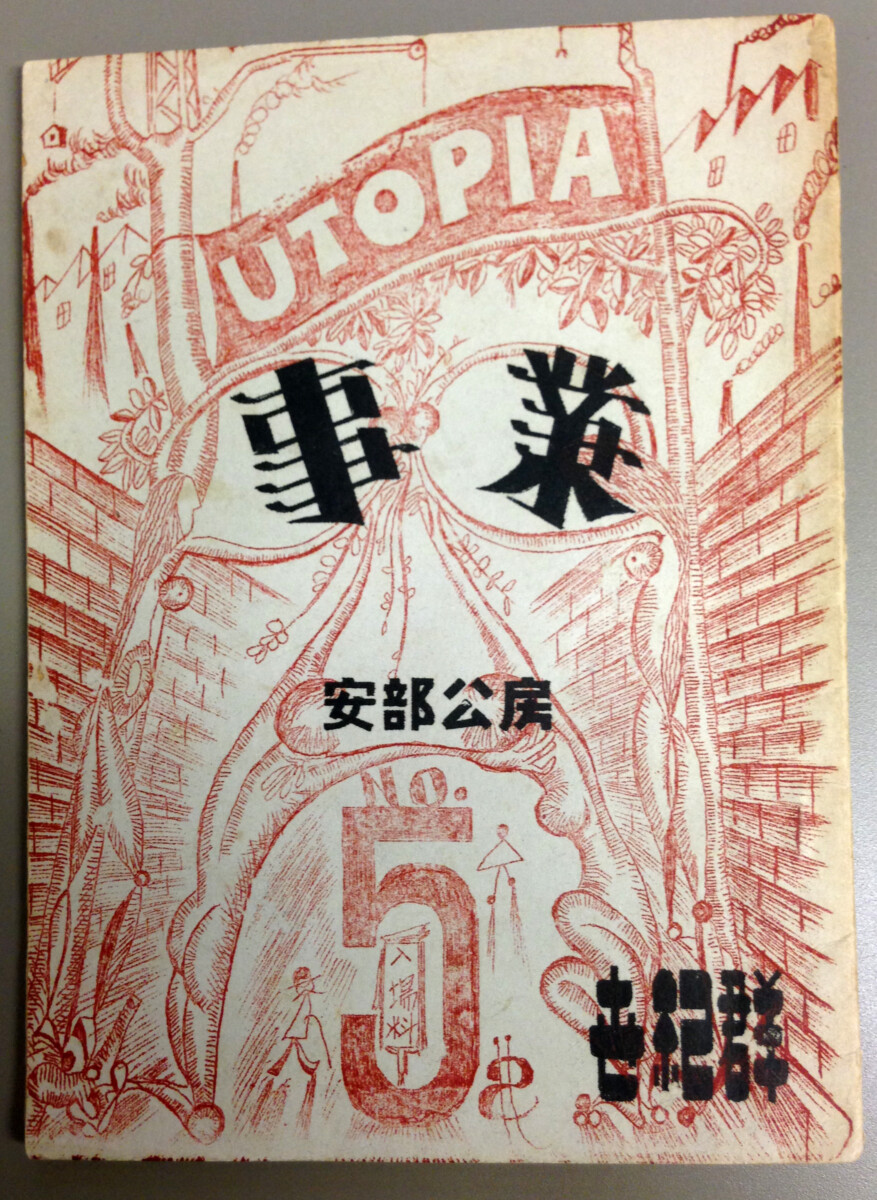
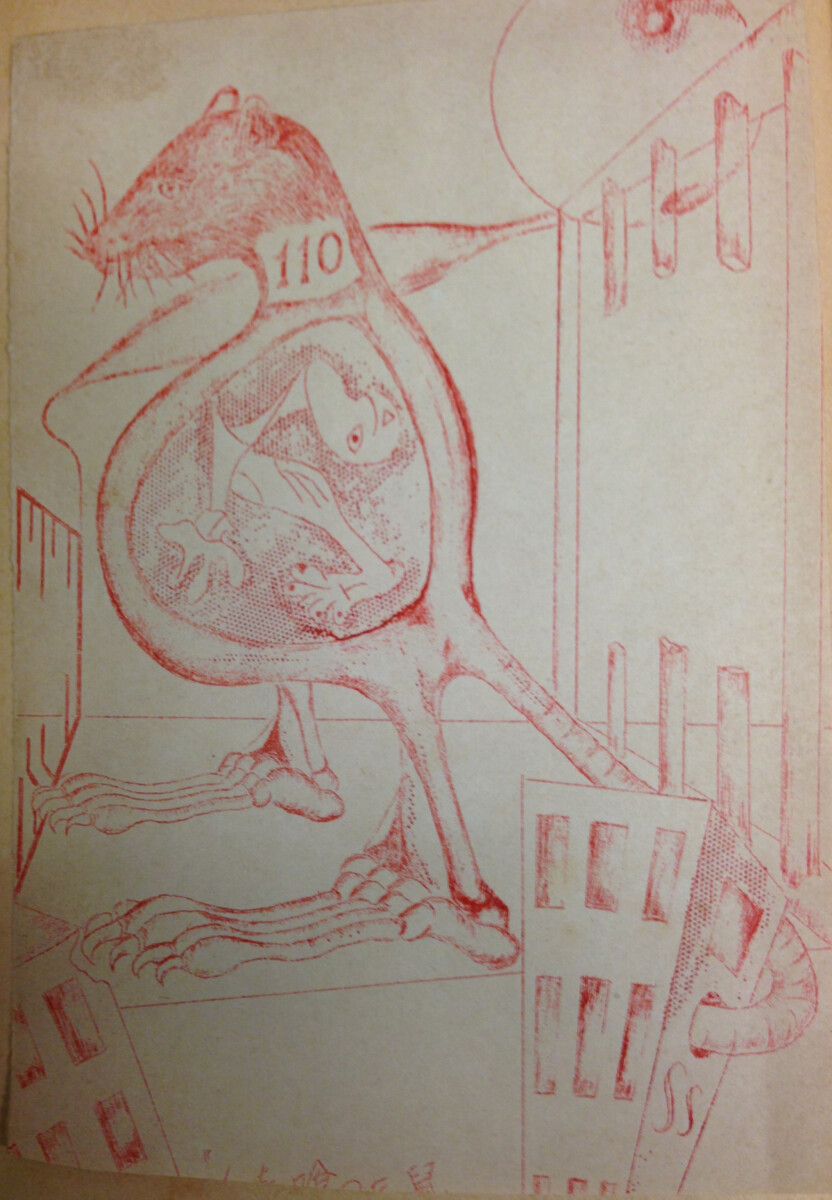
Volume 5 Cover and Illustration
Volume 6 is comprised of Sekine Hiroshi’s Tree in the Desert [Sabaku no ki] [and illustrations by Kōbō Abe, Teshigahara Hiroshi, Ono Seiji and Katsuragawa Hiroshi.
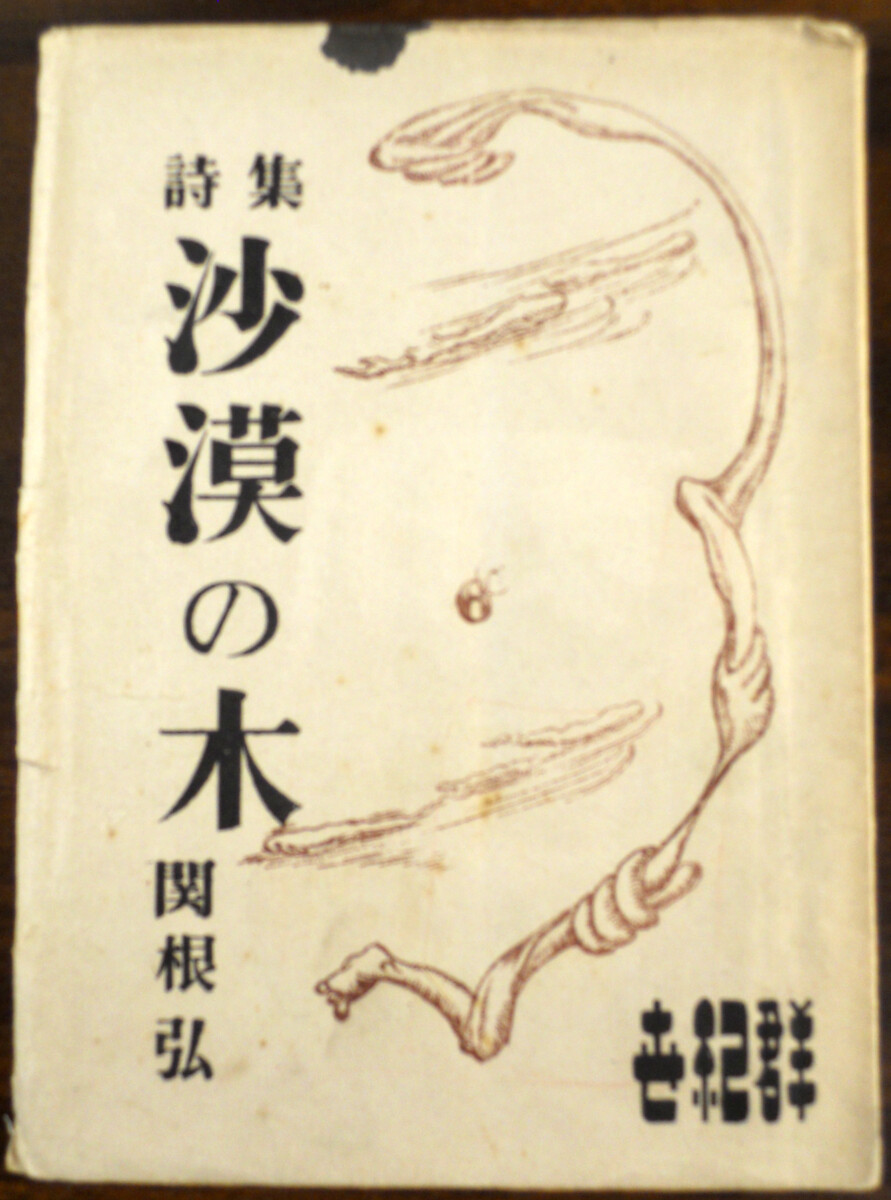
Volume 6: Cover
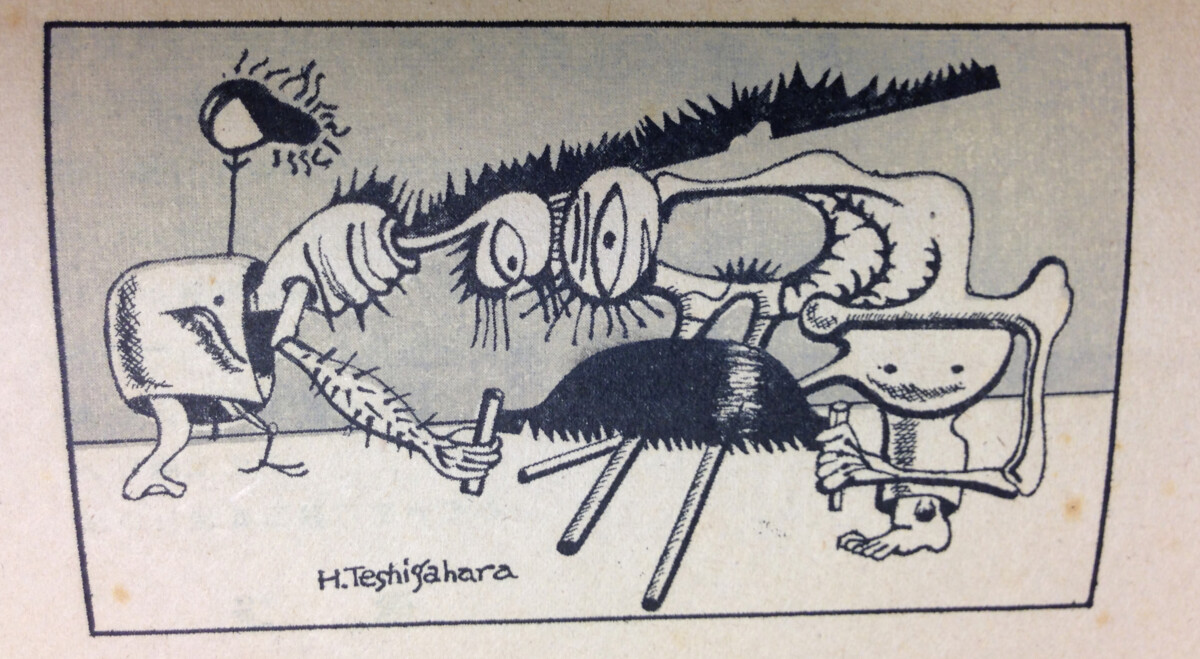
Volume 6: Illustration by Teshigahara Hiroshi
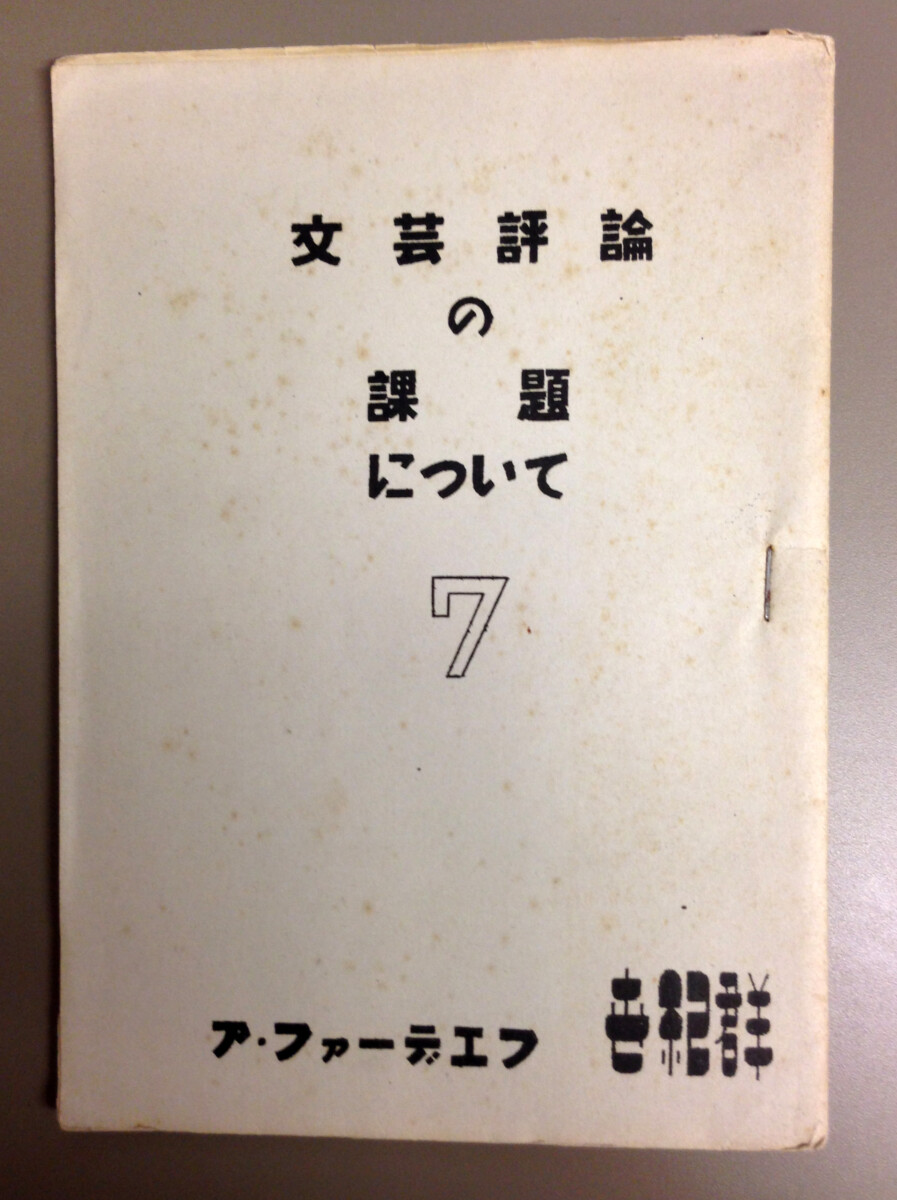
The final issue, Volume 7, contains Segi Shin’ichi’s translation of Issues of Literary Critism by Aleksandr Aleksandrovich [Bungei hyoron no kadai ni tsuite]. Volumes 6 and 7 are slightly larger than the other five.
Volume 7: Cover
- Nicole Fabricand-Person, Japanese Art Specialist