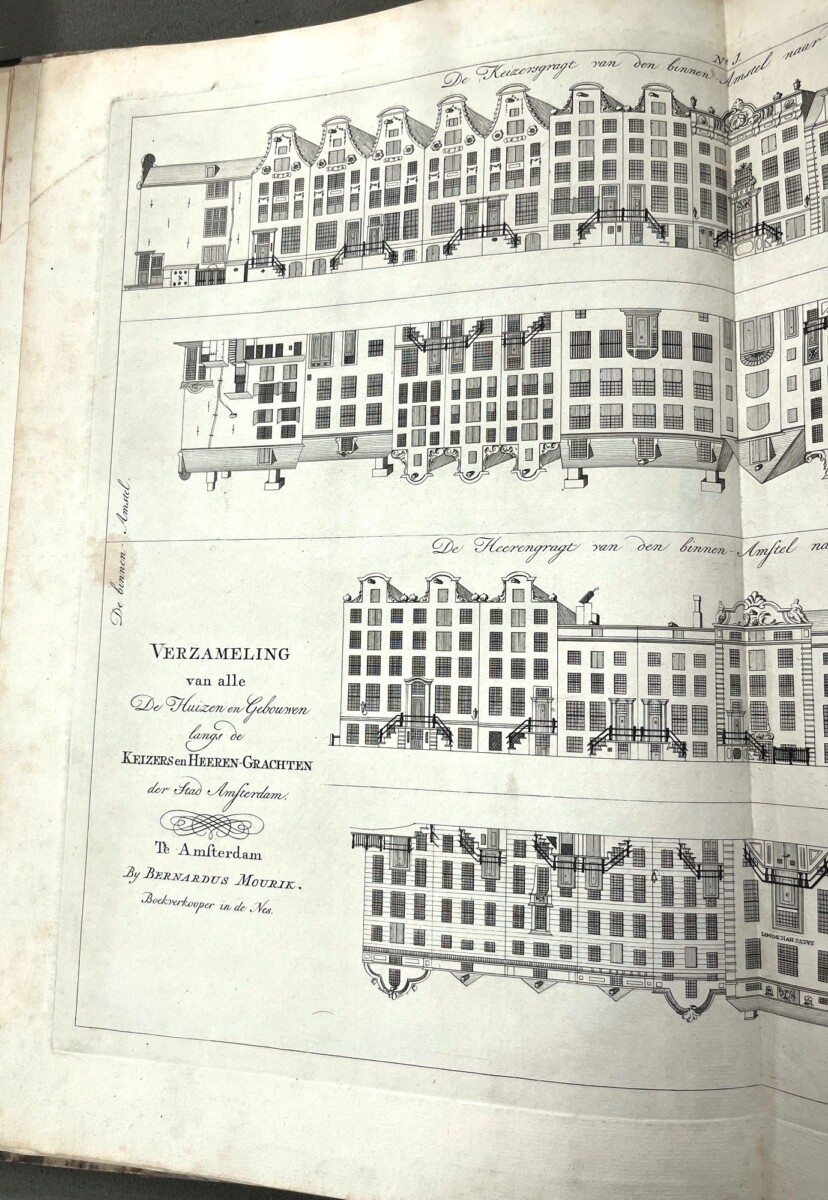
A recent purchase for Marquand Library, Verzaameling van alle de huizen en prachtige gebouwen gelangs de keizers en heere-grachten der stadt Amsterdam beginnende van den Binnen Amstel en eindigende aan de Brouwers-Gracht (Collection of all the beautiful buildings along the Emperor’s and the Lords’ canals of the city of Amsterdam, starting at the inner Amstel, and ending at the Brewers canal) is a unique record of 1400 facades of the buildings along the canal streets of Herengracht and Keizersgracht as they appeared in the late 1760s. The project was devised by the publisher Bernardus Mourik and financed by subscription of 242 individuals, whose professions and ranks were recorded at the beginning of the book. The twenty-four plates were first published in installments between 1768 and 1770, and could be bound as a book (or not) as the purchaser wished. Although the name of the architectural artist and engraver Caspar Philips Jacobsz has long been associated with the prints in this publication, popularly known as the Grachtenboek, his name did not appear on the title page until the second edition of 1791, after Mourik’s death.1 Marquand’s copy is a first edition.
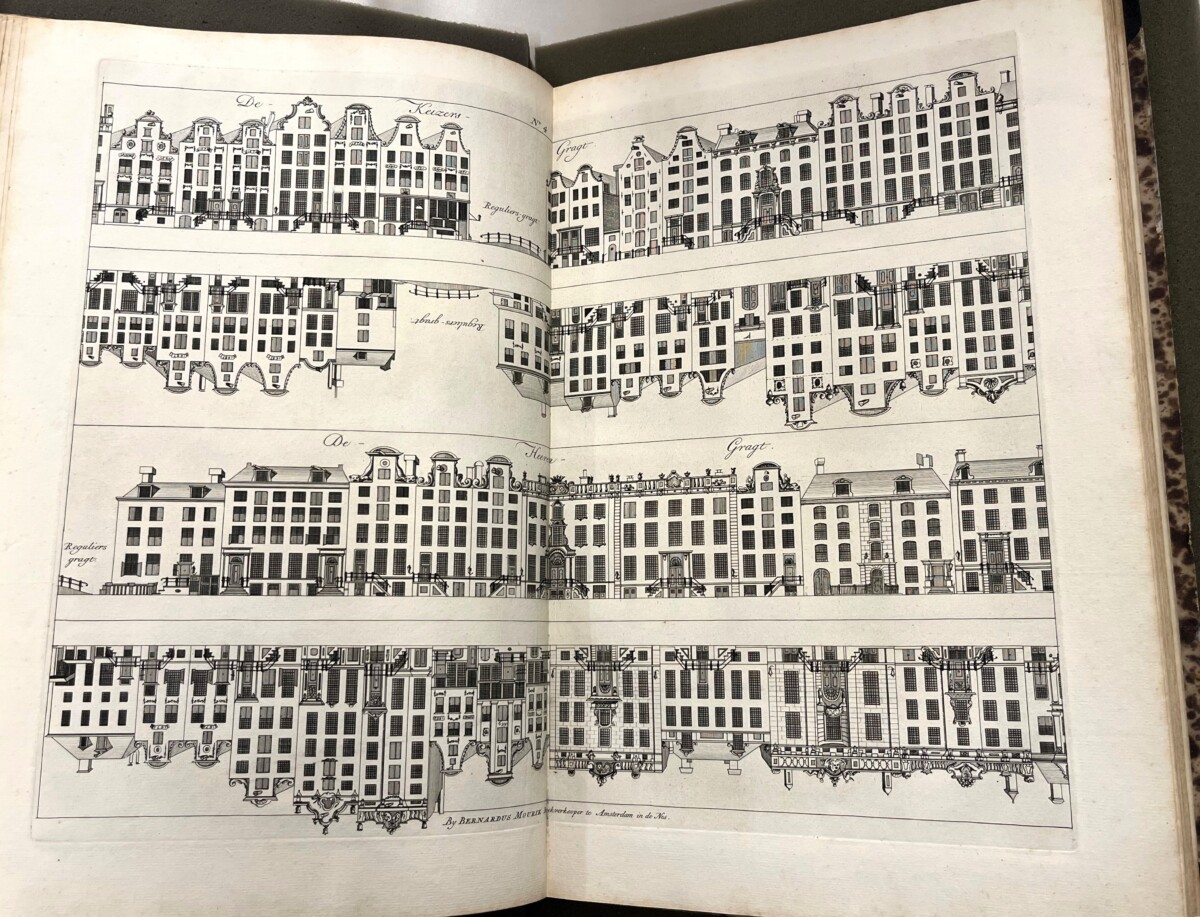
Each plate is composed of two paired strips of prints of the facades of all the existing structures on the two grandest canals in the city, where some of the most desirable residences and establishments were located.
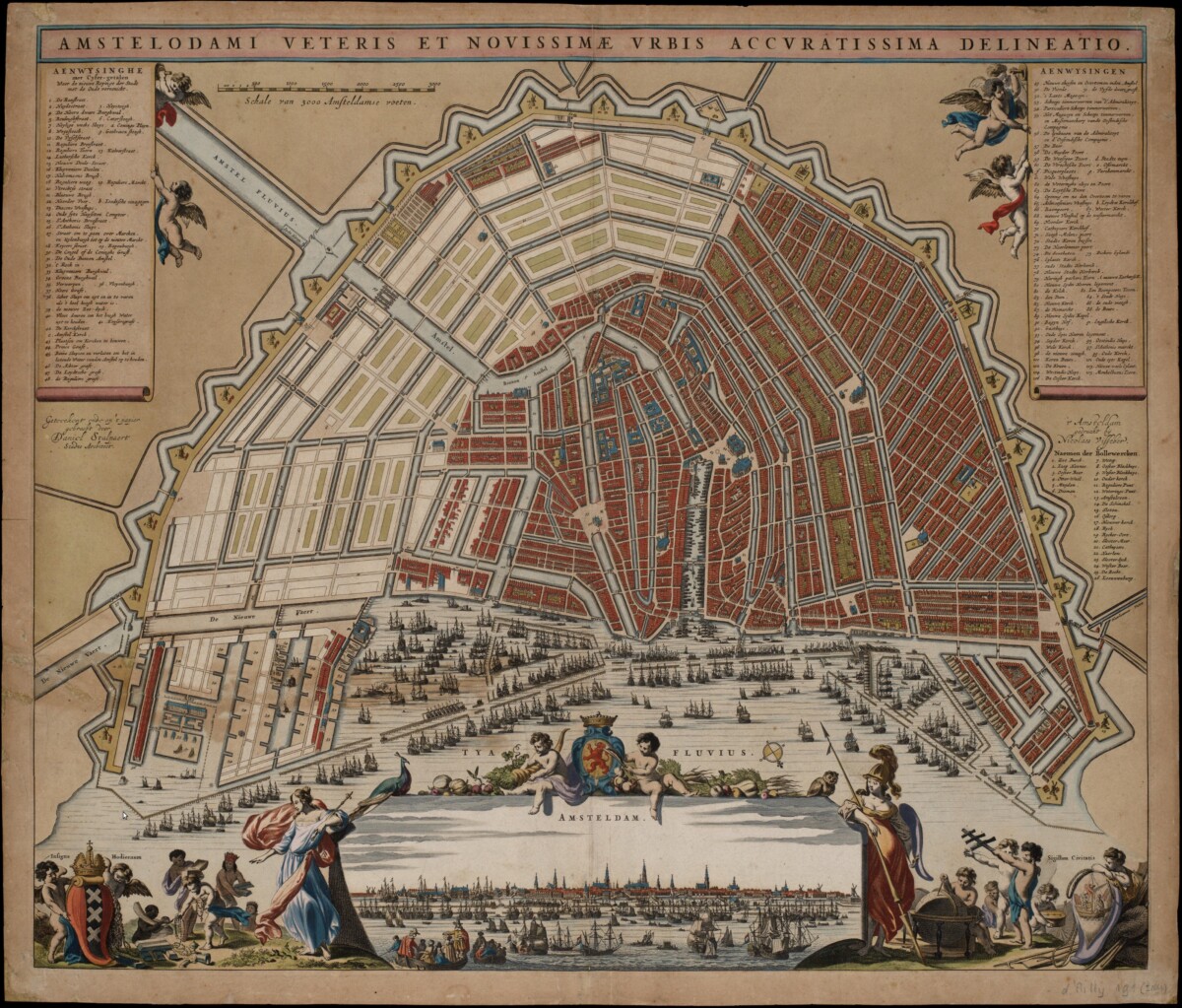
The major canals are arranged in roughly parallel half-circles, as shown in this map of Amsterdam (1662) viewed from the port at the bottom. The Kaizersgracht and the Herengracht are the second and third of these canals depicted just inside the outer border of the city. The outermost canal is the Prinzengracht, which was not depicted in the book, perhaps because the project was never intended to be comprehensive or simply ran out of money. In the plates, the facades on one side of the Kaizersgracht are depicted upright above the facades on the other side, shown flipped upside down; the facades of both sides of the Herengracht are recorded below in the same manner. The four strips scroll smoothly across the twenty-four plates that comprise the book. An ideal viewing of buildings on both sides of a canal simultaneously would seem to be from a boat moving along the water rather than by strolling along the usually narrow sidewalks. A canal boat ride to view the architecture is a pleasure that can still be enjoyed today, and some of the facades have changed very little since the publication of the Grachtenboek.
The original copper plates for the illustrations were discovered in 1912 by Eelke van Houten in the library of the Society for the Promotion of Architecture, resulting in van Houten’s first reissue of the plates in 1922, with added architectural and historical notes. Both the original publication and the later versions have been used by generations of architects for preservation and restoration work in the city as well as for inspiration for new construction. Grachtenboek. Van Caspar Philips. Herdruk, a copy of the 1967 reedition, is also available for viewing in Marquand Library.
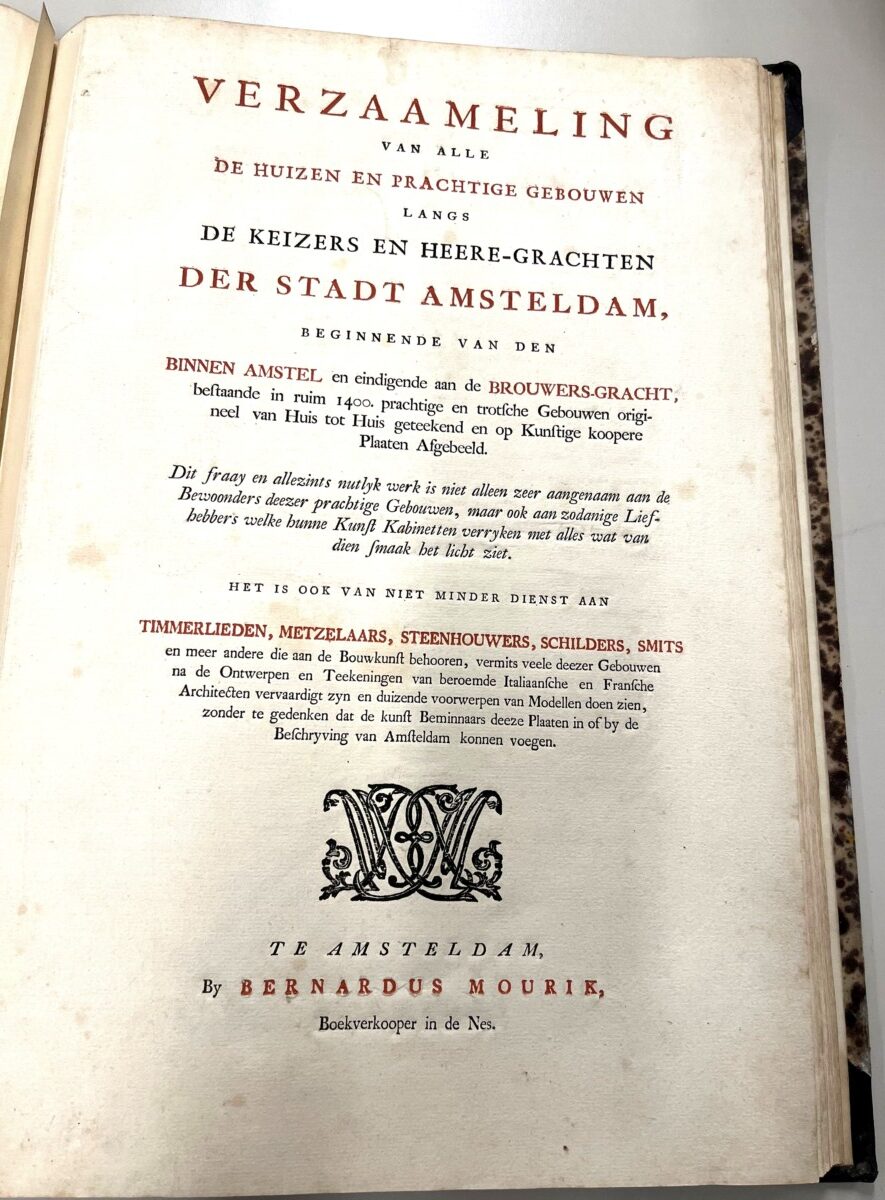
As described on the title page, in addition to being intended to appeal to the residents of “these beautiful buildings” the book was recommended for “all those enthusiasts who enrich their art cabinets with everything that shares that taste.” Moreover, since many of the buildings depicted “were built after the designs and drawings of famous Italian and French architects,” the plates would function as a model book for a whole spectrum of those who created such buildings, including carpenters, masons, stonemasons, painters, and smiths, among others. That the book was initially popular with the building trades is reflected in the many names of subscribers with related occupations: there are five master masons, around twenty master carpenters (“Mr. Timmerman”), a few painter-glazers, a master clockmaker, and other craftsmen in the list of subscribers.
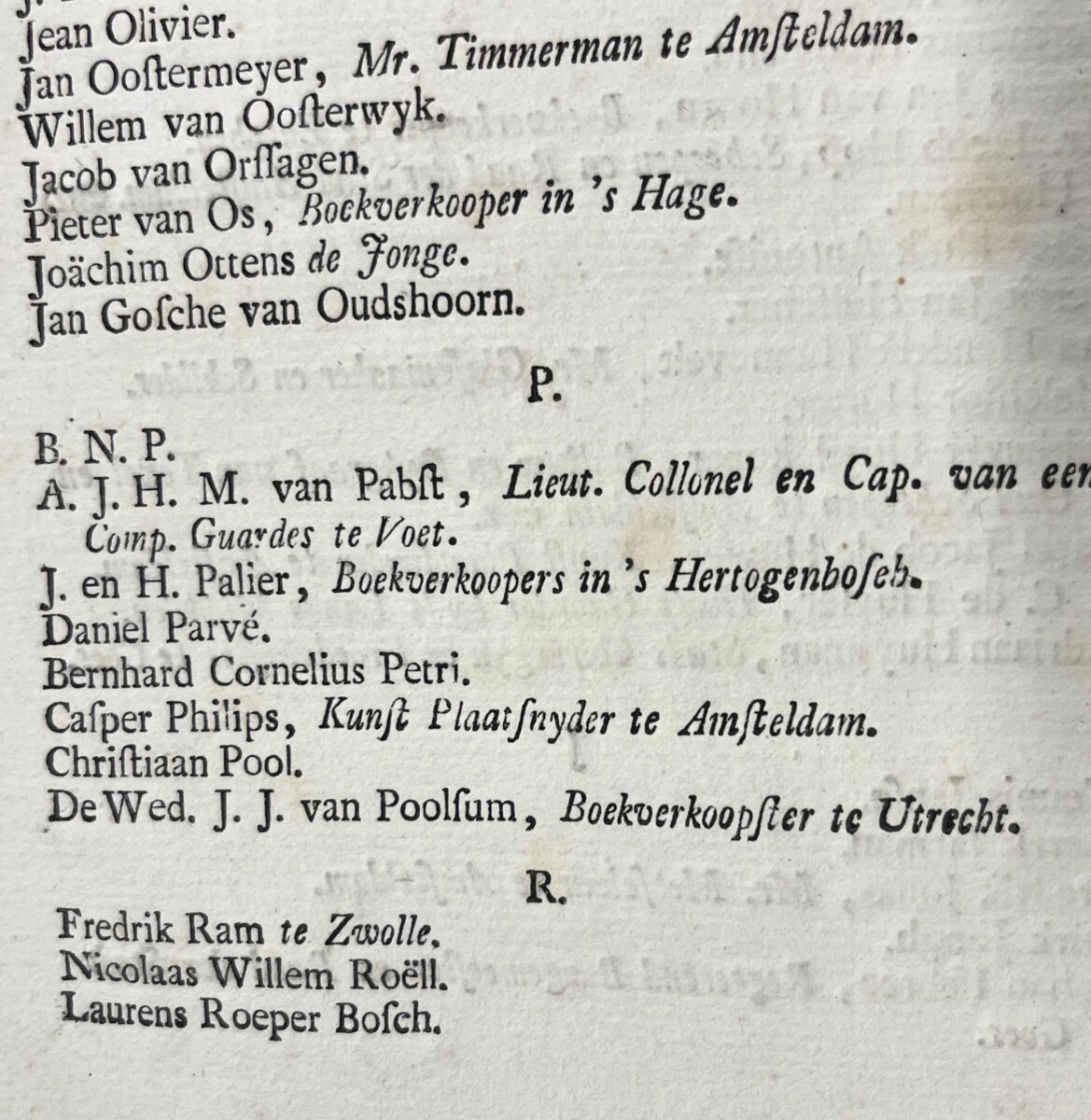
Though the name of Caspar Philips does not occur in the title page or on the plates of this first edition of the Grachtenboek, he is recorded as “Casper [sic] Philips, Kunst Plaatsnyder te Amsteldam” in the subscribers’ list, as are two other engravers. Booksellers, both from Amsterdam and other Dutch cities, also appear in this list, as do notable city office holders, along with some only identified by initials. A few widows of prominent citizens, from both Amsterdam and elsewhere, are also named among the mostly male subscribers. Some of these subscribers were also residents of the buildings depicted.
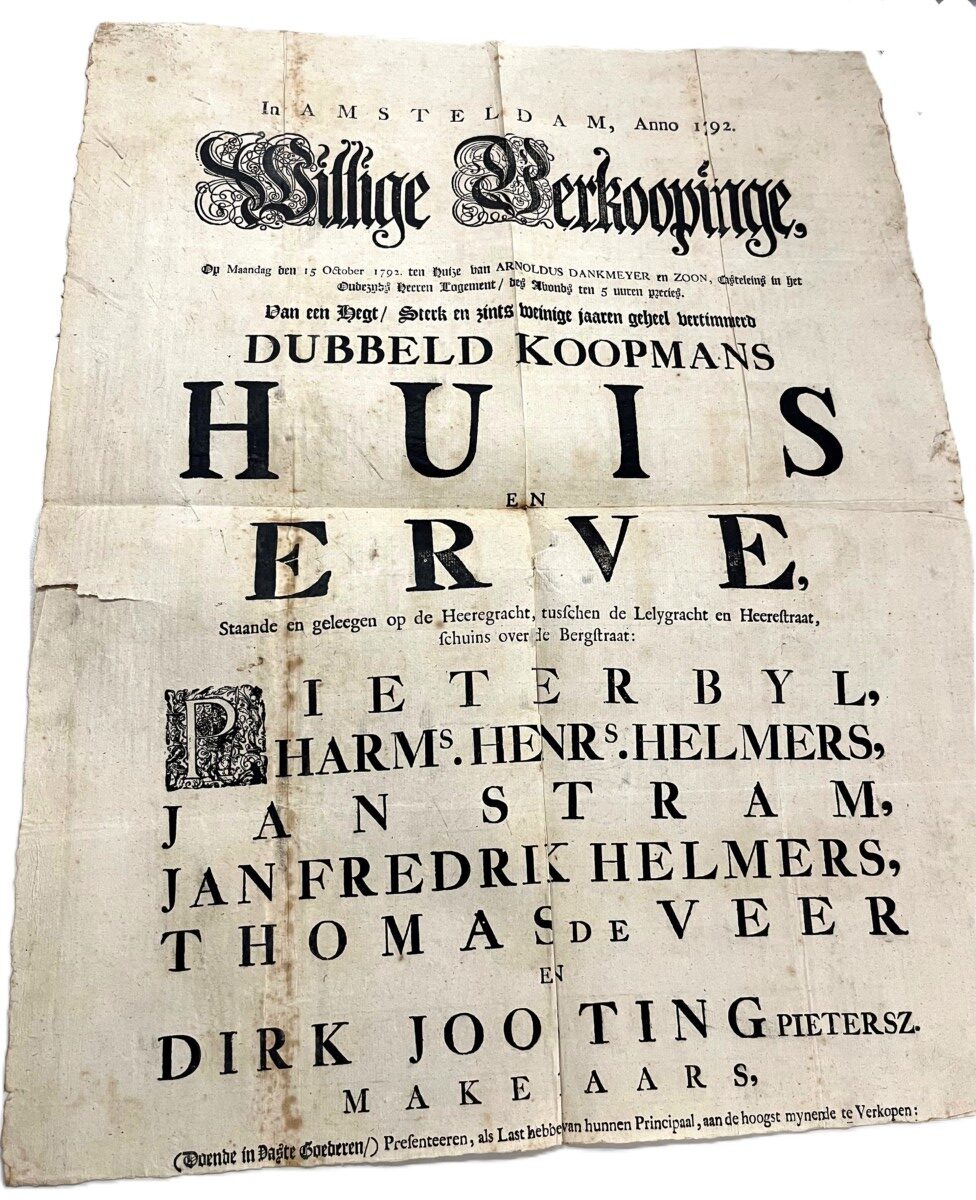
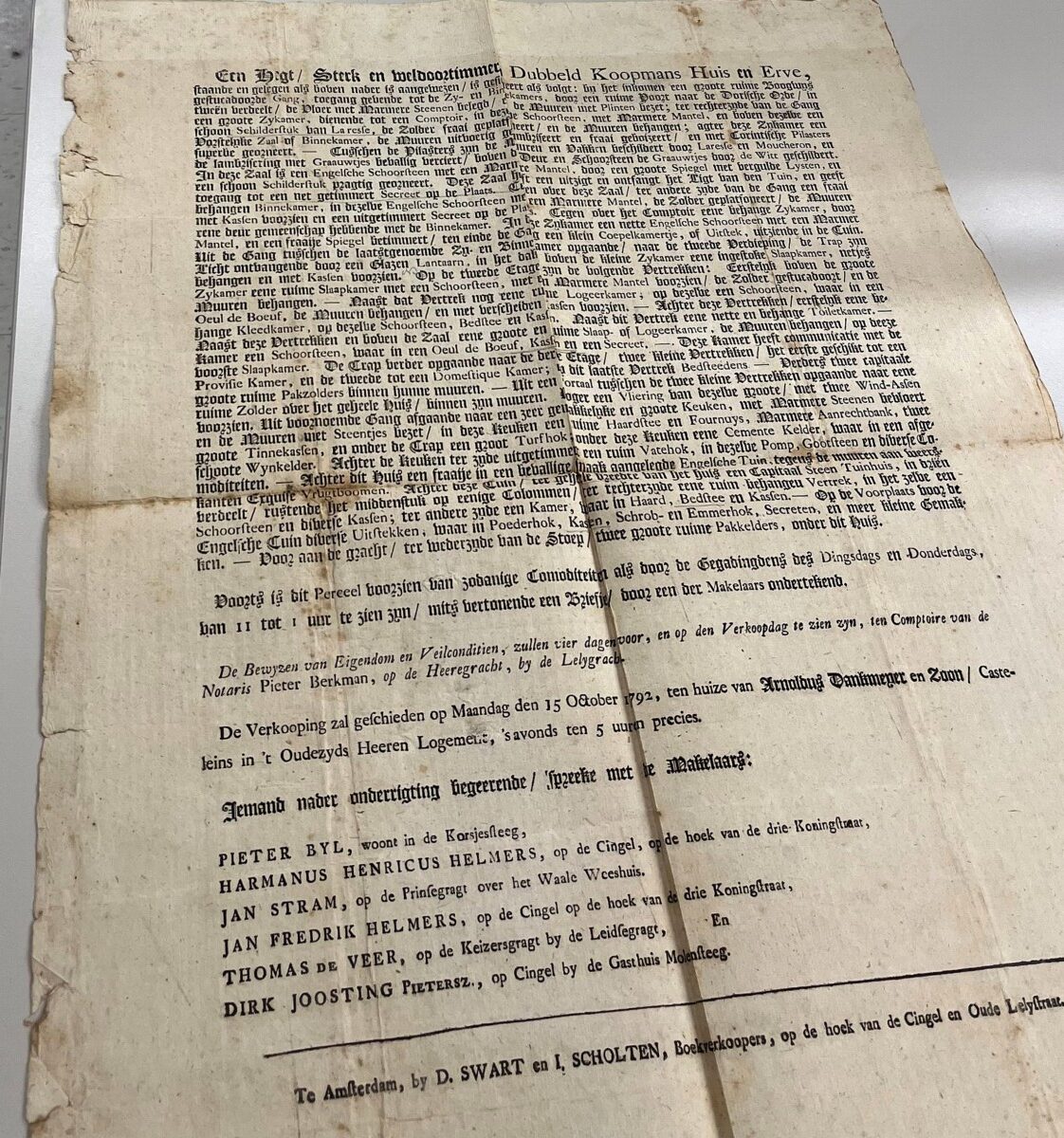
An added bonus to this recent acquisition was a large broadside (see above), advertising the public sale of a double-fronted merchant house and garden on the Herengracht in 1792. The poster had been placed in the book at some point in its history, and is like a time-capsule of a lavishly decorated merchant house in the late eighteenth-century, with mention of the marble floors and fine painted wall panels by Johannes Glauber and Gerard de Lairesse in this property “located on the Herengracht, between Lelygracht and Herenstraat, diagonally across from the Bergstraat.”
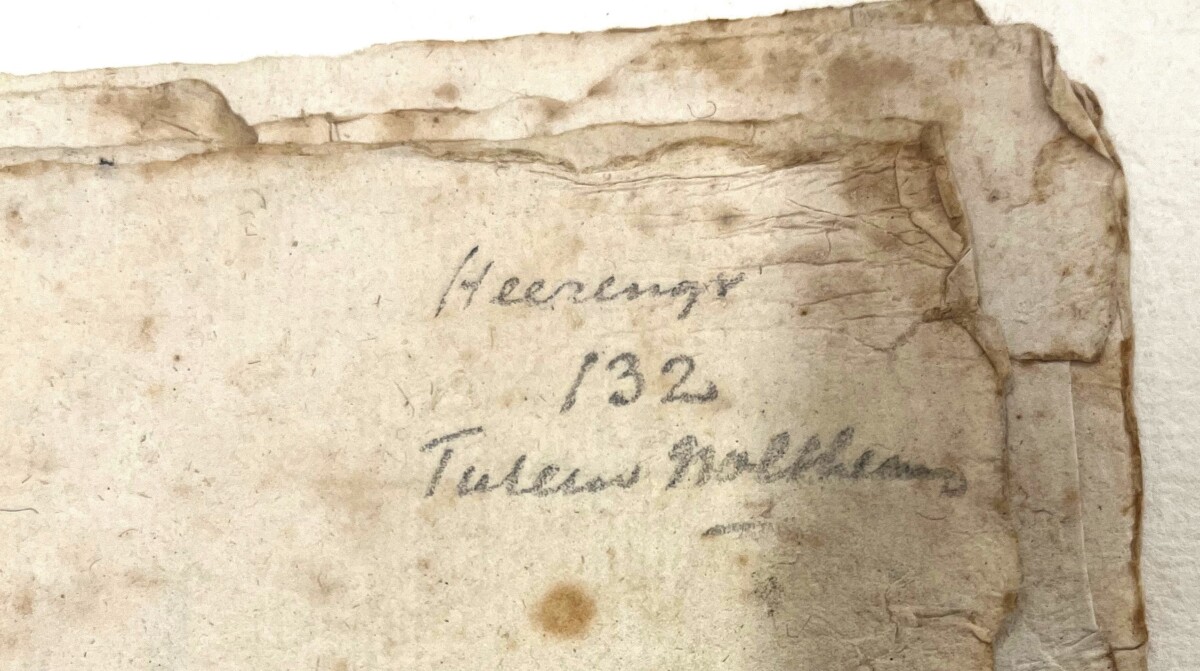
On the reverse of the broadside is a (difficult to decipher) pencil note: “Beschrijving van het [huis?] a/d. Heerengracht No. 132 ” and in another spot “Heerengr. 132” with a name: “Tuteins[?] Nolthemius[?].” A few plates in Marquand’s copy of the Grachtenboek include pencil notes by someone who added numbers and notes below certain facades, and one possible date of 1909.
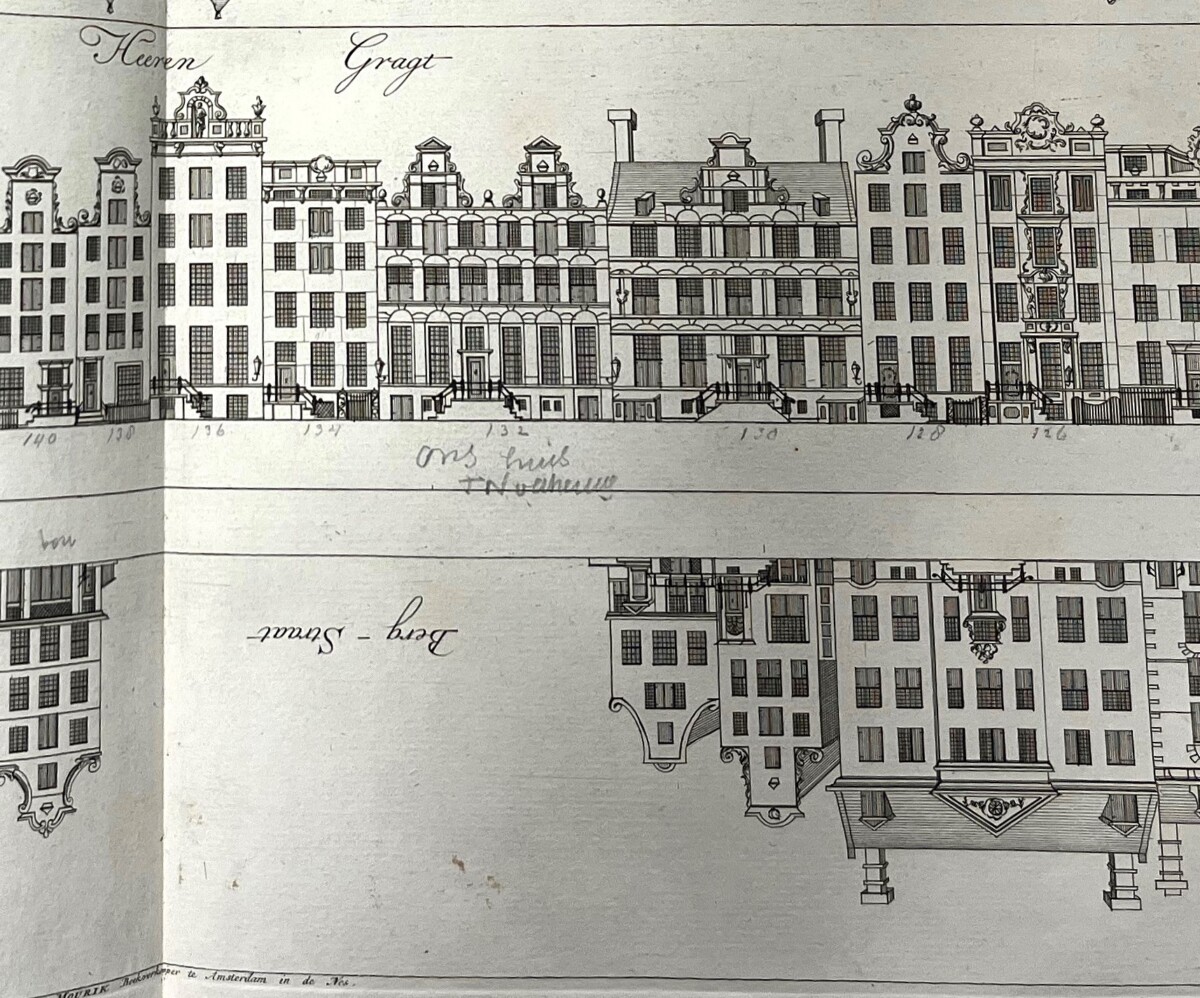
Plate 17 (above) seemed to be of particular interest to the author of these notes: houses along Herengracht opposite Bergstraat have been numbered, and under No. 132 (a handsome, double-fronted house) has been inscribed “ons huis T Nolthemius.” Another house on plate 18 is labelled “tantes Crommeling.” By tracing information about 132 Herengracht, it was possible to conclude that the inscriptions refer to the Tutein Nolthemius family, who inherited the house from the Crommelin family, the owners of the house after the 1792 sale. This particular copy of the Grachtenboek was, apparently, used by its owner to record family history represented by the images of grand homes on the canal. The broadside was likely a souvenir to commemorate the new ownership of the house.

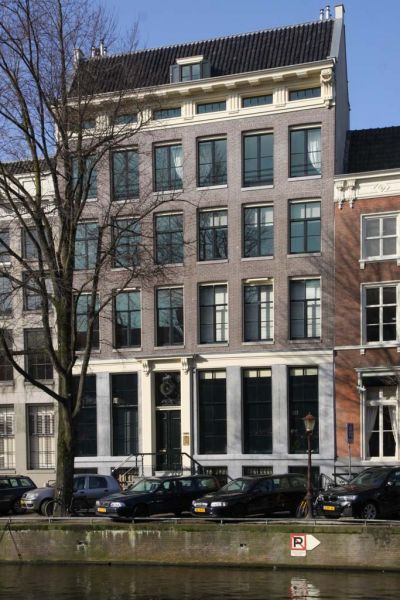
This particular house (like all of the others in this remarkable book) has an interesting history.2 Originally built in 1615, No.132 Herengracht was renovated in 1787 (the broadside mentions that it was newly renovated) by Jacob de Fines, and the stepped gables were replaced with a straight wooden ornamented cornice. The painted panels by Glauber and Lairesse, commissioned by the owner in the 1680s to adorn the walls, were first lent to the Riksmuseum before 1910 and later gifted to the museum in 1977, and a similarly painted ceiling was also recently rediscovered in the storage of the Cultural Heritage Agency (RCE).3 On New Year’s Eve, 2008, the house was severely damaged by a fire, but since it was considered a significant landmark, was restored in 2014-2016 and still exists today (see above, right) though it now differs greatly from the image in the Grachtenboek.
For anyone who has read this far in search of Ed Ruscha, Ruscha has described inspirations for his Every Building on the Sunset Strip (1966, first edition) in a video made with the V&A Museum, Dundee, and there is no mention of the Grachtenboek, but Ruscha’s books (including Dutch Details (1971), published in the Netherlands) may be a topic for another blog entry.4
- For more information on the editions of the book, see: “Grachtenboek van Caspar Philips,” https://www.amsterdam-monumentenstad.nl/database/grachtenboek_tekst.php?id=34
- See more comparisons of facades from the 1768 publication with photographs taken in 1990-1991 by Annemieke van Oord-de Pee in Paul Spies, The Canals of Amsterdam The Hague: SDU [1991], trans. Alan Miller.
- For information about the wall and ceiling paintings originally in this house, see: https://www.amsterdam-monumentenstad.nl/berichten.php?id=75
- https://www.vam.ac.uk/dundee/articles/ed-ruscha-every-building-on-the-sunset-strip
Nicola Shilliam, Western Art History Bibliographer