Woodblock-printed books and single-sheet prints related to the kabuki theatre were in high demand during the Edo period (1615-1868). It is estimated that more than a third of all woodblock prints published during this era were “kabuki prints” (kabuki-e). Like movie magazines of the past and celebrity-focused social media today, they were the vehicle by which images of actors and highlights of theatrical performances were transmitted to enthusiastic audiences throughout the country—even to those who could not afford admission or to those who, because of their location in major cities, would never have the opportunity to see a show.
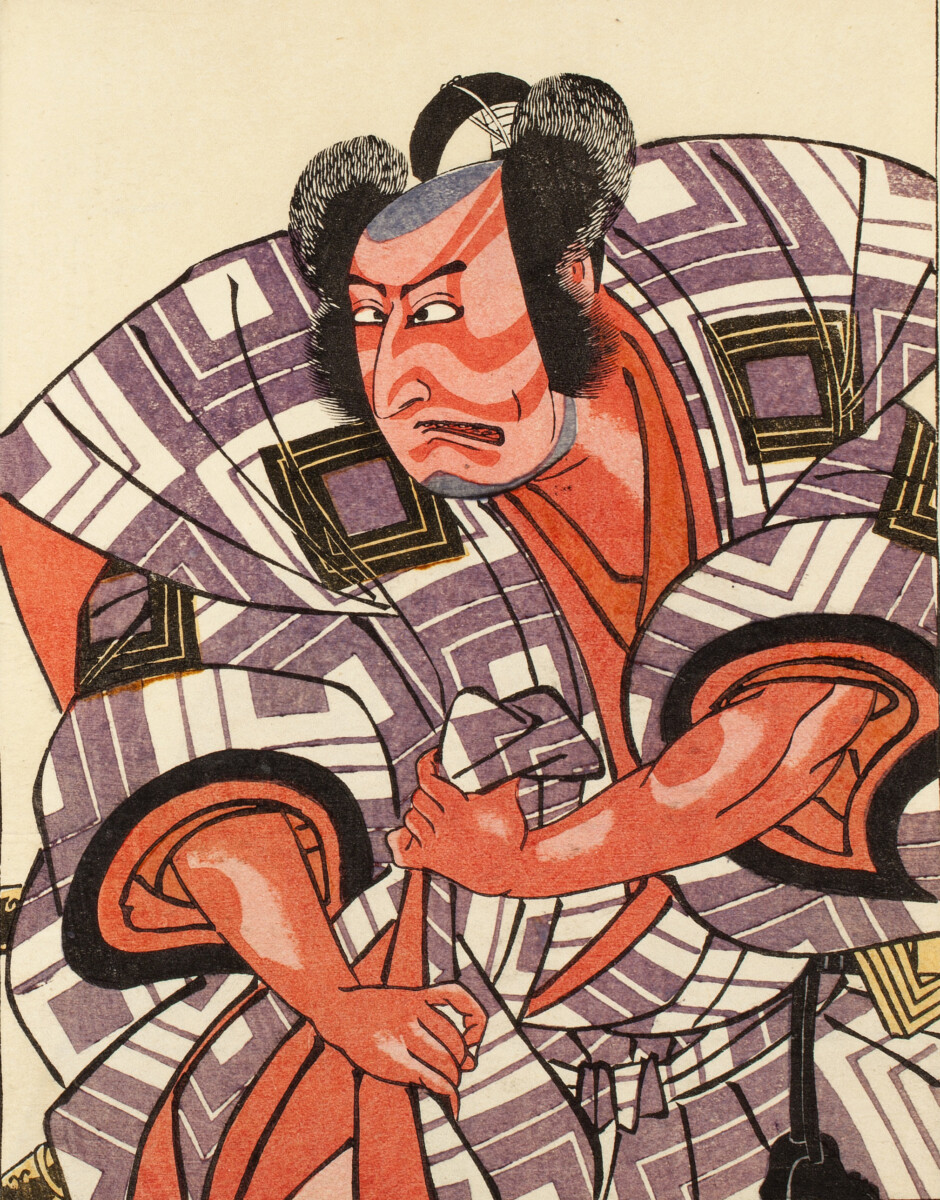
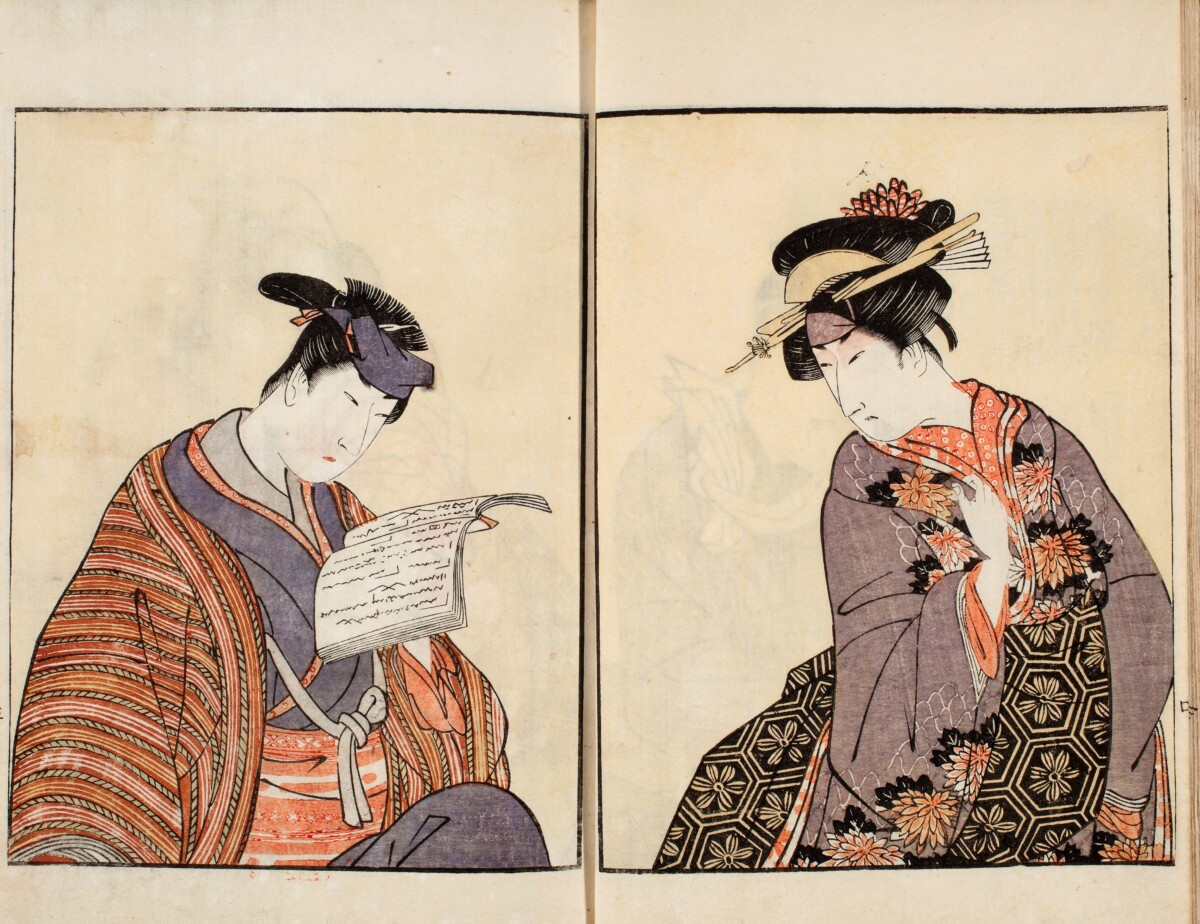
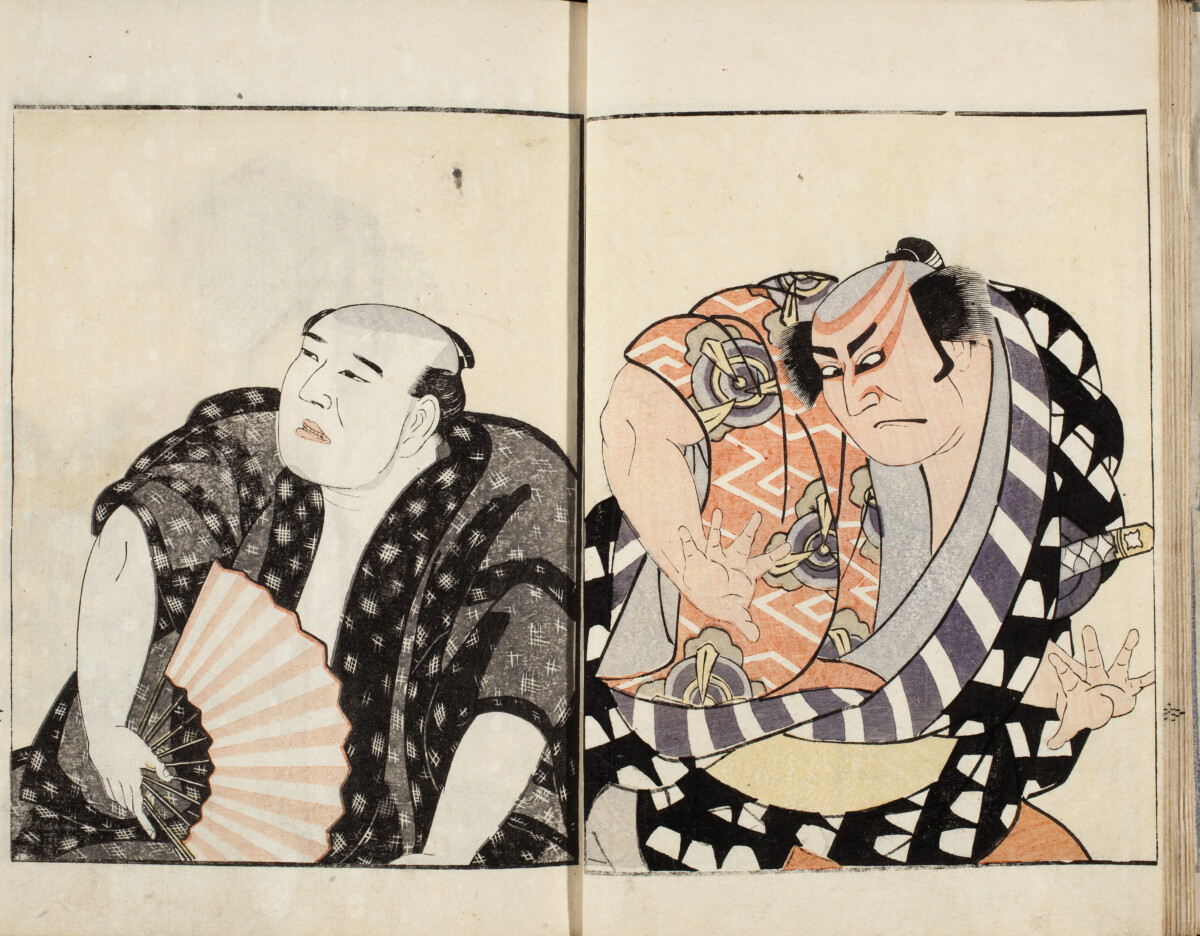
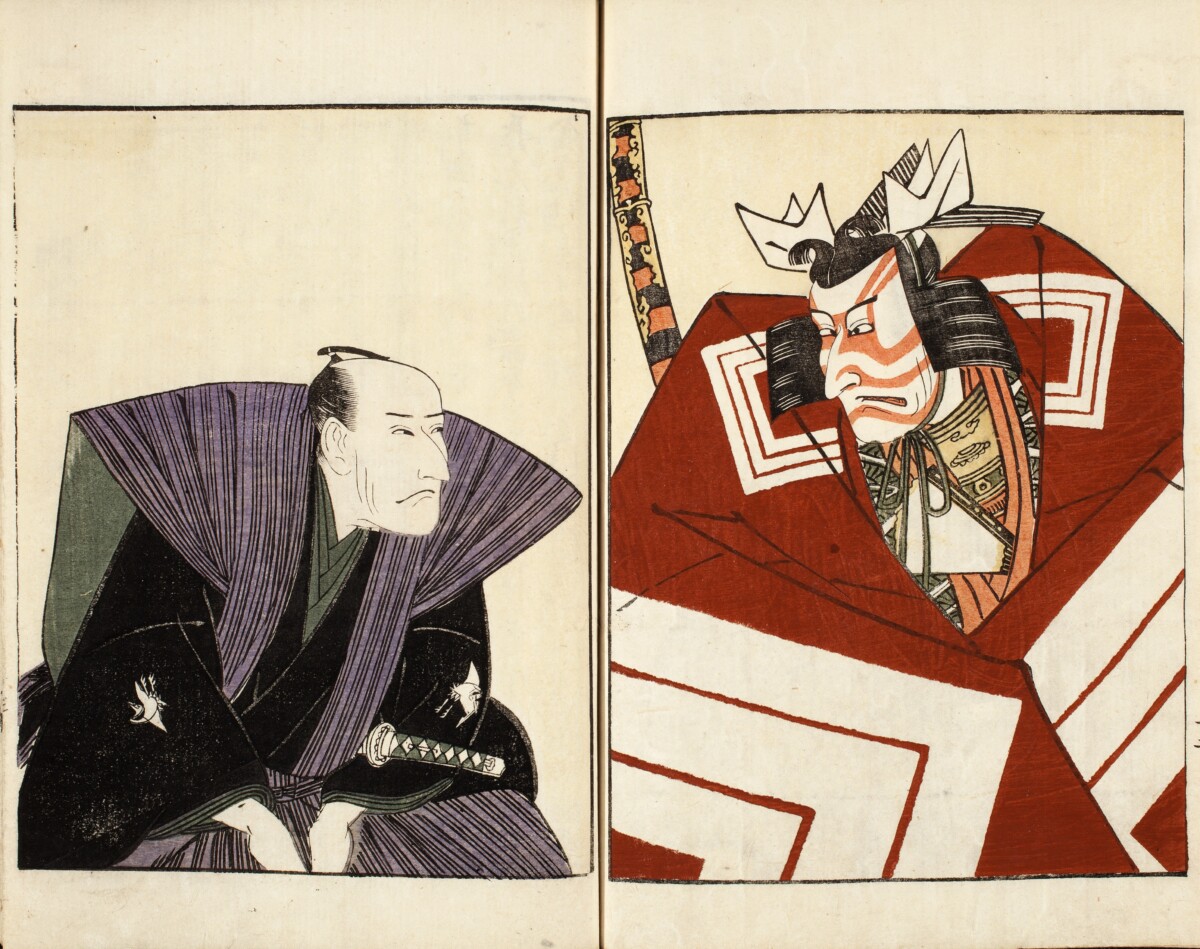
Among the kabuki theatre-related materials in Marquand Library’s collection, is the extremely rare and renowned book Actors on Two Sides of the Leaf [Yakusha konotegashiwa]. This two-volume set of richly-colored half-length portraits of kabuki performers by the artist Utagawa Toyokuni (1769-1825) created a sensation when it was published in 1803. At a time when the book-buying public craved innovation, it was a new and novel concept: it offered both the large focused portraits of the costumed actors popular in contemporary single-sheet prints on one side of the page opening and, on “the opposite leaf,” similarly-sized portraits of those same actors as they looked in everyday life—barefaced, without wigs, and in street clothes. (To understand the book’s popularity, one need be reminded how tempting it is today to click on a link that will show you a Hollywood celebrity without make-up!)
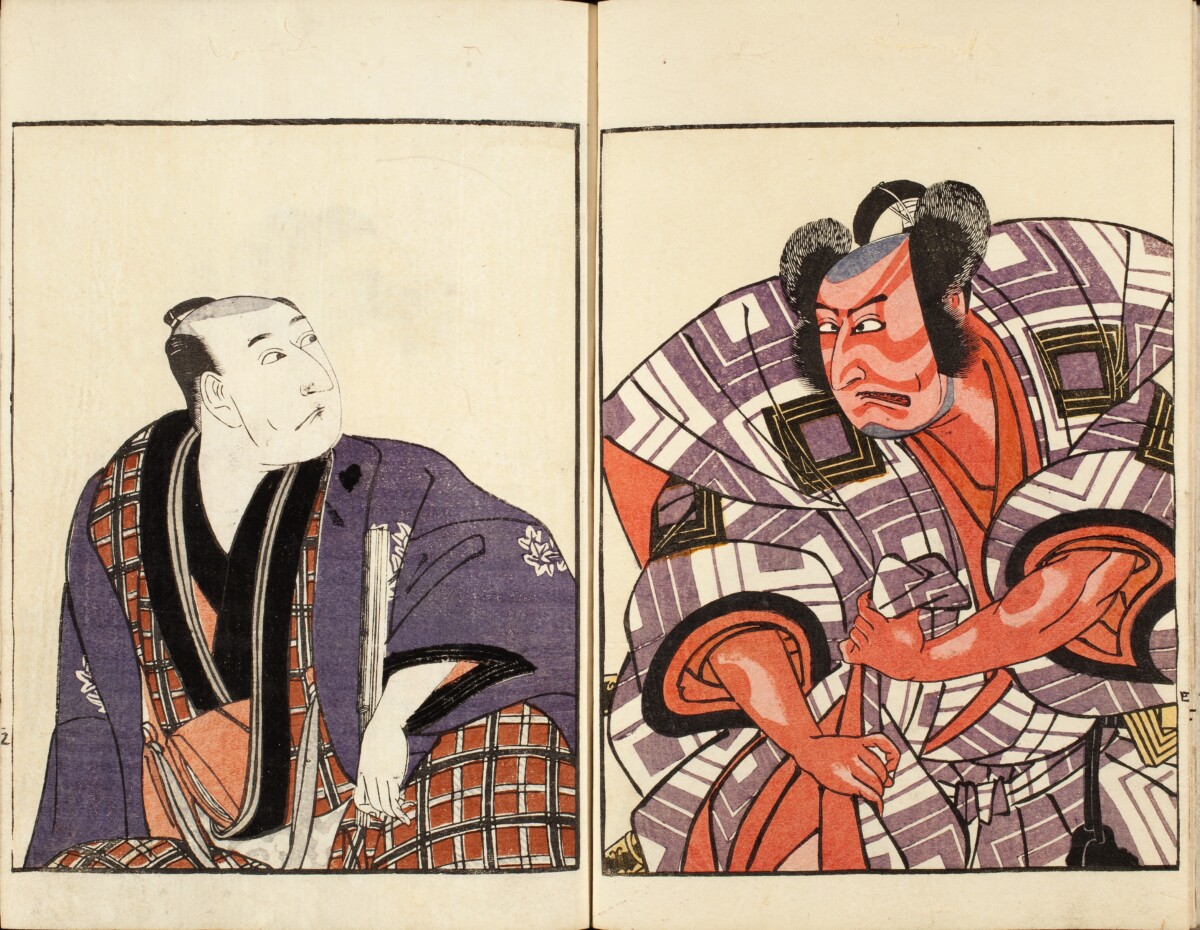
These portraits were touted as being superb likenesses of the individual actors both on and off the stage. In his preface to the book, for example, playwright and humorist Utei Enba claims they are as alike as “a reflection in water” and compares the portrait pairs to a classic story of an ancient painting of a horse. The painted horse, he recounts, was so realistic that each night it left the confines of the painting to go outside and eat bush clover. The striking contrast between these “realistic” portraits of actors and their onstage personae is so striking, it is not surprising that these images would delight reading audiences everywhere.

[Photo from the College of Agricultural Sciences of the University of Oregon:
https://landscapeplants.oregonstate.edu/plants/thuja-orientalis]
The title of the book, Actors on Two Sides of the Leaf, while referencing the book’s format, is also a play on words, something that would have been much appreciated by contemporary audiences. The word konotegashiwa is only very loosely translated to mean “two sides of the leaf.” Konotegashiwa is actually the Japanese word for the tree, Thuya Orientalis, which has leaves that are different on either side. The expression “the two faces of konotegashiwa,” (konotegashiwa no futa omote) was often used to describe things that appeared to be different, but were actually the same. Utei Enba, at the end of his preface acknowledges his clever title by referring to the “the two faces of the actor” (yakusha no futa omote).[1]
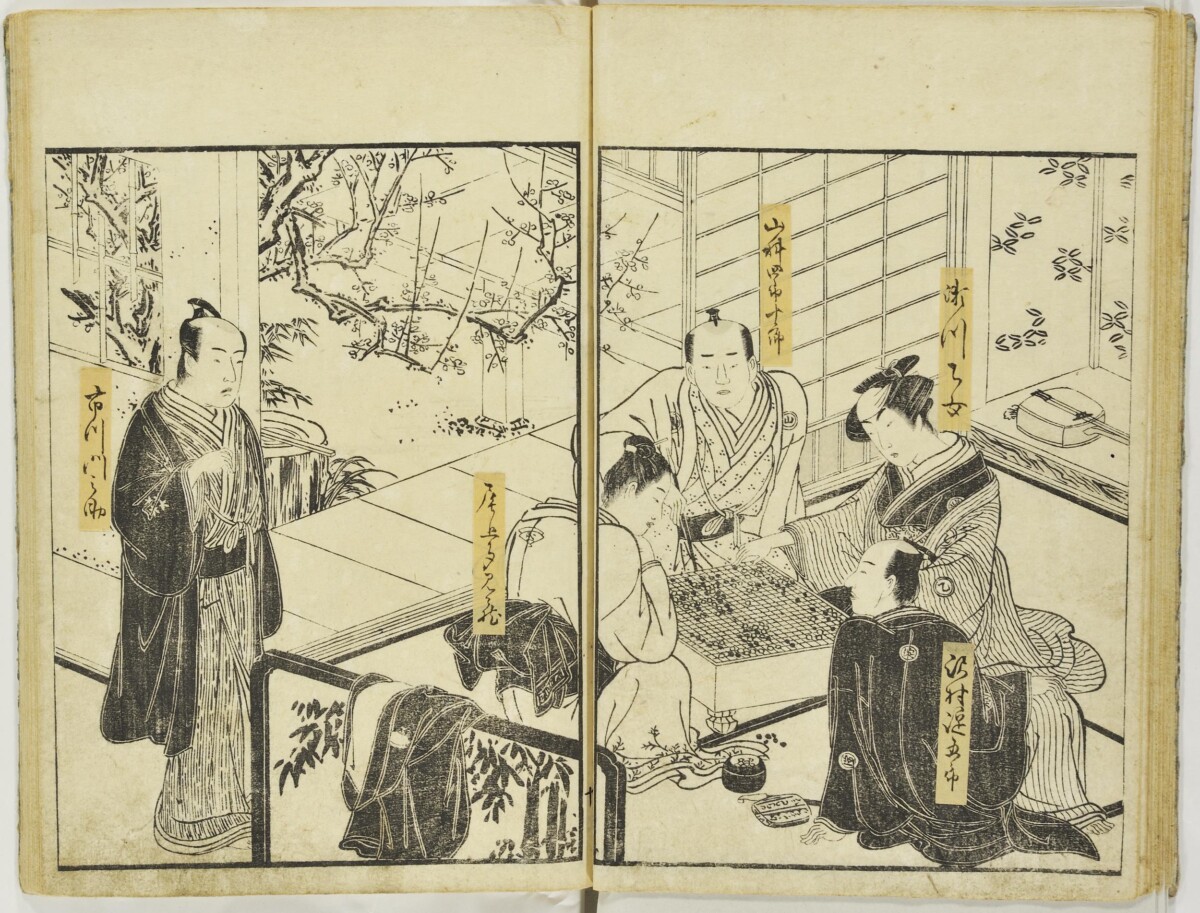
Although Actors on Two Sides of the Leaf was appreciated for its innovative design, it was not without its precedents. The first foray into portraying actors in “everyday life” was a book designed by the artist, Katsukawa Shunshō (1726-1793), and published in 1780. Printed less luxuriously in black & white, Actors Like Fuji in Summer [Yakusha natsu no Fuji], was filled with illustrations of actors living their private lives, enjoying activities like boating, visiting shrines, playing go, or strolling on the street. Like Mount Fuji, without its snow-capped peak in summer, the actors were portrayed without their wigs (or stage make-up). The book appears to have been popular because a second edition was issued in 1781, with the final page altered to include three actors new to the Edo (Tokyo) kabuki stage. [2] Yet, the subject matter appears to have languished until Toyokuni’s re-imagining of the theme with focused portraits in 1803.
The publication of Actors on Two Sides of the Leaf was timed to coincide with the 100th anniversary of the death of Ichikawa Danjūrō I, the first in family line of legendary kabuki actors that continues to this day. Toyokuni begins the book with the 12-year-old Danjūrō VII (1791-1859), who had inherited the name two years earlier in 1801, and ends with portraits of his grandfather, Danjūrō V (1741-1806) (see below).
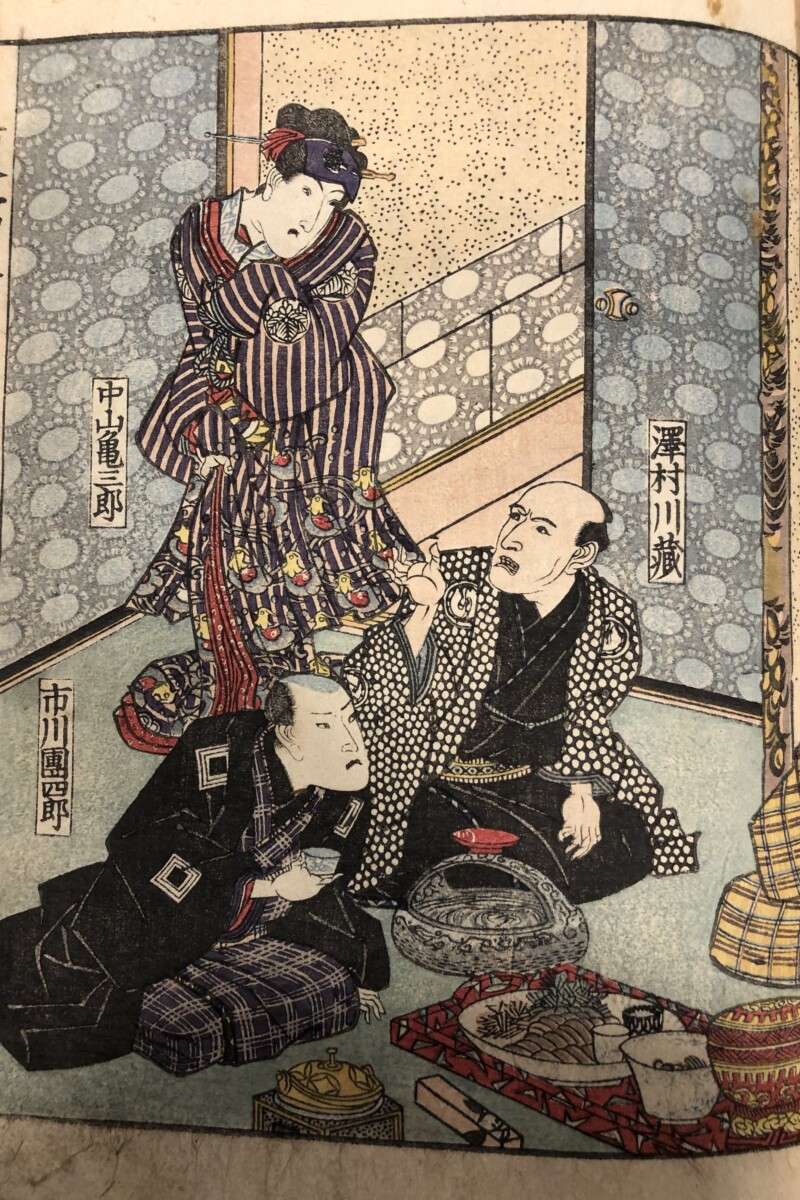
Also in the Marquand collection is a later version of the “Fuji in summer” theme by one of Toyokuni’s pupils, Utagawa Kunisada (whose work was highlighted in a previous blog post on banned books), entitled Actors Compared to Fuji in Summer. The two volumes, published 1827-1828, follow Katsukawa Shunshō’s earlier model and illustrate actors in various offstage pursuits (volume 1) and in and around their homes (volume 2). This detailed look at actors in their private lives is distinguished from the earlier publication by its rich color. Beautiful patterns on actor robes and luxurious wall papers and accoutrements hint at lavish lifestyles of kabuki stars, who are identified by name in the cartouches beside them. It reminds us that, just like our peeks into celebrity homes today in magazines like Architectural Digest and TV shows like MTV Cribs, people have always been fascinated with “the other side” of famous actors.
- [1] Jack Hillier, The Art of the Japanese Book. [London: Sotheby’s Publications, 1987], vol. 1, p. 575.
- [2] Kenji Toda, Descriptive Catalogue of the Japanese and Chinese Illustrated Books in the Ryerson Library of the Art Institute of Chicago, [Chicago, 1931], pp. 181-2.
- Nicole Fabricand-Person, Japanese Art Specialist