As early as the seventeenth century–long before there was 3-D computer-modeling for home renovations on HGTV–Japanese carpenters (architects) created detailed three-dimensional paper models of famous tea houses, designed by the great tea masters of the past.
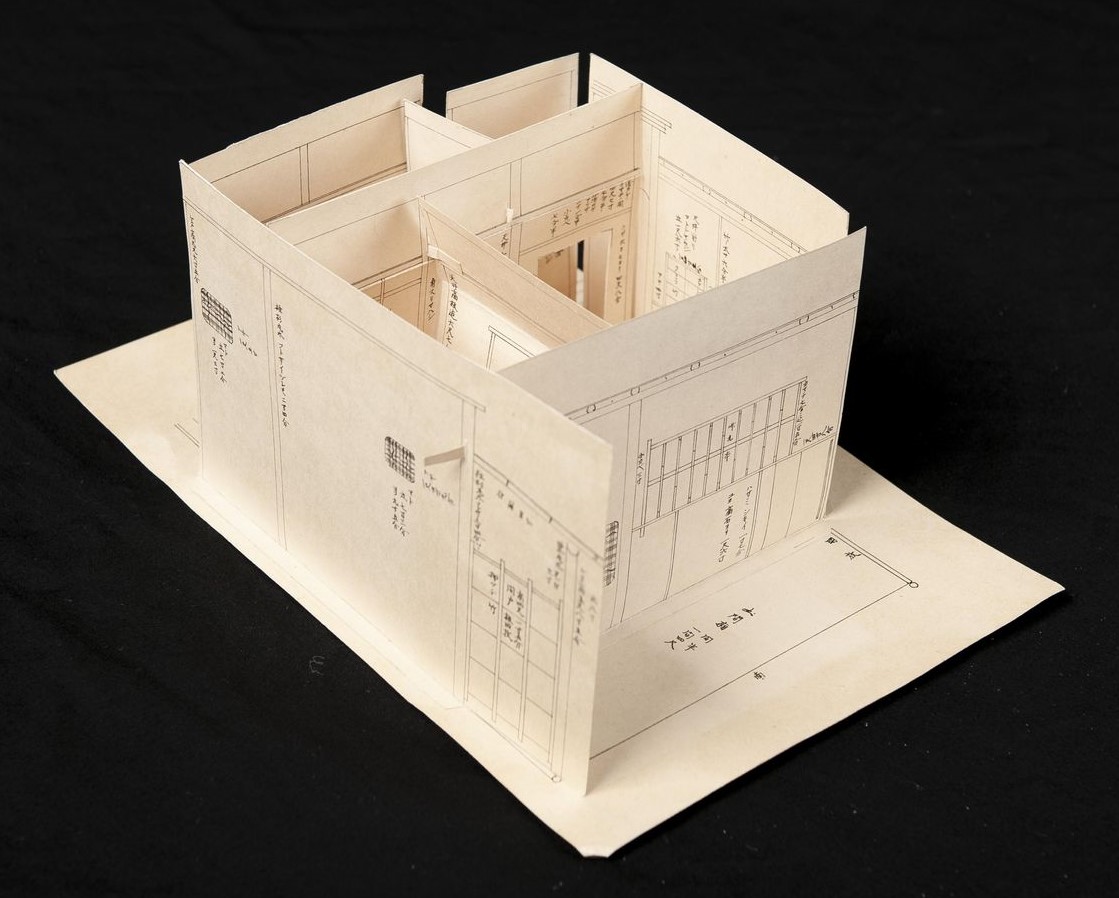
Sakata Sakujirō,Chaseki okoshiezu [Folding-drawing Tea Houses] (early 20th-century).
Although very rare, Marquand Library has been able to acquire two complete sets of tea houses: a hand-inscribed set of pop-up models dating from the late 19th-century (ca. 1820-60) and a woodblock-printed set from the early 20th-century. The former was originally owned by the Kenshin’in, a small temple in Kyoto, and the latter was made and sold by the tea utensil dealer, Sakata Sakujirō. Each set contains 90 pop-up models housed in two wooden boxes.
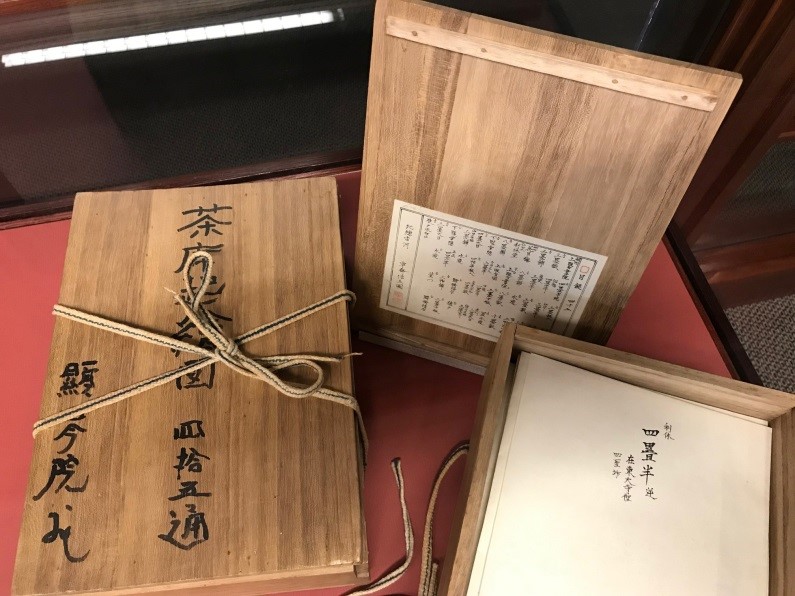
Pictured here are the paulownia wood boxes from the 19th-century set of pop-up tea houses, originally owned by the Kenshin-in temple. The 45 models in each box lay flat in soft paper envelope-like enclosures (seen here to the right). A table of contents has been pasted to the underside of each box lid.
Very little is known about the history of these “folding-drawing tea houses” [chaseki okoshiezu]. Some scholars have suggested that, like HGTV celebrity hosts, architects made these boxed sets of pop-up models to share ‘the look’ of classic structures and potential building designs with their clients. Others—noting the comprehensively inscribed details of construction and decoration on each model—have speculated that they were originally made to transmit classical ideals of tea house construction and spatial design to future generations in their family workshops. Whatever their origin, by the late 19th-century, these sets of pop-up models appear to have been made and sold by tea utensil dealers as collectibles for tea aficionados.
Traditional tea houses are generally small rustic wooden buildings, specifically created for the tea ceremony (chanoyu)–the ritual of preparing and drinking powdered green tea (matcha). They are built to be a respite from the chaos of everyday life and therefore emulate the thatched huts of quiet mountain villages. The tea house and adjunct garden design developed in the 16th-century not only impacted the history of Japanese building design but, in the 20th-century, profoundly influenced architecture around the world. These models preserve this architectural tradition.
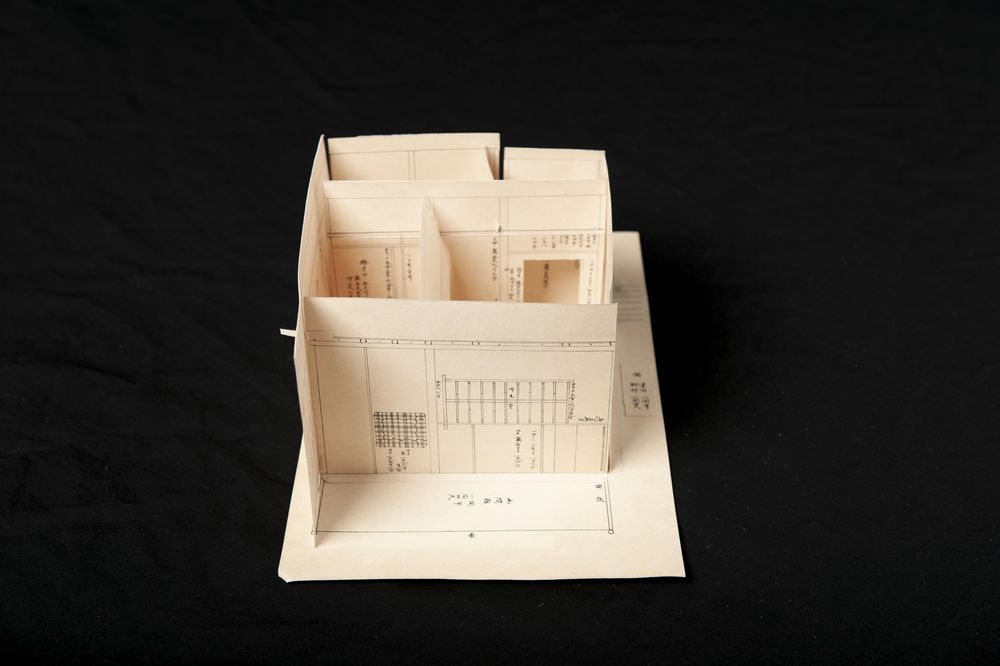
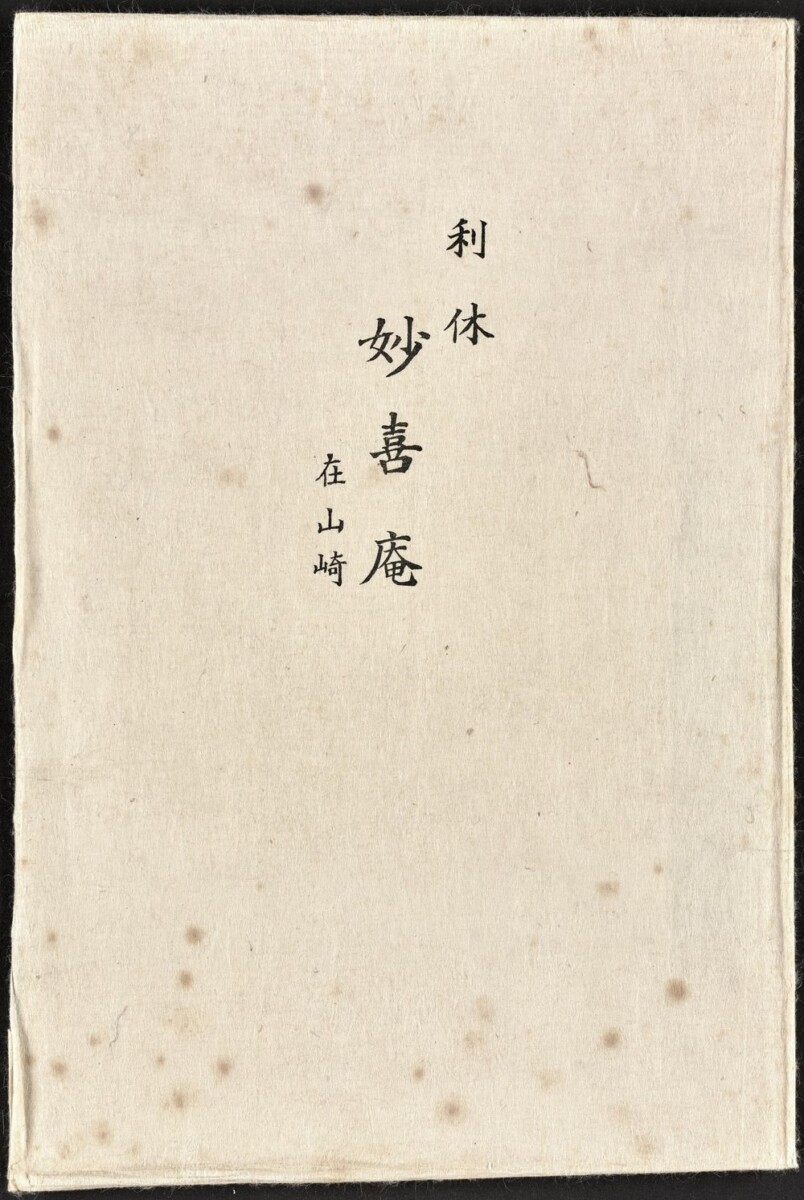
Built in 1582, the Tai’an Tea House was designed by the famous tea master Sen no Rikyū (1522-1591) for the legendary general, Toyotomi Hideyoshi (1593-1615). Tai’an survives today on the grounds of the Myōki’an, a Zen temple just outside of Kyoto. It is one of three tea houses to have been officially designated a Japanese National Treasure.
The tea ceremony itself is an art form in Japan and the collecting of tea utensils (tea bowls and caddies, scoops and whisks) for use and for display has been popular since the 15th-century, when the Ashikaga shoguns first acquired collections of fine tea ware from China. For hundreds of years, dealers sold fine tea ceremony-related items to avid collectors and practitioners–and it appears, that by the turn of the 20th-century, these sets of tea houses had become another popular item to collect.
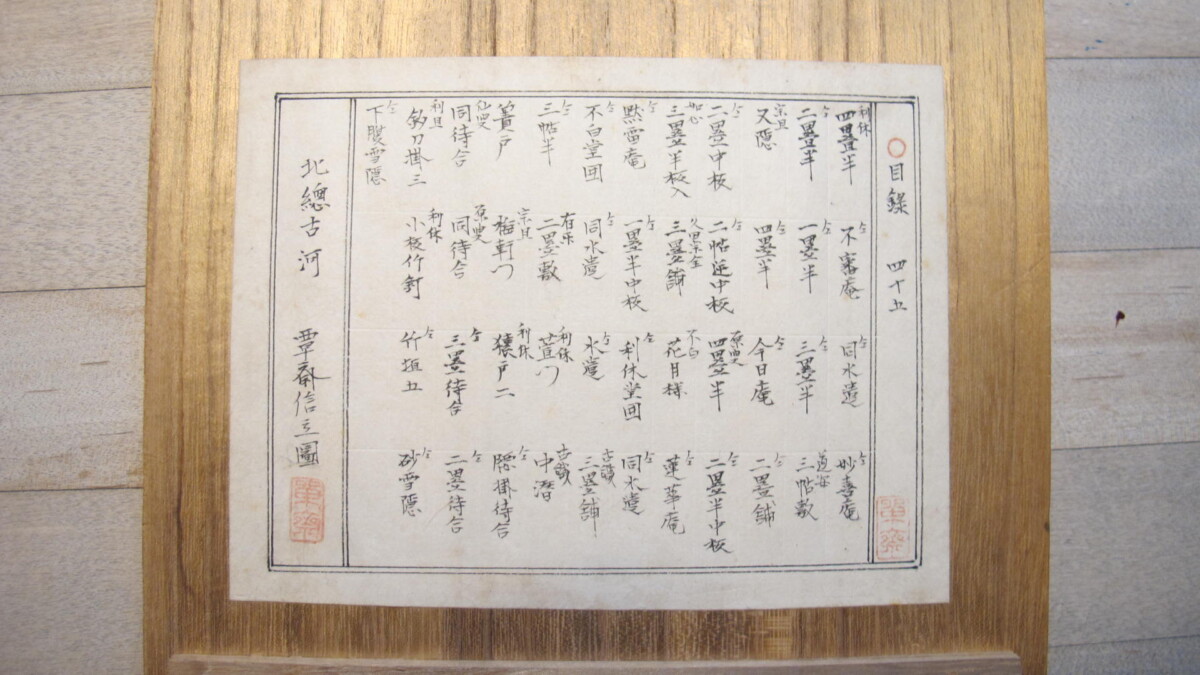
The early 19th-century pop-up tea house in Marquand’s collection was once owned by the Kenshin’in, a small temple that still exists today in Kyoto. It is a particularly fine collection of large, highly articulated models that have detailed hand-written notations regarding construction, materials and decoration. Made and signed by Nobutatsu Tansai, this set differs from the others made by him, which are comprised of 65 tea houses, housed in a single, divided box. This set features 90 tea houses divided evenly between two wooden boxes made from paulownia wood. (Paulownia wood was used because it is not only insect resistant, but regulates the interior environment of a box by swelling and contracting with outside changes in heat and humidity.) A soft paper envelope, labeled with the name of the model, protects each individual tea house from damage. It is attached to and becomes the base of the model when the structure is unfolded. As can be seen above, there is a hand-written index (mokuroku)—a Table of Contents—listing each of the forty-five tea houses within, pasted to the underside of each box’s lid. All are legendary buildings designed by famous tea masters from the sixteenth to early nineteenth century. Their names appear in tiny characters to the right of each structure and include such notable figures as Takeno Jōō (1502-1555), Sen (no) Rikyū (1522-1591), Furuta Oribe (1544-1615) and Kobori Enshū (1579-1647). The site of this set’s manufacture, Hokushō Koga (an area in modern Chiba and Ibaraki prefectures) appears beside the index, in the upper left corner of the label, followed by the name and seal of the set’s maker, Tansai Nobutatsu.
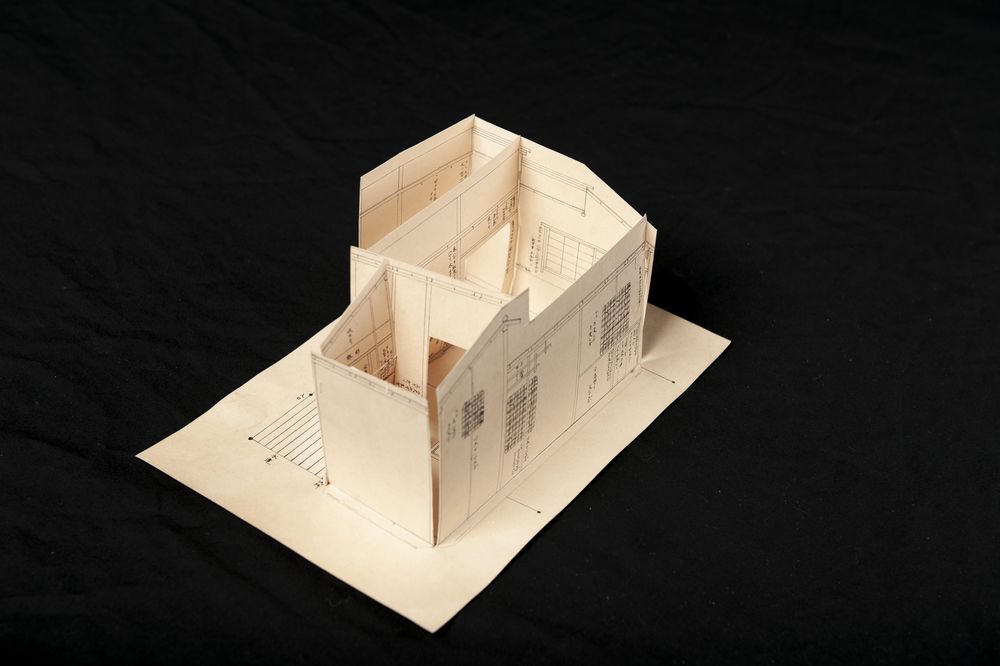
Fushin’an tea house. Designed and built in the 16th-century by the legendary tea master, Sen no Rikyū (1522-1591), the Fushin’an tea house is located in Kyoto and is associated with the Omoesenke School of Tea.
Our early 20th-century set of pop-up tea houses was made and sold by the tea utensils dealer, Sakata Chōjirō. Like the Kenshin’in set, it has 90 folded structures equally divided between two wooden boxes. There is some variation, however, in the tea houses chosen for inclusion in each set. This may reflect changes in the perceived importance of certain tea houses or, possibly, the emphasis on tea houses associated with different schools of tea. In both sets, similar papers–the stiff stock used for the pop-up tea house structure and the thick soft sheets used for the envelope enclosures have been used. Three of the tea houses from this set have been photographed from different angles and digitized. For a better sense of these remarkable pop-up structures, they are available for viewing here.
- Nicole Fabricand-Person, Japanese Art Specialist