Colorful birds on flowering branches fill the pages of a recent acquisition to Marquand Library’s Japanese rare book collection. The serene beauty of its illustrations, however, belies a rather scurrilous publishing history. Illustrated Book of Birds from Abroad [Kaihaku raikin zui] is therefore not just nice to look at, but important to our understanding of Japan and the business of publishing in the late 18th century.
When Birds from Abroad was first published in 1790, the technology of full color printing was relatively new in Japan. The bird-and-flower-theme, long established in both Chinese and Japanese painting, was also a relatively recent addition to the woodblock print repertoire.
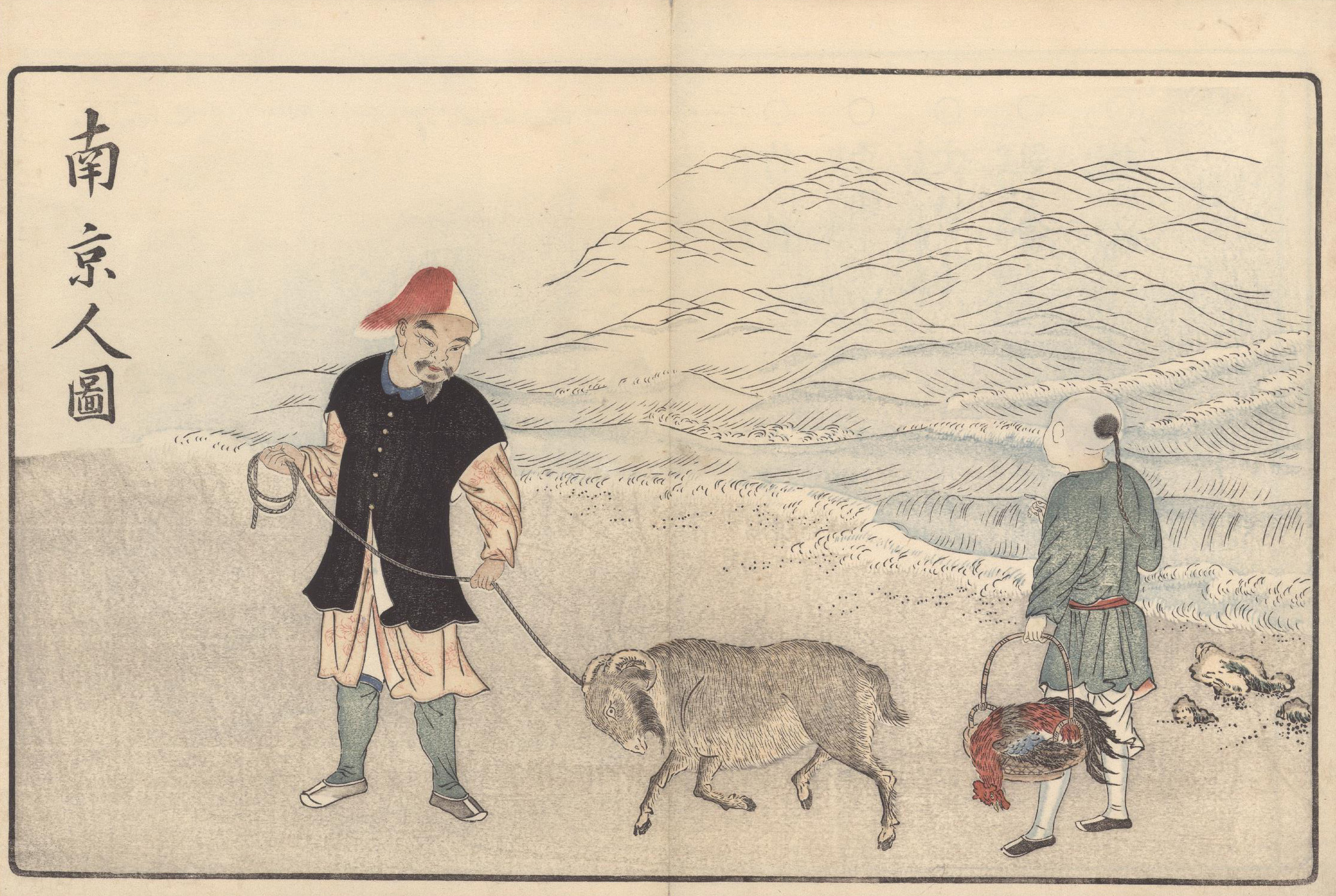
The preface of the book tells us that it is about the magnificent exotic birds brought to Japan by Chinese and Dutch traders. Prefaces in Japanese publications of this period, however, were often patently false or exaggerations of the truth; they were part of the hype of the book and they always spun marvelous tales. Birds from Abroad actually has two prefaces: one in the very prestigious Chinese language and one in Japanese. They tell us that the birds pictured were brought to the port city of Nagasaki from China and Indonesia in the year 1788 and that they were painted by the Chinese artist, Kiyō Ishōsai Shusen, who was living there at the time. The Chinese preface adds that the two illustrations of Chinese traders would be of great interest to those who did not live in the the port city and had never seen foreigners. Purchasers of this book therefore would be getting privileged access to the exotic worlds of Chinese culture and of Nagasaki where foreigners lived. They would also own beautiful illustrations by a noted Chinese artist.
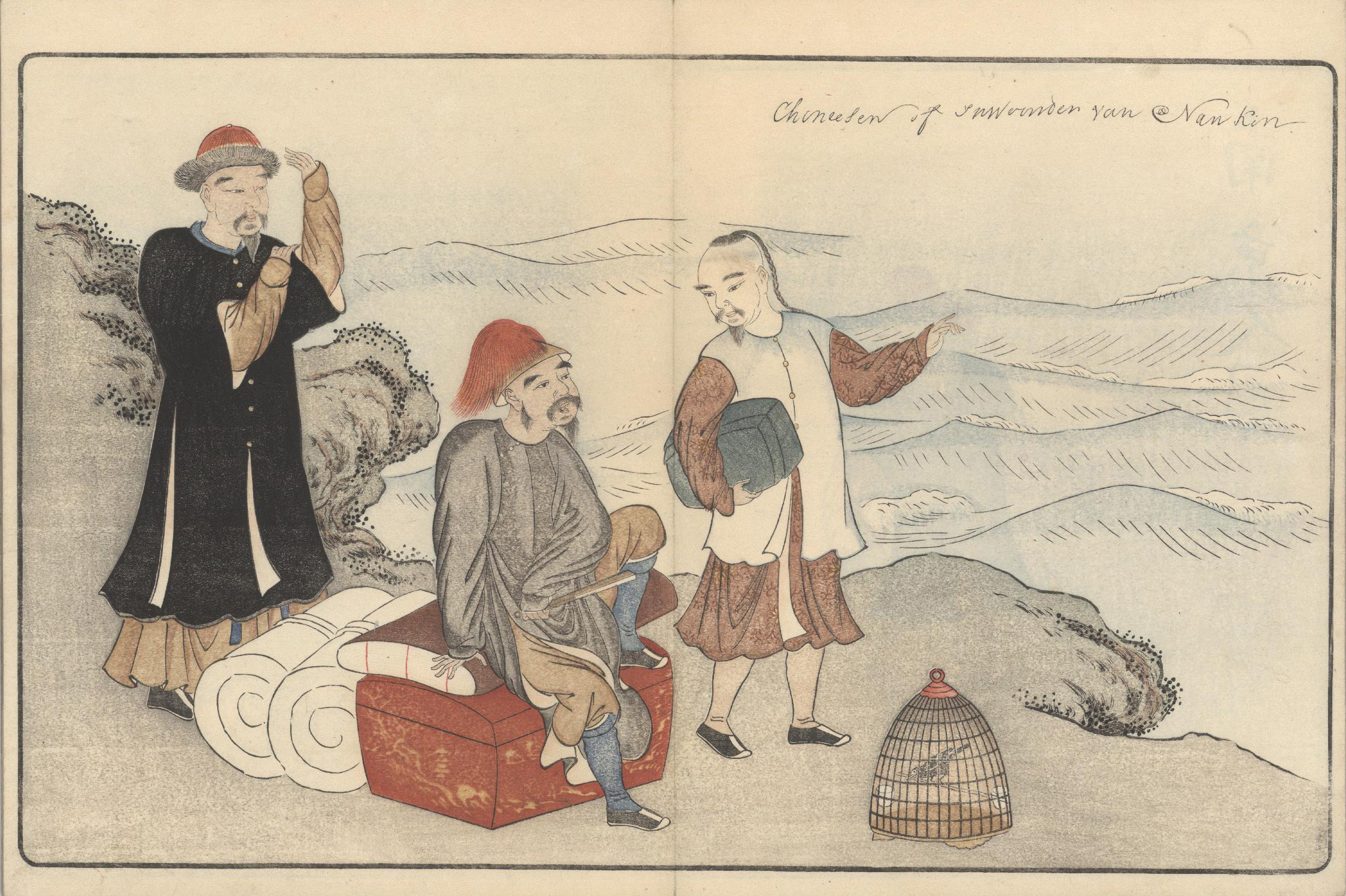
The name of the true artist–the “un-prestigious” Japanese artist of the beautiful double-leaved woodblock prints in Birds from Abroad–does not appear in either preface or in the publishing information at the end of the book; the lofty presentation required that the Chinese artist, Kiyō Ishōsai Shusen be acknowledged here in the colophon once more. The Japanese artist, Kitao Masayoshi (also known as Keisai), is mentioned only in the afterward where we are told that the illustrations in the book are actually his reduced-size copies of Shusen’s paintings, and that the twelve woodblock images that comprise the book were chosen from the hundreds painted by the Chinese artist.
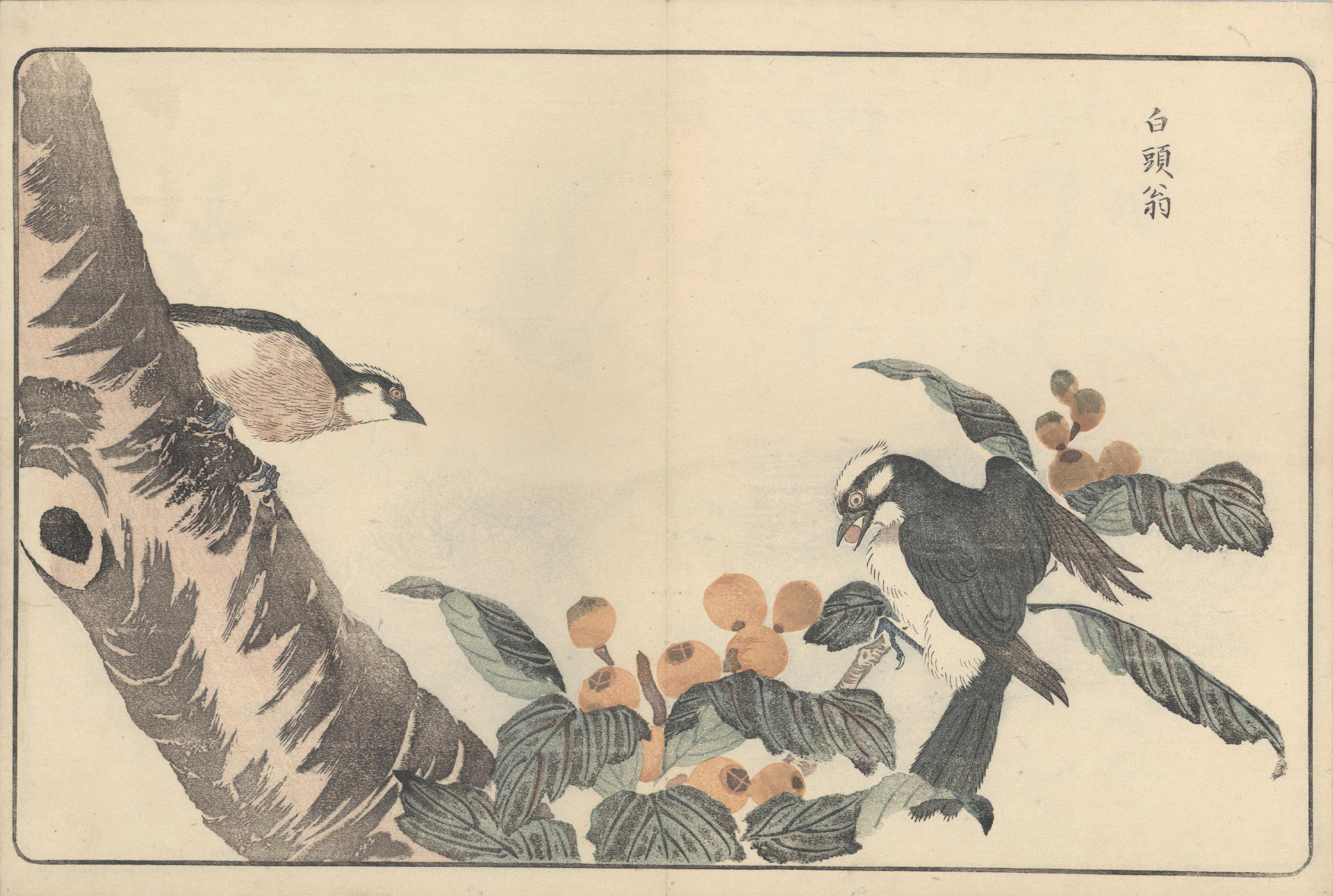
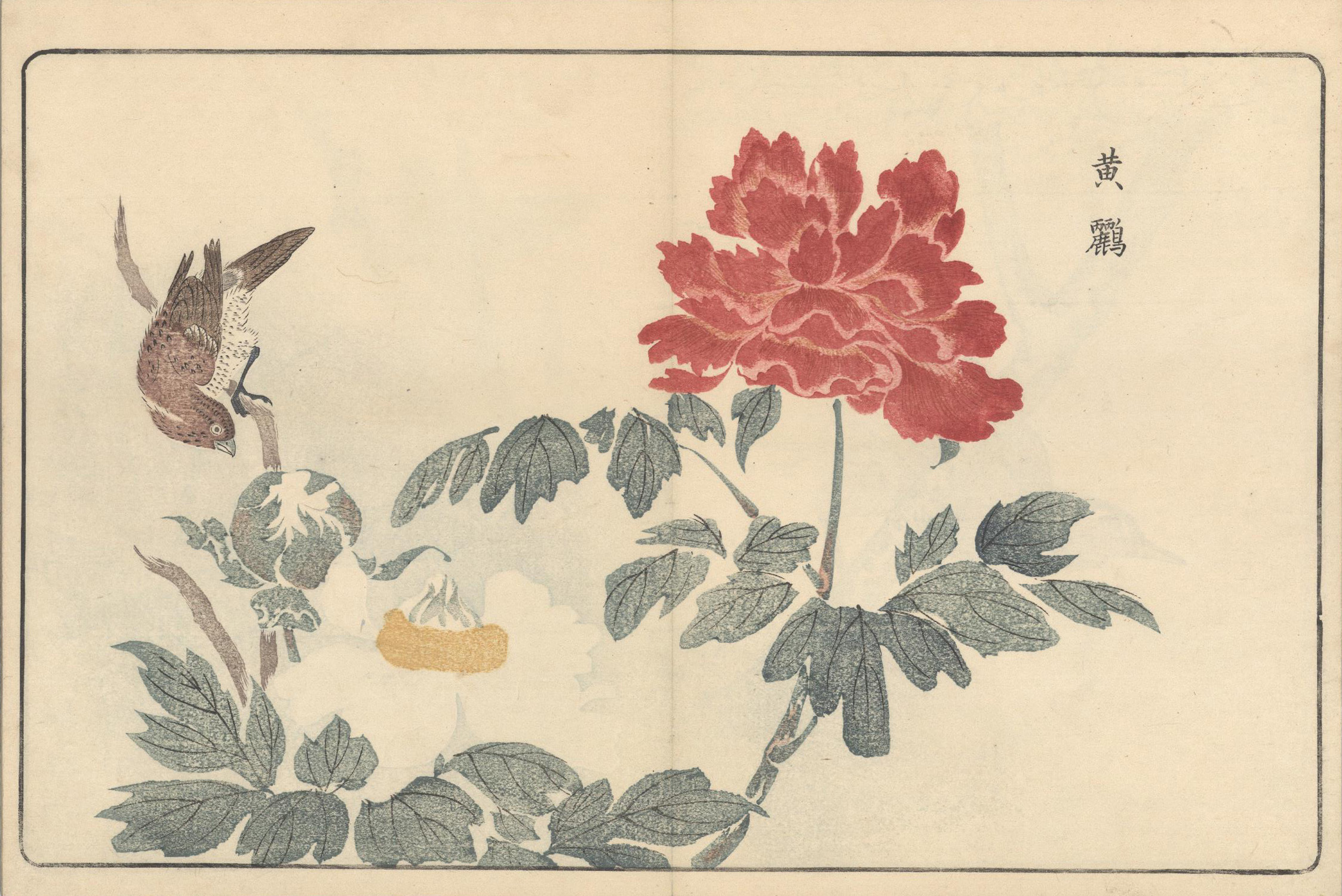
The bird and flower illustrations of Birds from Abroad are beautifully delineated in carefully balanced compositions. In a further nod to ‘things Chinese,’ the motif are “boneless” (mokkotsu), lacking the contour lines which define forms in most Japanese woodblock prints. The first (1790) edition of the book also featured the embossing of motif, which brought the birds and flowers life-like three-dimensionality. The Marquand copy, however, is the third edition. While Marquand does not often seek the third edition of a book, this particular third edition, printed in 1793, is quite special.
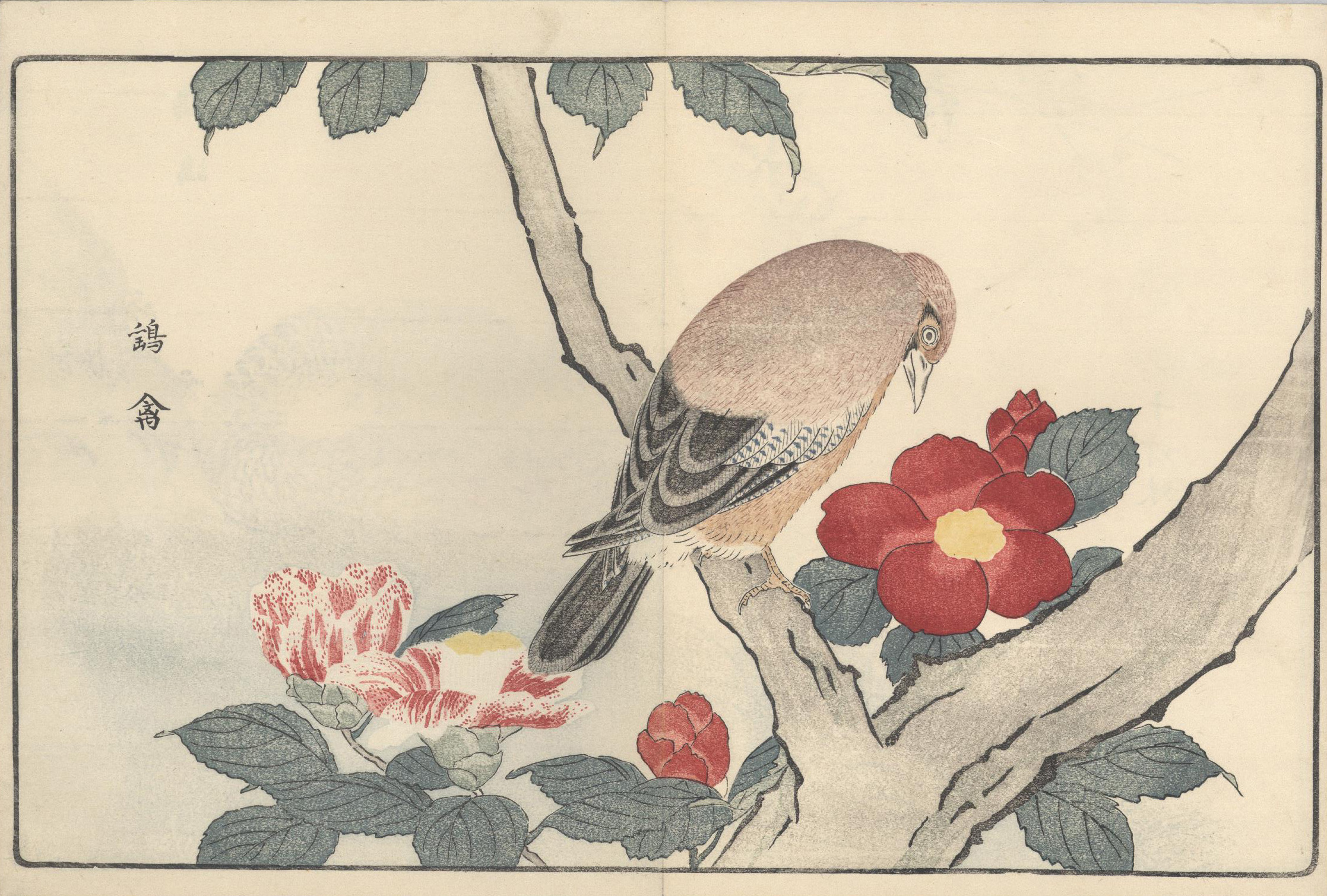
By way of background, in 1790, at the same time the first edition of Birds from Abroad was published, another book about birds, Myriad Birds: Paired Kyōka (Momochidori kyōka awase), with designs by one of the most renowned artists of the time, Kitagawa Utamaro, was released by one of the most noted publishers of the period, Tsutaya Jūzaburō. Kitagawa’s book was wildly popular and an instant best seller. It seems it was so successful that, three years later, when Marquand’s third edition of Birds from Abroad was published, the publishing information at the back of the 1790 edition was changed. The woodblock for the final page of our edition was re-carved to falsely indicate that Kitagawa Utamaro—not the Chinese painter, Kiyō Ishōsai Shusen, was the artist responsible for the illustrations. To reinforce the attribution, Utamaro’s printed signature also appears on one of the prints, indicating that a second block was altered to validate the spurious colophon. The afterword, however, remains unchanged; it still refers to Kitao Masayoshi copying the paintings of Shusen. While we do not know how this was rationalized, it does suggest that the afterword was largely ignored–even in the first edition where he was given credit for his beautiful prints.
Because publishers in 18th century Japan are known for their pirating of material and underhanded bookselling practices, a book like this edition of Birds from Abroad, which highlights the manipulation of the art market, is a real find for our teaching collection. We are also fortunate to have acquired a copy because it is extremely rare in any edition. Unfortunately, this is because of the disgraceful widespread practice of art dealers cutting up books with beautiful double-leafed images (especially those with bird and flower designs) to sell them individually as woodblock prints for greater profit. Interestingly, without the book context, these individual prints in museum collections are recognized as the work of Kitao Masayoshi, finally giving this artist his true credit for the beautiful designs.
- Nicole Fabricand-Person, Japanese Art Specialist