Now a classic of Japanese art and literature, it took Suzuki Bokushi (1770-1842) almost forty years to get his book, Snows of the North Country (Hokuetsu seppu) to market. This was because 19th-century publishers, catering to a sophisticated urban audience in the major cities of Edo (now Tokyo), Kyoto and Osaka, did not believe there would be interest in a book focused on the snowy world of Echigo province in north central Japan.[1]
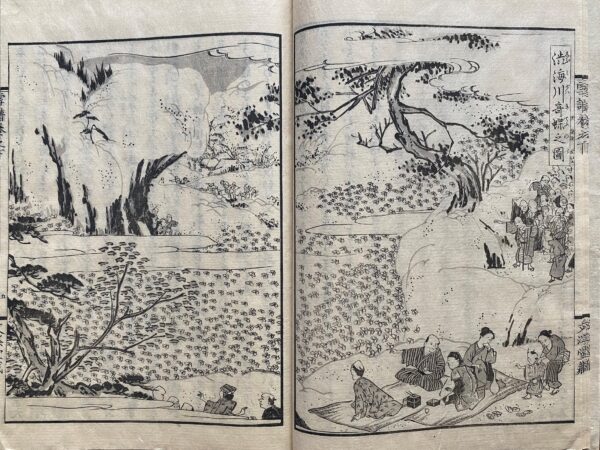
Snows of the North Country is, in part, an encyclopedic view of a world overwhelmingly impacted by snow eight months of the year. Most striking are the books’ dynamic illustrations of storms.
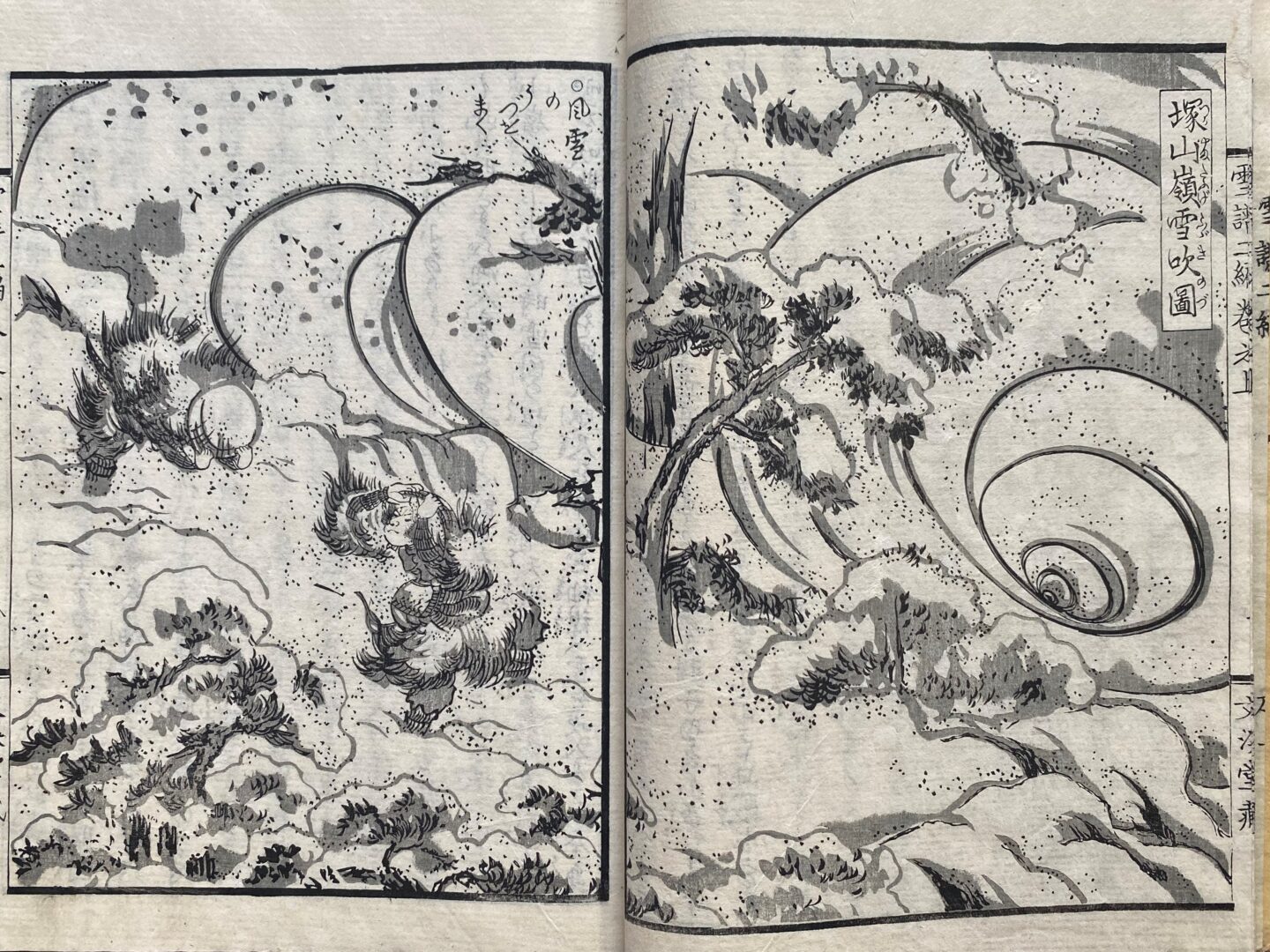
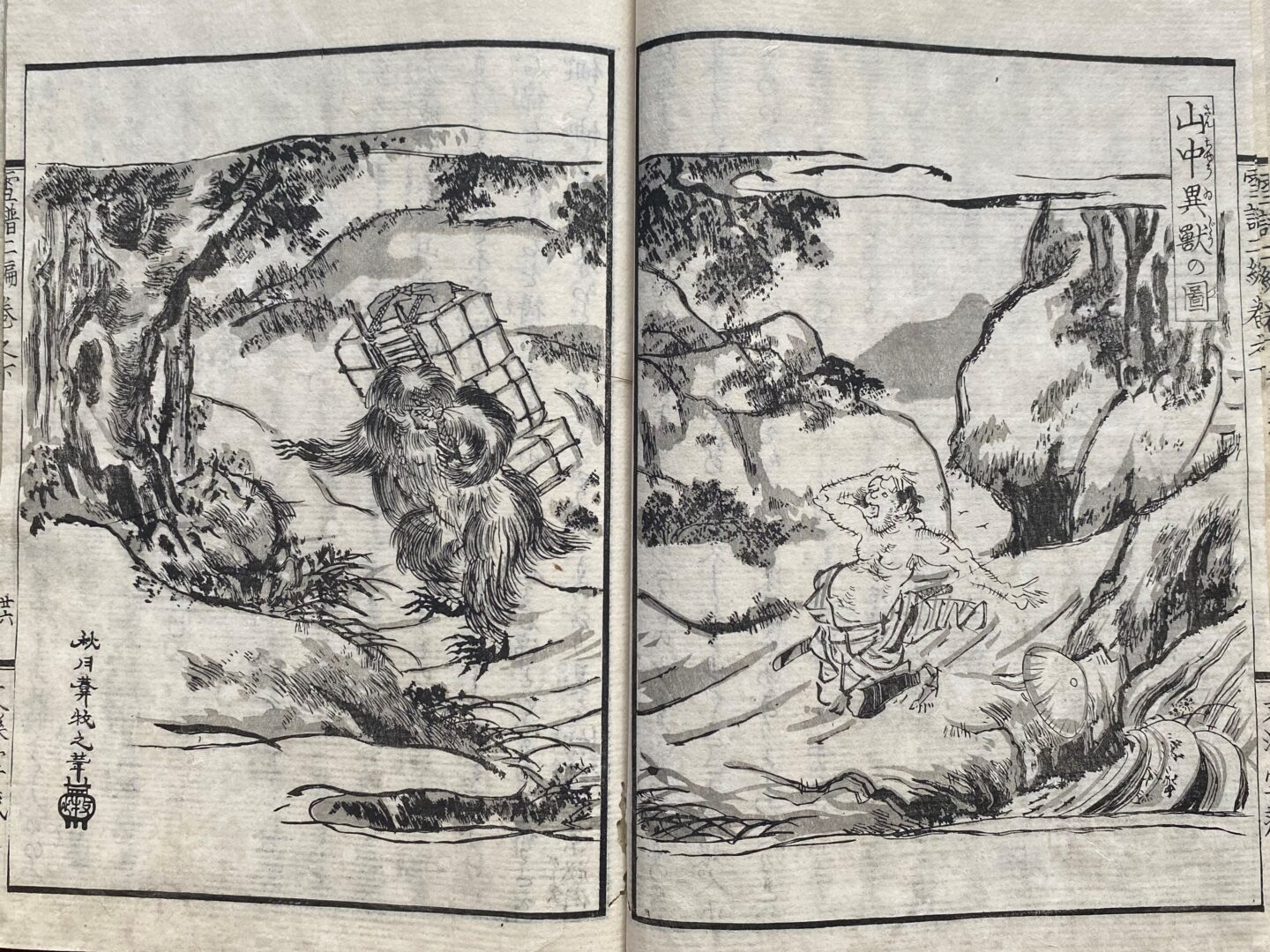
Bokushi discusses everything from the province’s lifestyles, customs, dialect and folk tales to its technologies. He also provides detailed descriptions of flora and fauna–which he admits in the book are based on personal observation and may not be absolutely accurate. (Here, for example, is an illustration of a section about the strange Big Foot-like creatures encountered by people of the north country.)
Perhaps most striking about Snows of the North Country is Bokushi’s inclusion of illustrations of “snow flowers”—scientific drawings of snowflakes copied from a small self-published book by Lord Doi Toshitsura (1789-1848) who, along with his retainer, had traveled to different regions of the north country to capture and study their crystalline shapes.
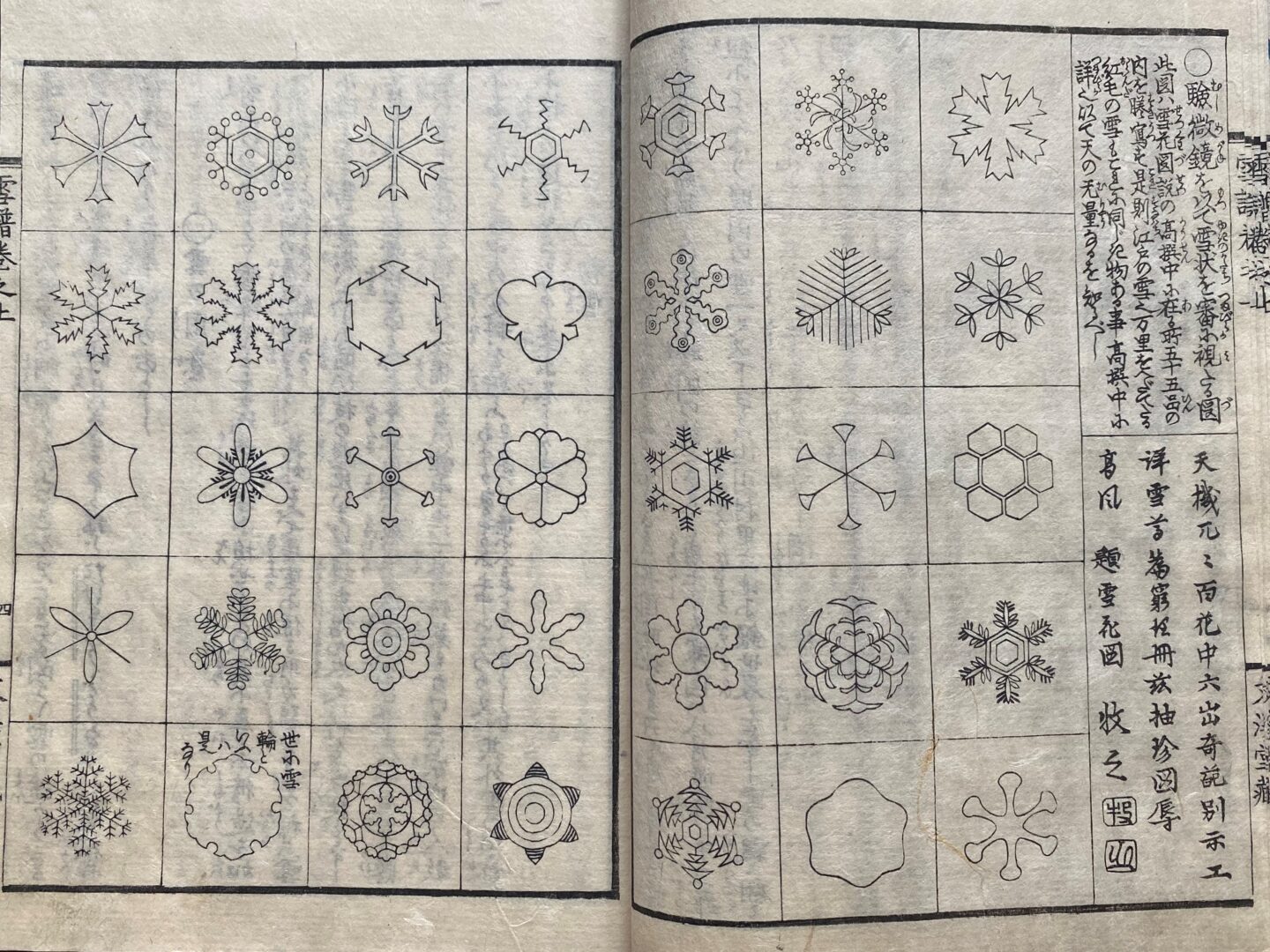
Lord Doi Toshitsura’s book had not received any attention when it was published in 1833, but when copies of his snow flowers dazzled audiences in the first three volumes of Snows of the North Country, the book became a bestseller. He was consequently encouraged to produce a second volume of snowflakes, which Bokushi then copied for publication in his second set of books.
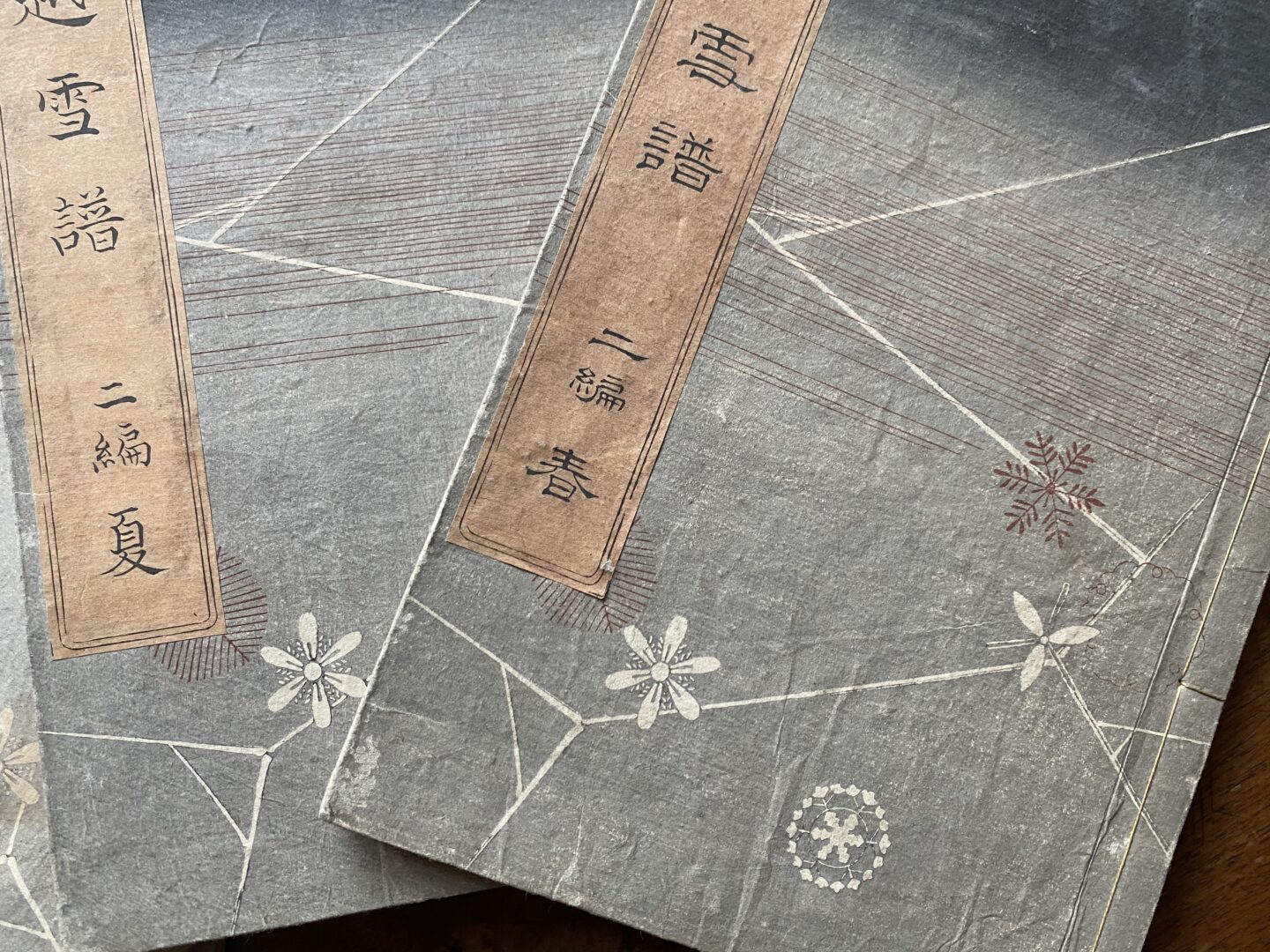
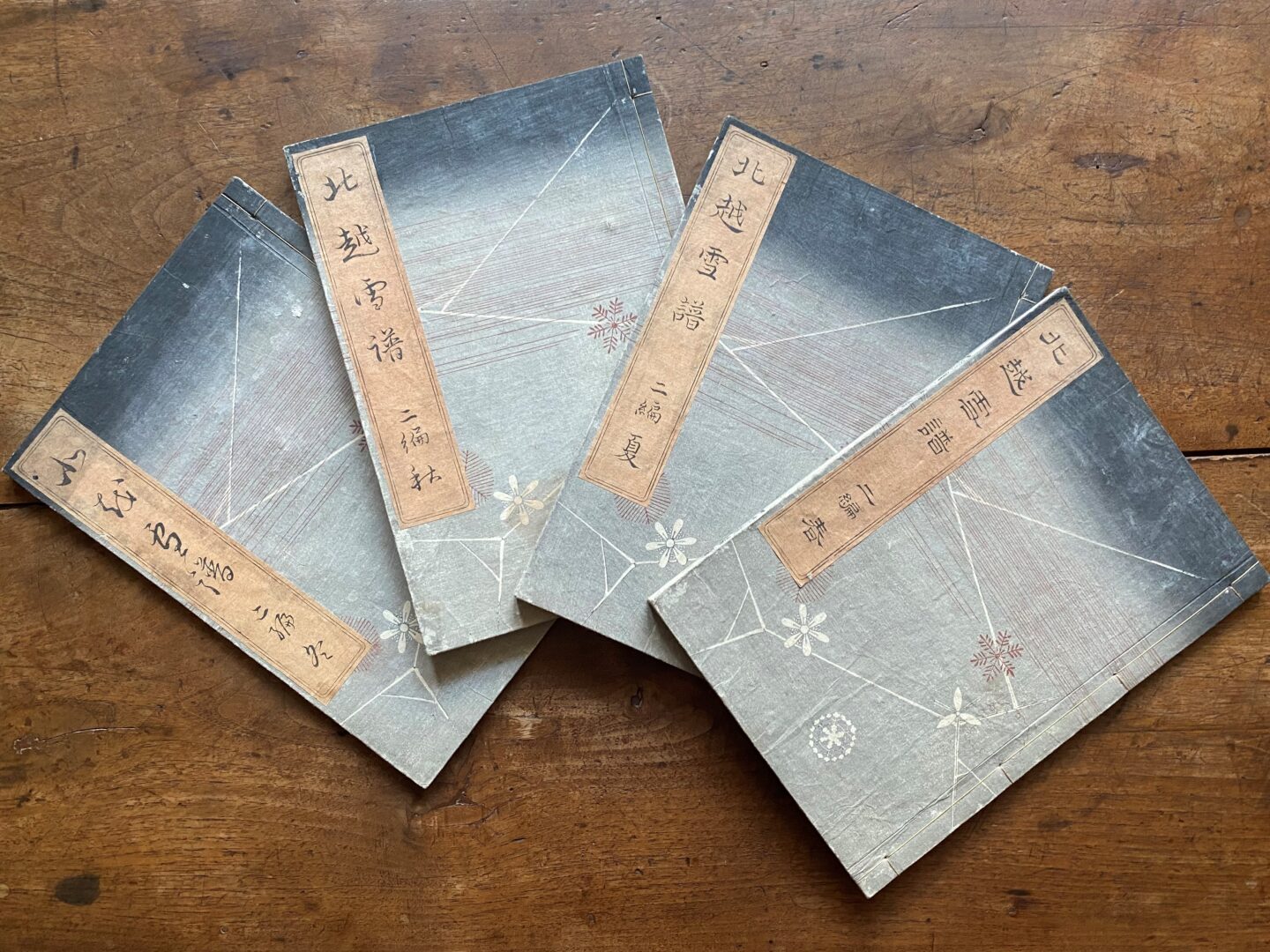
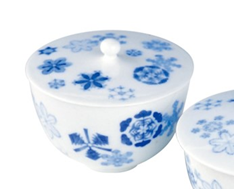
Significantly, Bokushi also used these snowflake designs to illustrate the covers of Snows of the North Country, which caused an instant sensation in the art world. The motif was immediately adapted for textiles, ceramics, lacquerware and metalwork designs across Japan. Snowflakes also began to appear in woodblock prints for the first time. These books therefore had a huge impact on Japanese art and designs that were ultimately adapted in Western decorative art.
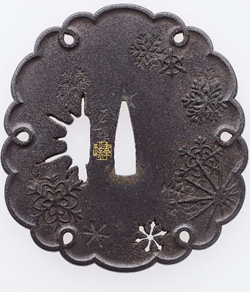
Kano Natsuō (1828-1898) Tsuba (iron sword fitting) with snowflake design (late 19th c.) MFA, Boston https://www.mfa.org/
Late 19th century tea bowl with snowflake pattern. From the Takeo Nabeshima Family Archives
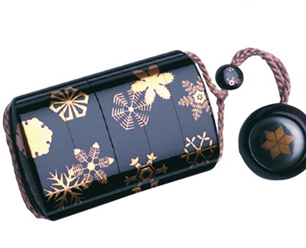
Hara Yoyusai, Inro container; lacquerware (late 19th c.) Koga History Museum
Kimono with snowflake pattern. Keisai Eisen, Edo no matsu meiboku zukushi oshiage myokeno matsu (c. 1840’s) Koga History Museum
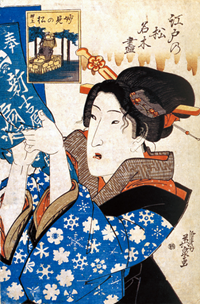
Examples of metalwork, textiles, ceramics and lacquerware with snowflake designs.
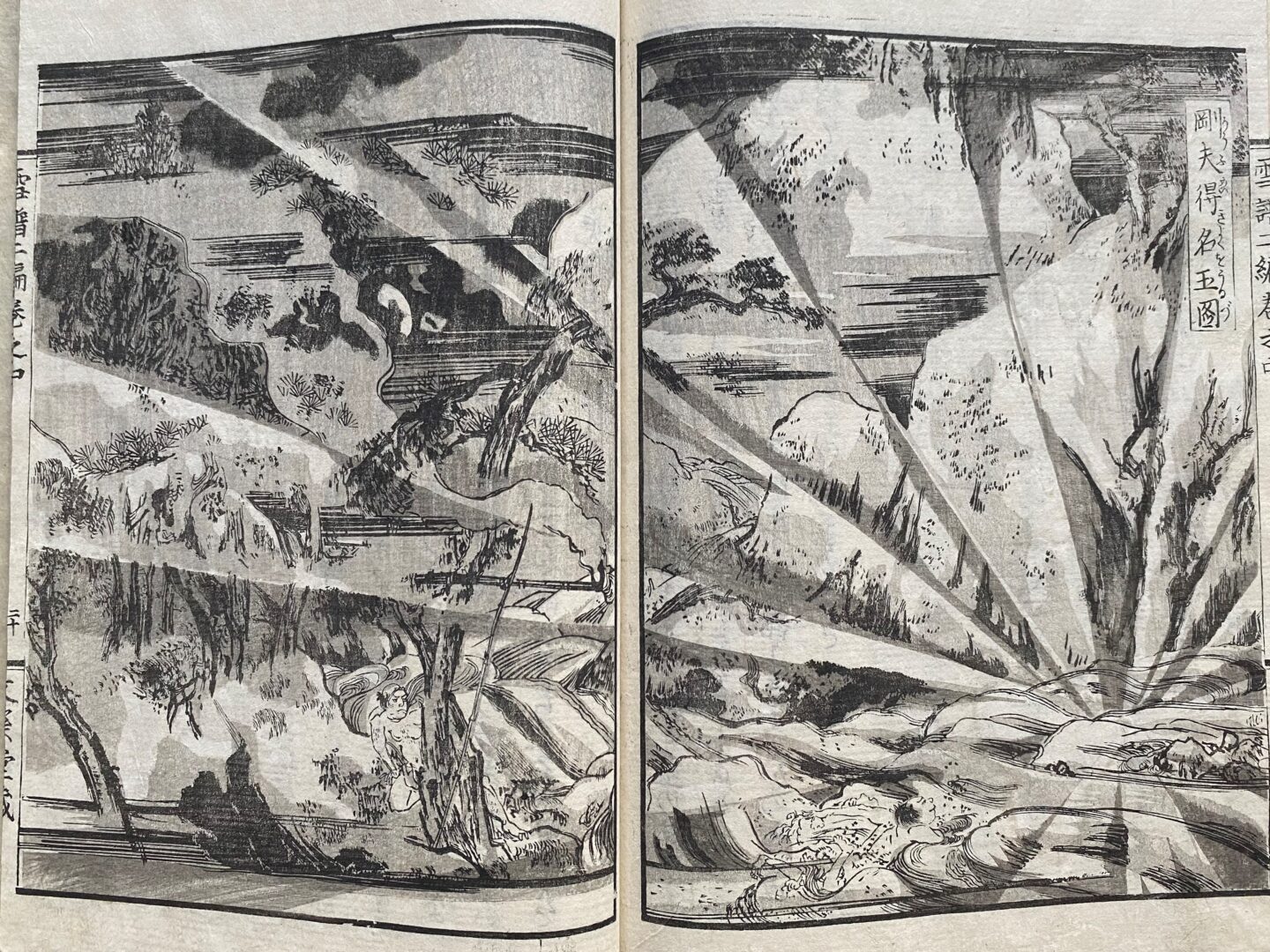
Many of the remarkable illustrations in Snows of the North Country are also quite striking in their similarity to 20th and 21st century Manga. Scenes of snow squalls, storms and the unique lighting effects that occur in the frozen world will undoubtedly be of interest to those studying the art of contemporary graphic novels.
Today, Suzuki Bokushi is a cultural hero to the people of Niigata prefecture. The Suzuki Bokushi Memorial Museum has been built there to honor this important work of literature and art. For those interested in reading Snows of the North Country, later editions are available in the PUL collection in both Japanese and in English translation (Snow Country Tales: Life in Other Japan).
Find Marquand Library’s copy of Snows of the North Country (Hokuetsu seppu) in our online catalog.
- Nicole Fabricand-Person, Japanese Art Specialist
[1] Present-day Niigata prefecture
[2] The Marquand copy is the first printing of a corrected edition of the book. The earlier edition was published inexpensively on inferior paper. It is most likely that the first printing was cheaply produced because the publisher had little confidence in the book’s success. He was willing to print a luxury edition when the first proved to be so popular.